
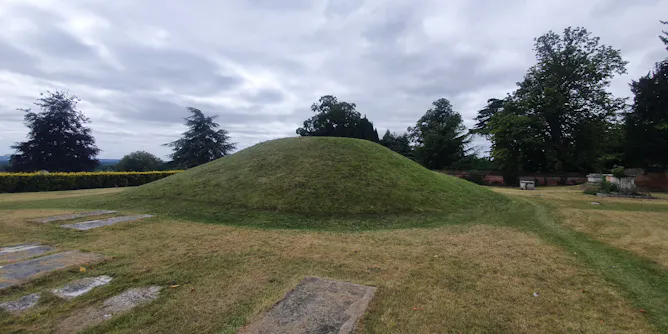
Skeletons found with items that don’t align with their estimated sex are usually excluded from research – but that assumes a 19th century view of gender.
Articles on Archaeology
Displaying 221 - 240 of 670 articles
Experts insist there is no scientific reason for allowing these fossils to travel to space.

Maui officials have asked relatives to provide DNA samples to help identify victims of the Lahaina wildfires. Time and exposure to the elements, however, can make DNA retrieval from remains difficult.
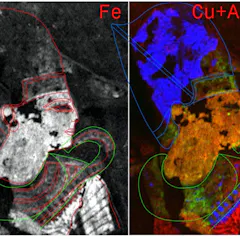
A technique called portable X-ray fluorescence has helped Egyptologists identify changes and adjustments to details of tomb decoration that are invisible to the human eye.
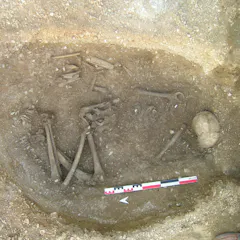
In the largest study of its kind, researchers have used DNA from a 6,700-year-old cemetery in France to reconstruct the lives of everyday Neolithic people.
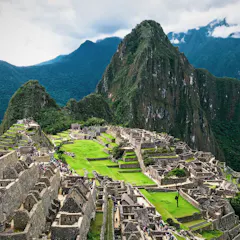
Machu Picchu is now an iconic tourist destination in Peru – but it was once a royal palace that pulled people from all corners of the Inca empire.
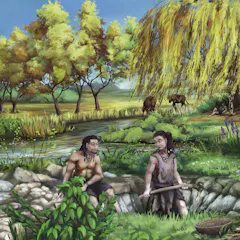
The pits are important for rethinking how we have previously considered life and society during the Mesolithic period.
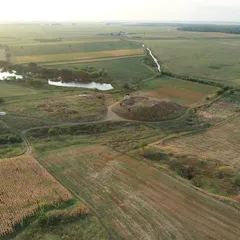
Ancient DNA from Ukraine uncovers the earliest evidence of the arrival of the ‘steppe ancestry’ – the last piece of the modern Western European genetic puzzle.
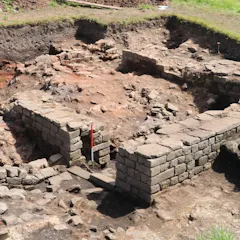
It might seem odd to rebury what’s been dug up but it’s to make sure what’s found is preserved for future research.

Despite opening to mixed reviews, the final instalment is a classic Indiana Jones caper that doesn’t disappoint.

The final Indiana Jones movie is coming out June 30. The fifth in a series over 42 years, many of its ideas are taken from 19th-century orientalist and racist archaeology.
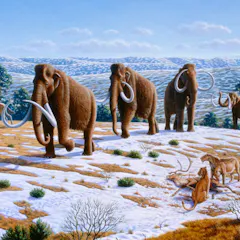
A forensic technique more often used at modern crime scenes identified blood residue from large extinct animals on spearpoints and stone tools used by people who lived in the Carolinas millennia ago.

New evidence from contested Laos cave site shows humans reached Southeast Asia at least 68,000 years ago.
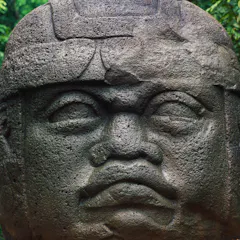
The return of an important monument to Mexico puts a spotlight on a culture whose influence is still felt in the Americas today.
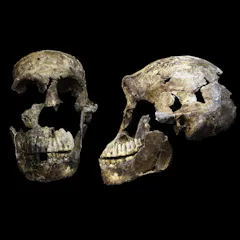
Homo naledi had a brain less than half the size of our own. Yet the new research claims it had cognitive abilities far beyond what we might expect.

This was an area in which early anatomically modern humans survived, evolved and thrived, before spreading out of Africa to other continents.

We need deep-time African urban history and theories to make sense of contemporary urban life and anticipate its future possibilities in African terms.

Researchers examined whether kissing is an innate human activity or whether its origins are relatively recent.

Signs of controlled fire use from Spain are at least 50,000 years older than previous evidence.
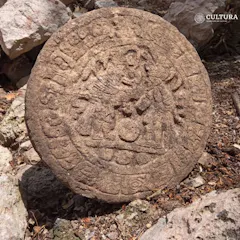
Ancient rituals and games possess characteristics like repetition, structure and the use of symbolic objects that aid students in understanding the world.
Top contributors
-

Professor of Environmental and Geographical Sciences, Bournemouth University; University of Reading
-
PhD Candidate, Anthropology and Archaeology, University of Bristol
-
Associate Professor of Archaeology, Griffith University
-
Professor in Geochronology and Geochemistry, Southern Cross University
-
Director, ARC Centre of Excellence for Transforming Human Origins Research, Griffith University
-
Professor of Archaeology and Biological Anthropology, School of Social Science, The University of Queensland
-
Professor of Archaeology, Griffith University
-
Associate Professor and Director, Flinders Microarchaeology Laboratory, Flinders University
-
Curator of Human Evolution of the Cleveland Museum of Natural History and Research Assistant Professor of Anthropology, Stony Brook University (The State University of New York)
-
Senior Lecturer, University of Mpumalanga
-
Honorary Professor, Archaeology, The University of Queensland
-
Honorary Associate Professor, UNSW
-
Associate professor, University of Johannesburg
-
Postdoctoral fellow, University of Tübingen
-
Associate Professor of Anthropology, Rice University