
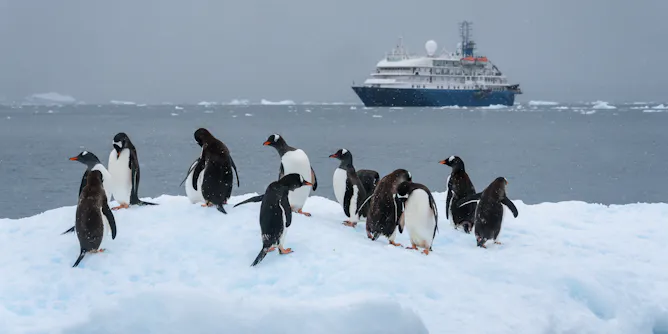
New research maps how ship traffic connects Antarctica to worldwide ecosystems.
Articles on Antarctica
Displaying 161 - 180 of 417 articles
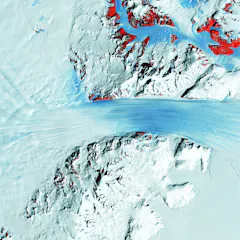
A massive Antarctic ice shelf is showing signs of cracking and could trigger worldwide flooding.
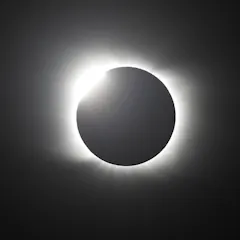
Penguins will have the best seat in the house as a total solar eclipse passes over Antarctica on December 4. Australia and New Zealand will experience a minor partial eclipse, but not a noticeable one.

While some invasive animals have breached Antarctica, the continent is still pristine. Our challenge is keeping it that way.
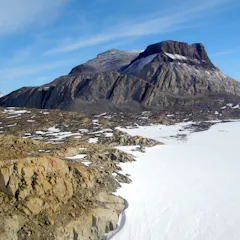
A billion-year-old ‘hydrogen economy’ in the frozen soil of Antarctica provides bacteria with energy, water, and the carbon that makes up their bodies.
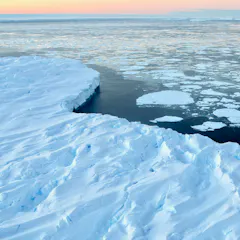
If the world is to adapt to sea level rise with minimal cost, we must address the uncertainty surrounding Antarctica’s melting ice sheet. This requires significant investment in scientific capacity.
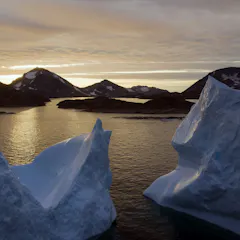
Greenland’s melting ice sheets threaten to significantly hamper humanity’s efforts to mitigate climate change.
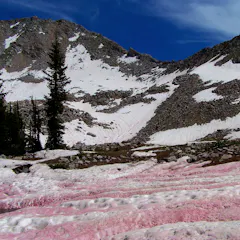
How do organisms survive extreme conditions – and how can their adaptations help us develop better technology?

Emperor penguins survive in a ‘Goldilocks zone’ between too much sea ice and too little. A new study shows the risk they face from climate change.
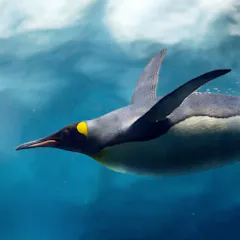
They can’t fly through the air but they can fly underwater.
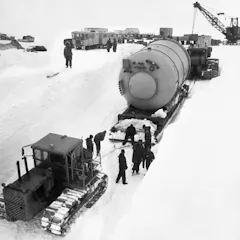
Nearly 60 years after a radiation-leaking reactor was removed from a US Army base on the Greenland ice sheet, the military is exploring portable nuclear reactors again.

These giant predators are helping solve the mystery of Earth’s cooling shift some 50 million years ago.
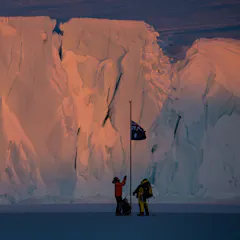
Complex questions over environmental protection and resource extraction require the signatories to give the future of the treaty much more serious attention.
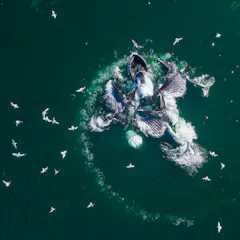
Bubble-net feeding is when whales blow bubbles from their nose to encircle their food, trapping their prey into a tight ball. A citizen scientist was the first to capture this behaviour in Australia.
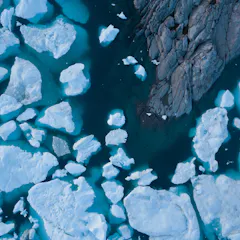
The Arctic region is warming much faster than the rest of the planet. The rapid loss of ice affects the polar jet stream, which influences weather patterns across the northern hemisphere.
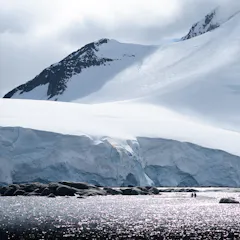
If emissions continue at their current pace, Antarctica will cross a threshold into runaway sea rise when today’s kids are raising families. Pulling CO2 out of the air later won’t stop the ice loss.
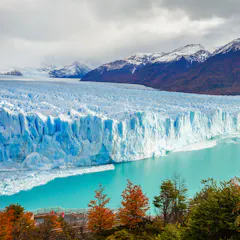
Glaciers aren’t sterile wastelands – they’re chock-full of microscopic life.
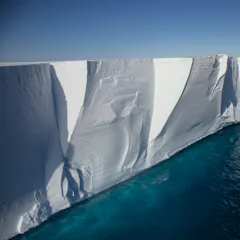
In a new study, we found that a third of Antarctica’s ice shelves could collapse at 4°C of global warming.
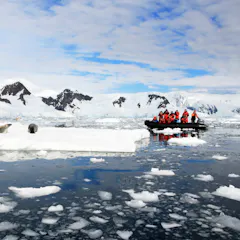
Over six months, 73,991 tourists visited the continent. The potential to spread coronavirus to penguins, whales and other wildlife is enormous.
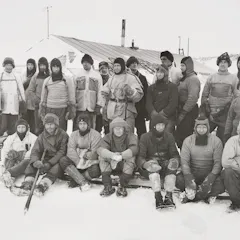
Antarctic research has historically been a bastion of men from Europe and North America. Only now is the field opening up to women and people of colour. And there’s a way to go yet.
Top contributors
-

Adjunct Professor, Institute for Marine and Antarctic Studies, University of Tasmania
-
Professor of Antarctic Studies, School of Humanities, University of Tasmania
-
Pro Vice-Chancellor of Research, University of Technology Sydney
-
Director of the ARC Centre of Excellence for Our Future Oceans and Scientia Professor in Oceanography, UNSW
-
Professor of Astrophysics, UNSW
-
Adjunct Senior Lecturer, University of Tasmania
-
Professor in Ocean Physics, University of Auckland, Waipapa Taumata Rau; Earth Sciences New Zealand
-
Chief Scientist, Australian Antarctic Division and Professor of Climate Science, Australian National University
-
Assistant Professor of History, Texas Tech University
-
Senior lecturer, Institute for Marine and Antarctic Studies, University of Tasmania
-
Australian Laureate Fellow, Distinguished Professor, Deputy Director of ARC Securing Antarctica's Environmental Future (SAEF), University of Wollongong
-
Honorary Senior Fellow in Ecology, University of Wollongong
-
Professor of Polar Geodesy and ARC Laureate Fellow, University of Tasmania
-
Antarctic Law Researcher, Institute for Marine and Antarctic Studies and the Antarctic Climate and Ecosystems CRC, University of Tasmania
-
Director, Securing Antarctica's Environmental Future and Professor of Biological Sciences, Monash University