
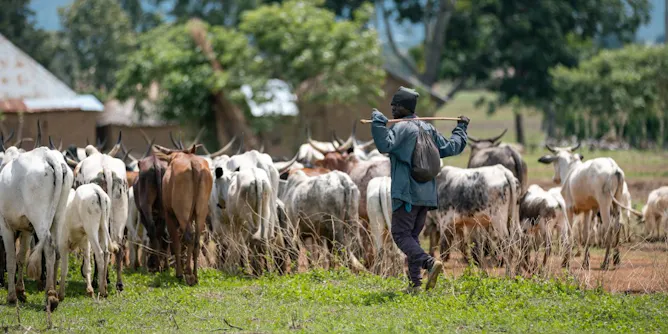
Africa’s drylands need support, but it shouldn’t overlook systems that people rely on.
Articles on Agriculture + Land
Displaying 61 - 80 of 146 articles

There’s a significant shift towards the recognition of customary rights and the strengthening of women’s land rights.
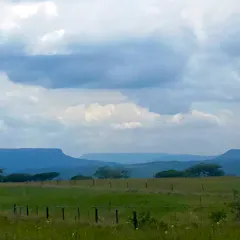
Decades of experimentation revealed slow ecological processes and long-term interactions that have international scientific value.

Development banks have spent over US$1 billion on factory farming in Africa, locking in high greenhouse gas emissions. Natural farming systems are a better choice.

Africa’s share of the world’s agriculture exports is low and has deteriorated over time.
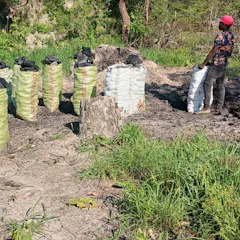
In rural Zambia, solar power has brightened lives, but communities living next to forests can only pay for it by cutting down trees, putting forests at risk.

75% of Mount Kilimanjaro’s indigenous plants have been wiped out over the last century.
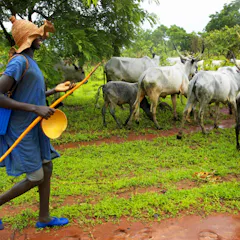
Conflict over land, pastoral mobility and weak governance often overlap with religious fault lines, but can’t be reduced to them.
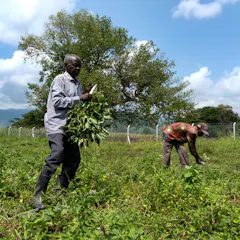
African farmers face rising climate disasters that destroy crops and livestock. The G20 must champion new, affordable tech-based insurance for them.

South Africa’s G20 presidency is a chance to lobby for investment in drought-tolerant crops, better irrigation, and early warning systems.

Ghanaian bank lending to agriculture and manufacturing is in decline

The cannabis industry in Zimbabwe and South Africa is about to become a huge earner for corporations but small-scale farmers will lose out.
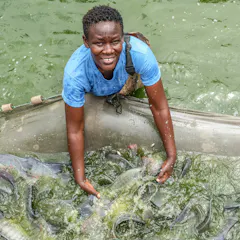
Africa’s small-scale aquaculture practitioners need cold storage facilities to stop their fish from going to waste.
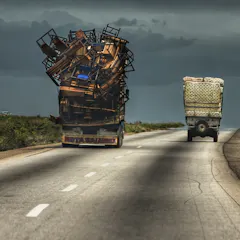
Nigeria’s clay soil needs a boost to become more stable for road building.
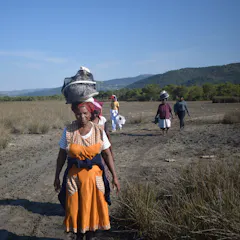
South Africa’s Eastern Cape women farmers have problems getting land, loans, and leadership positions.

Tanzania’s avocado boom wastes 30%-50% of produce, hitting smallholder farmers hardest. Better training, fair prices, quality standards and storage can cut losses.

The Amadiba community in South Africa holds fast to traditional farming. They have also withstood pressure to mine their land.
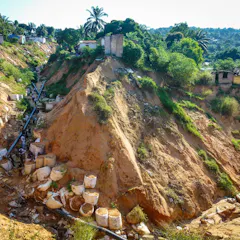
Urban planning can prevent gullies from forming, saving costly repairs and avoiding displacement of people.
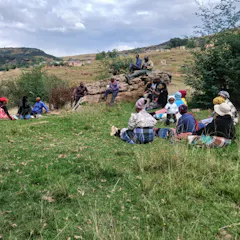
Rural communities in South Africa rely on public land to graze their livestock. They must be part of fighting soil erosion and restoring natural grasses.

After the elections, Malawi’s government will need to confront deep-rooted structural challenges to secure lasting food security and drive inclusive economic growth.
Top contributors
-

Senior Fellow, Department of Agricultural Economics, Stellenbosch University
-
Professor of Climate Change, Food Systems and Health and Director of The Lancet Countdown in Africa, London School of Hygiene & Tropical Medicine
-
Senior Lecturer at Oyo State College of Agriculture and Technology, Igboora, Nigeria and Extraordinary Senior Lecturer at Indigenous Knowledge Systems Centre, North-West University, Mafikeng, South Africa, North-West University
-
Ass. Professor, University of Maryland Eastern Shore; North-West University
-
Lecturer, University of Fort Hare
-
Research Fellow, International Food Policy Research Institute (IFPRI)
-
Teaching Assistant Professor, University of Pittsburg and Visiting Associate Professor, The University of Osaka, University of Pittsburgh
-
Senior Research Fellow & Malawi Country Program Leader, International Food Policy Research Institute (IFPRI)
-
Research entomologist, Department of Conservation Ecology and Entomology, Stellenbosch University
-
Economist at the Centre for Competition, Regulation and Economic Development, University of Johannesburg
-
PhD Candidate, University of Memphis
-
Professor and DSTI/NRF SARChI Bio-economy Research Chair, University of Cape Town
-
Senior Researcher, Associate Professor: Economic Management Sciences, University of Pretoria
-
Senior Researcher, Agricultural Research Council - Animal Production, University of KwaZulu-Natal
-
Senior Researcher and Statistician, University of Hohenheim