
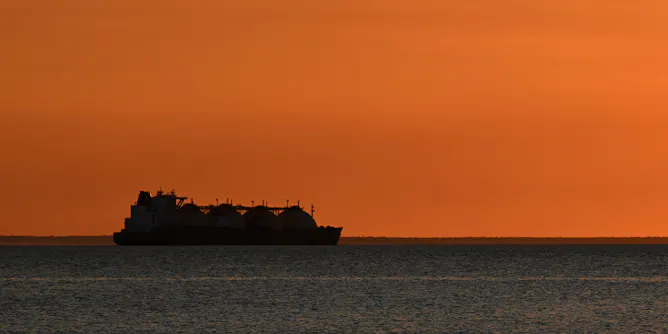
Our war game simulations showed how vital it is to protect shipping routes across the entire ocean, not just in waters close to Australia.
Articles on US-Iran conflict
Displaying 41 - 60 of 434 articles

Each year, about 10–12% of global shipping trade passes through the Bab el-Mandeb Strait – whose name means ‘Gate of Tears’.
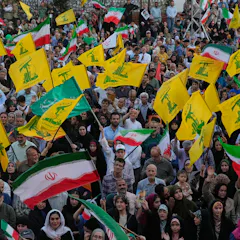
Hezbollah faces an uncertain future as the Lebanese public becomes disillusioned with it. Here are four scenarios for what the group could do next.
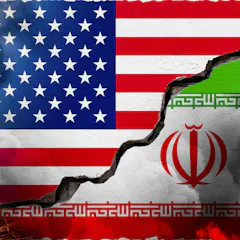
There is no end in sight to the conflict between the US and Iran.
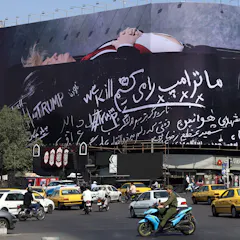
The reality is there is no military pathway to opening the Strait of Hormuz. Trump may attempt to find one anyway.
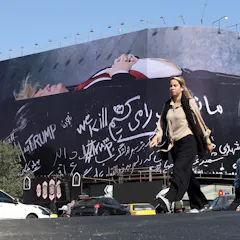
Trump has backed himself into a corner from which there is no apparent escape.
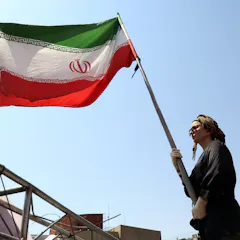
Trump has declared the US the ‘guardian’ of the Strait of Hormuz, but his strikes are feeding the very behaviour they aim to deter.
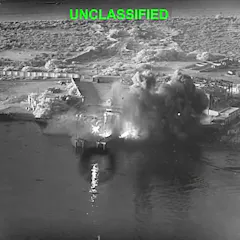
Both sides are at an impasse over control of the Strait of Hormuz, with no end in sight.
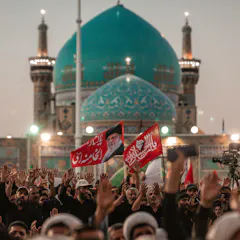
A MIddle East expert addresses some of the key questions about the renewed conflict.
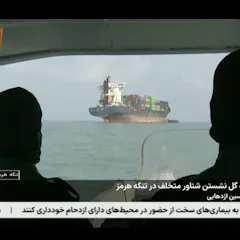
Realists in the Islamic Republic know that sanctions relief and access to global markets are what Iran needs now.
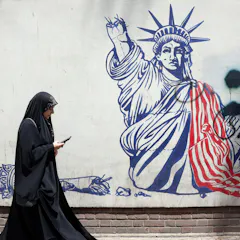
The MoU signed by the US and Iranian presidents was never likely to hold.
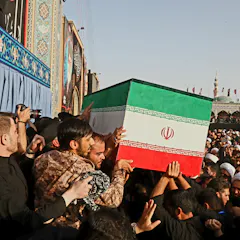
Ayatollah Ali Khamenei’s week-long funeral was transformed into far more than a state ceremony.
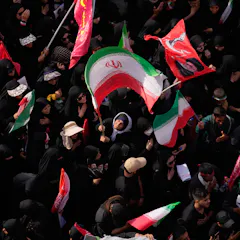
New tit-for-tat airstrikes between the US and Iran over control of the Strait of Hormuz suggest the ceasefire will not turn into a permanent peace.
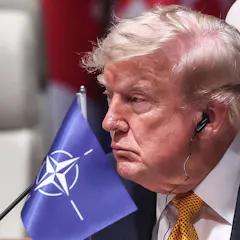
The US and Iran have once again traded strikes, prompting Donald Trump to declare the ceasefire between them ‘over’.
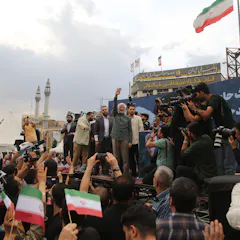
In Iran, the ‘hardliners’ are a politically powerful group who follow the strict principles of the 1979 revolution.
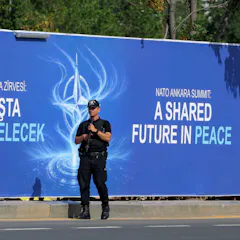
As ever, a lot will depend on the mood of the US president, Donald Trump.

The leaders of both countries have used significant events to claim victory over the other.
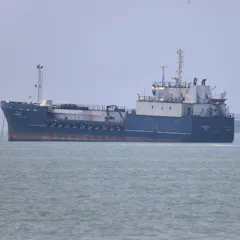
New strikes from the US and Iran continue to put the future of the crucial shipping channel in doubt, but a permanent toll is neither legal nor workable.
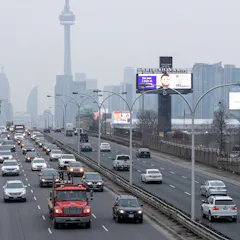
Resilient urban mobility can be created by giving people options that ensure they can still move around when a shock affects one form of transportation.
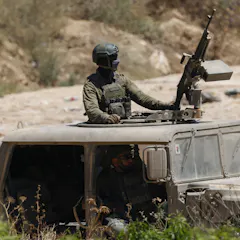
Israel has long sought to gain a military advantage by degrading its adversaries’ military capabilities outside of times of direct conflict.
Top contributors
-

Honorary Research Fellow, Department of International Politics, City St George's, University of London
-
Emeritus Professor of Middle Eastern Studies, Australian National University; The University of Western Australia; Victoria University
-
Professor in International Politics, City St George's, University of London
-
Associate Professor in International Relations, UNSW
-
Lecturer in History and International Studies, Leiden University
-
Professor of International Security, University of Birmingham
-
Adjunct Professor, Defence and Security Institute, The University of Western Australia; UNSW
-
Associate Professor in International Politics, UCL
-
Lecturer in Energy Systems, University of Oxford
-
Professorial Fellow, University of Canberra
-
Professor of International Relations, Lancaster University
-
Professor of the Practice of Political Science and International Relations, USC Dornsife College of Letters, Arts and Sciences
-
Lecturer, Department of War Studies, King's College London
-
Associate Professor, Defence Studies Department, King's College London
-
Fellow for the Middle East at the Baker Institute, Rice University