

Vaccines need to be kept cold to remain effective. A lack of power in remote areas makes this difficult, reducing the reach of the life-saving pharmaceuticals.
Articles on Supply chains
Displaying 321 - 340 of 360 articles

Malicious code or deliberate design faults can be inserted into everyday business products before they even leave the original manufacturer. Here’s how you can protect yourself.
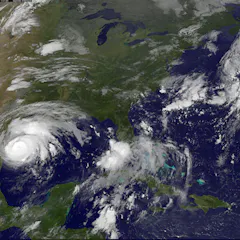
Large-scale emergencies can be a strain, even in one of the world’s richest countries. Population growth, income inequality and fragile supply chains may make the problem worse.

Supply chains are complex things. Big firms need to give them more attention.
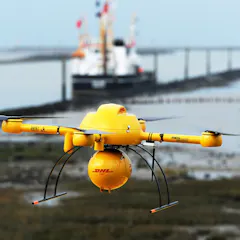
Supply-chain experts see reliable data, STEM education and smarter regulation as essential for Australia to succeed in an increasingly automated world under pressure to be environmentally sustainable.
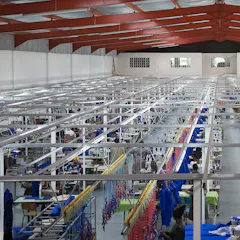
Businesses can play a major role in either facilitating modern slavery or eradicating it.

Electric cars might be a quick fix to clean up transport, but the problems with cars go beyond just emissions.
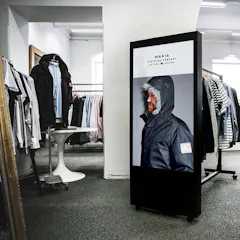
To survive the crisis, fashion companies are relying on new technologies. New players, new customer experience, big data – the whole sector is changing.

The US is once again experiencing a shortage of blood, a difficult commodity to ship because it is perishable and time-sensitive. Here’s how game theory could help solve the problem.

Flaws in manufacturing processes can cause chip flaws like Spectre and Meltdown – and blockchain technology may offer a solution.

Thanks to Hurricane Maria, some US hospitals are experiencing a saline shortage. In times of emergency, medical supply chains break down too easily.

Acquiring companies that don’t complement the main business went out of fashion more than a decade ago.
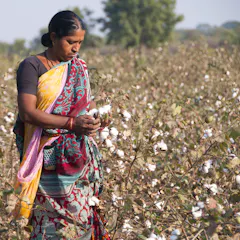
Adding 20 cents to the price of a T-shirt in Australia would be enough to lift all Indian workers in the garment supply chain out of poverty.
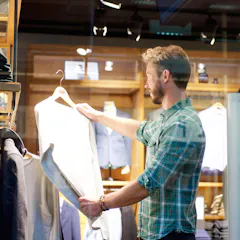
While the fashion industry may want to address worker exploitation in their supply chains, it would open them up to tremendous legal liability. This needs to change.

Apple’s latest iPhone sold out within minutes of its launch, but questions still remain about whether that pace of demand will continue and, if so, whether the company’s supply chain will be able to keep up.
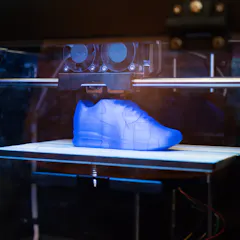
From the sounds of some brands’ marketing, you may be forgiven for believing that bespoke shoes are just a footstep away.

Is the 61% spike in the price of Brazil nuts this year because we’re going nuts for nuts?

Britain has fed itself before, can it do so again? It’s not easy to tell.
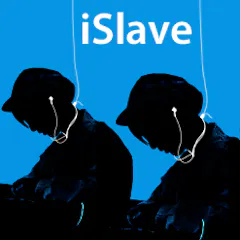
The first ten years of the iPhone has been a bloody decade of labour abuse, especially in Chinese factories such as those run by Foxconn, the world’s largest electronics manufacturer.

Wage theft and exploitation are rampant in certain industries. Certifying those that commit to fair work conditions could be key to fixing the problem.
Top contributors
-

Associate Dean, School of Business and Law, Edith Cowan University
-
Eugene M. Isenberg Chair in Integrative Studies, UMass Amherst
-
Professor of Health Service Operations, School of Pharmacy & Medical Sciences, University of Bradford
-
Deputy Director of the HUMLOG (Humanitarian Logistics and Supply Chain Management Research) Institute, Hanken School of Economics
-
Professor in Sustainable Production and Consumption, Anglia Ruskin University
-
Lecturer in Logistics, Technological University Dublin
-
Associate Professor in Operations and Supply Chain Management, UTS Business School, University of Technology Sydney
-
Assistant Professor of Operations Management, University of Manchester
-
Senior Lecturer in Operations and Supply Chain Management, Anglia Ruskin University
-
Professor of Logistics and Supply Chain Management, Heriot-Watt University
-
Associate Professor of Supply Chain & Analytics, University of Missouri-St. Louis
-
Associate Professor, University of Sydney Business School, University of Sydney
-
Distinguished Professor of Supply Chain Management, Northeastern University
-
Associate Professor, Supply Chain Analytics, University of Bradford
-
Professor of Accounting, University of Portsmouth