

South Africans should not panic about the food system. But authorities will need to act swiftly and assertively to restore stability.
Articles on Supply chains
Displaying 241 - 260 of 360 articles

Cybersecurity for pipelines and ports is too important to leave unregulated.
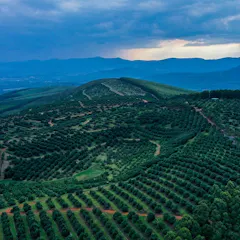
Government support for farmers, higher rainfall and grain imports have helped sub-Saharan Africa stave off food insecurity, but the region isn’t out of the woods yet.

Skyrocketing demand coupled with shortages of vital components is leading to bottlenecks in the supply chain of Pfizer’s and other mRNA vaccines.
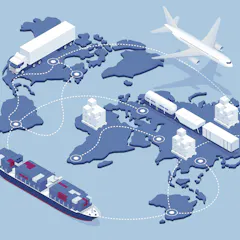
Supply chain finance is now in jeopardy.
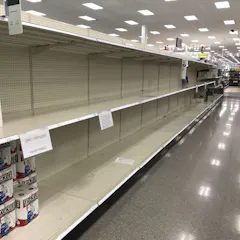
Modern supply chains have become very efficient, but that means disruptions of any kind can lead to delays and shortages.

Right now, the nation is almost entirely dependent on other countries for minerals that are used in everything from wind turbines to strike fighters and satellites.
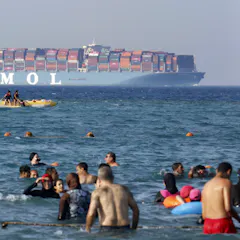
Before the container was standardized, loading and unloading goods was very labor-intensive, inefficient and costly.

Direct implications for maritime security are unlikely. But there will be ripple effects in the shipping industry and in many commercial sectors.
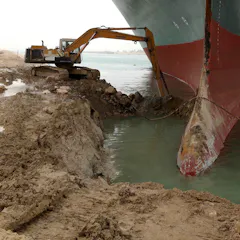
A bottleneck in the global shipping network will accelerate the move to more local production and shorter supply chains.
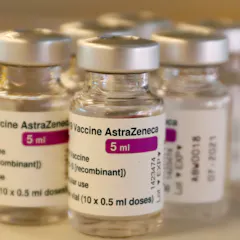
Exports of the vaccine continue to be a point of contention between the EU and UK, while newly released US trial results are quickly amended.
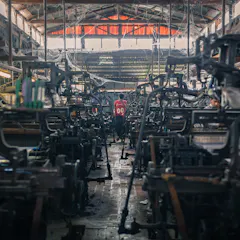
Pressure from business leaders and a simple legislative process leave few excuses for not introducing rules to combat modern slavery in commercial supply chains.

The high cost and long lead times for building computer chip factories makes it difficult for the U.S. to reverse the steady decline of its domestic semiconductor manufacturing capacity.

Hospitals have a lot of room to reduce, reuse and recycle supplies – as many were forced to discover during the pandemic.

The hard work of eliminating plastic waste must start with businesses.

Another local lockdown, another outbreak of shoppers stockpiling. Fortunately supply chains are now prepared.
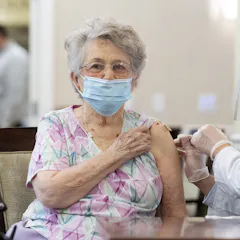
West Virginia’s success holds some important lessons for other states and the rest of the COVID-19 vaccine rollout.

With reports emerging of vaccine wastage across the world, medical supply chain experts explain why that’s to be expected.

Whether it’s health-care workers, kids in school or people running errands, Canadians need face masks during COVID-19. There’s no reason they shouldn’t be made here at home.
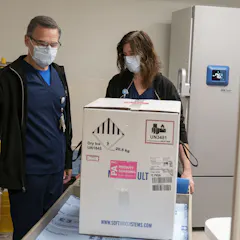
The vaccines’ cold storage requirements and shipment rules put small, rural communities at a disadvantage, but that’s only part of a long-running challenge.
Top contributors
-

Associate Dean, School of Business and Law, Edith Cowan University
-
Eugene M. Isenberg Chair in Integrative Studies, UMass Amherst
-
Professor of Health Service Operations, School of Pharmacy & Medical Sciences, University of Bradford
-
Deputy Director of the HUMLOG (Humanitarian Logistics and Supply Chain Management Research) Institute, Hanken School of Economics
-
Professor in Sustainable Production and Consumption, Anglia Ruskin University
-
Lecturer in Logistics, Technological University Dublin
-
Associate Professor in Operations and Supply Chain Management, UTS Business School, University of Technology Sydney
-
Assistant Professor of Operations Management, University of Manchester
-
Senior Lecturer in Operations and Supply Chain Management, Anglia Ruskin University
-
Professor of Logistics and Supply Chain Management, Heriot-Watt University
-
Associate Professor of Supply Chain & Analytics, University of Missouri-St. Louis
-
Associate Professor, University of Sydney Business School, University of Sydney
-
Distinguished Professor of Supply Chain Management, Northeastern University
-
Associate Professor, Supply Chain Analytics, University of Bradford
-
Professor of Accounting, University of Portsmouth