
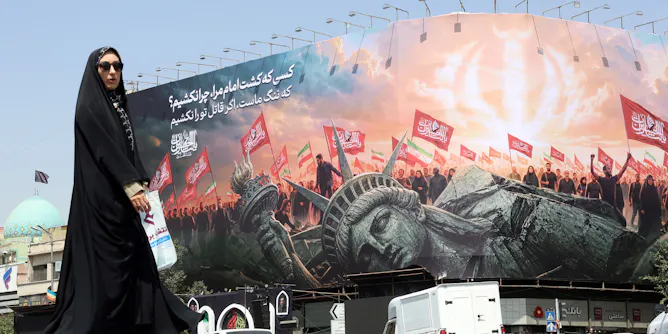
Neither side can stomach a strategic defeat. Nor can they find a way to an exit ramp.
Articles on Strait of Hormuz
Displaying 21 - 40 of 170 articles
Idle vessels accumulate biofouling quickly, especially in tropical waters. But there are precautions other ports can take against alien pests, parasites or disease.
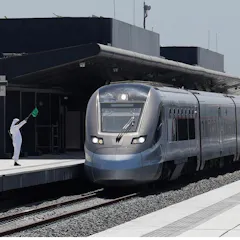
Once completed, the 2,177-kilometer GCC Railway will connect six Gulf kingdoms and provide alternative routes to Europe and Asia.
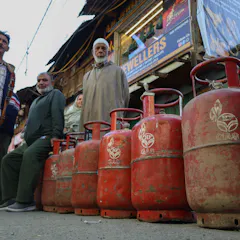
Cooking gas and diesel fuel are among the oil products whose supply levels have been affected already. Here’s why to expect long-term shortages.
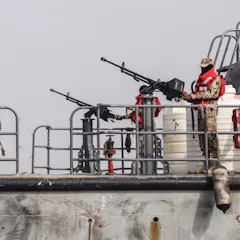
The ongoing war in Iran has created an expanding zone of risk for shipping, including for Saudi Arabia’s strategy of redirecting oil exports away from Hormuz.

The US president has maed several statements suggesting that he is not happy with the Israeli prime minister.

Long before synthetic fertilizers, the global guano trade reshaped farming, fueled American expansion and exposed the hidden human costs of feeding the modern world.

Each year, about 10–12% of global shipping trade passes through the Bab el-Mandeb Strait – whose name means ‘Gate of Tears’.
There is no end in sight to the conflict between the US and Iran.
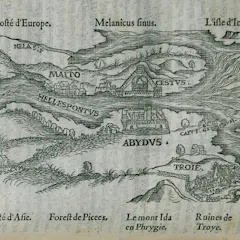
Control of the Dardanelles and the Bosphorus strait was life and death for ancient Athens. Waterways are no less important – and contentious – today.
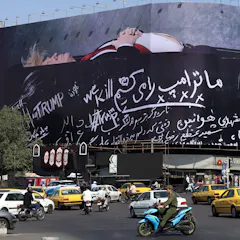
The reality is there is no military pathway to opening the Strait of Hormuz. Trump may attempt to find one anyway.
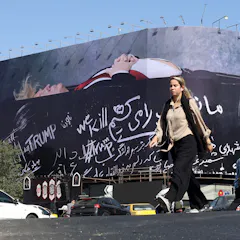
Trump has backed himself into a corner from which there is no apparent escape.
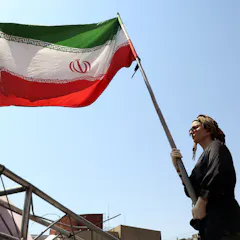
Trump has declared the US the ‘guardian’ of the Strait of Hormuz, but his strikes are feeding the very behaviour they aim to deter.
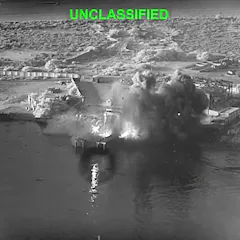
Both sides are at an impasse over control of the Strait of Hormuz, with no end in sight.
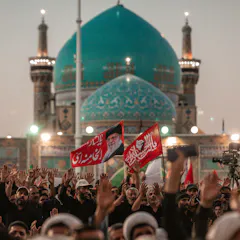
A MIddle East expert addresses some of the key questions about the renewed conflict.
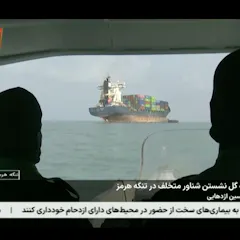
Realists in the Islamic Republic know that sanctions relief and access to global markets are what Iran needs now.
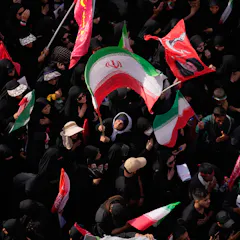
New tit-for-tat airstrikes between the US and Iran over control of the Strait of Hormuz suggest the ceasefire will not turn into a permanent peace.

With the declining power of financial sanctions, many countries are now physically boarding ships to enforce scattershot rules of trade, conflict and commerce.
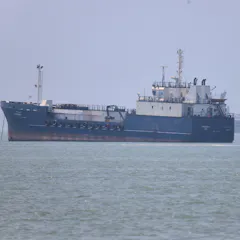
New strikes from the US and Iran continue to put the future of the crucial shipping channel in doubt, but a permanent toll is neither legal nor workable.

Iran’s control of the Strait of Hormuz and Israel’s right to defend itself against Hezbollah’s rocket attacks have boxed the US president into a corner.
Top contributors
-

Professor in International Politics, City St George's, University of London
-
Honorary Research Fellow, Department of International Politics, City St George's, University of London
-
Lecturer in Energy Systems, University of Oxford
-
Adjunct Professor, Defence and Security Institute, The University of Western Australia; UNSW
-
Professorial Fellow, University of Canberra
-
Associate Professor in International Politics, UCL
-
Fellow for the Middle East at the Baker Institute, Rice University
-
Executive Co-Director, Institute for Water, Environment and Health (UNU-INWEH), United Nations University; Technical University of Hamburg
-
Associate Professor in International Relations, UNSW
-
Assistant Professor of International Relations, American University
-
Professor in Global Thought and Comparative Philosophies, Inaugural Co-Director of Centre for AI Futures, SOAS, University of London
-
Assistant Professor in Circular Supply Chains, University of Bradford
-
Lecturer in Sustainable Freight Transport and Logistics, University of Leeds
-
Associate Professor in Operations and Supply Chain Management, UTS Business School, University of Technology Sydney
-
Lecturer, Department of War Studies, King's College London