

Environmental assessment methods involve trade-offs. Lean towards efficiency and risk missing crucial impacts. Wade too deep into fact finding and assessments become unfeasible.
Articles on Renewable energy
Displaying 201 - 220 of 1566 articles
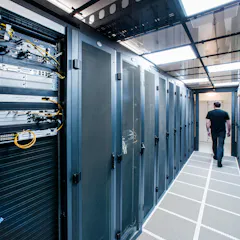
AI is disturbing the push to electrify vehicles, heating and other sectors running on fossil fuels.

The Energy Department has a dual mission with a heavy science focus and manages large, expensive programs, many of which are behind schedule and over budget.

The Interior Department manages about one-fifth of all US land. Its secretary mediates among many competing uses for it, from recreation to energy production.
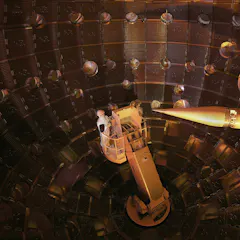
Even once researchers can reliably get more power out of a fusion reaction than they put in, they’ll still need to overcome engineering challenges to scale up fusion energy.

Flow batteries can feed energy back to the grid for up to 12 hours – much longer than lithium-ion batteries, which only last four to six hours.

Increasing temperatures puts a strain on electricity supplies, while bushfire smoke can limit the electricity produced by solar panels. So, what can we do about it?
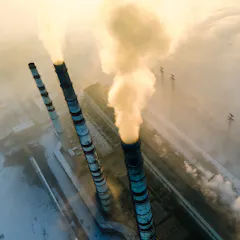
Nuclear is far from a reality in Australia. In the interim, Dutton’s plan would prop up coal and gas
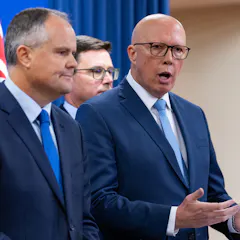
A successful transition to clean energy is vital to Australia’s prosperity. But the Coalition’s latest nuclear salvo leaves many unanswered questions.

Even small actions, such as choosing the right rooftop solar set-up or changing when we use energy, can make a big difference.

Utilities have options for addressing surging power demand from AI data centers, but there’s no silver bullet.
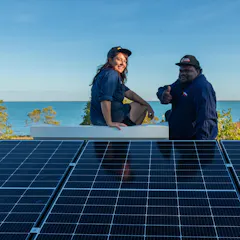
A new federal government strategy outlines how to elevate the rights of Indigenous Australians
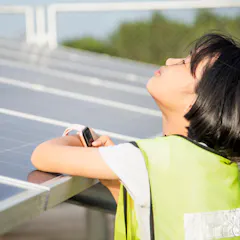
Getting this right is important. It could secure jobs, lower bills, shore up industries, and help Australia unlock its full potential.

The annual UN climate conference ended with a weaker deal than many countries hoped for, and with calls to overhaul the climate talks for the future.

Most Americans actually agree on key issues, including reproductive rights, firearms laws and climate change.

COP29 shows how the climate fight depends on an interconnected ecosystem of governments and corporations.

Your electric water heater uses a lot of electricity overnight. Shifting it to soak up solar could be a win-win.

An agreement between an indigenous community and an energy company secured the development of a power plant in exchange for community benefits. But the deal does not meet energy justice principles.

Sub-Saharan Africa is lagging behind in the transition to electric cars and motorbikes. Investment in local manufacturing, renewable energy and storage systems to supply charging stations is needed.
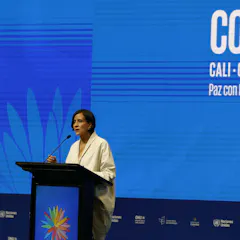
While governments at COP16 make glacial progress on protecting nature, what billions of people choose to do individually can add up to make a big difference.
Top contributors
-

Professor of Engineering, Australian National University
-
Professorial Fellow, University of Canberra
-
Senior Research Associate, Renewable Energy & Energy Systems Analyst, UNSW
-
Senior Fellow in Energy and Climate Change, Grattan Institute
-
Professor, Crawford School of Public Policy and Director, Centre for Climate and Energy Policy, Australian National University
-
Professor Emeritus, Macquarie Business School, Macquarie University
-
Professor of Physics, University of Johannesburg
-
Senior Industry Fellow, Environment and Planning, RMIT University
-
Honorary Associate Professor, UNSW
-
Associate Professor, Renewable Energy, Monash University
-
Professor, School of Economics, The University of Queensland
-
Professor and Director, Victoria Energy Policy Centre, Victoria University
-
Honorary Associate Professor, Centre for Climate Economics and Policy, Australian National University
-
Research Principal, Institute for Sustainable Futures, University of Technology Sydney
-
Associate Professor of Economics, Griffith University