
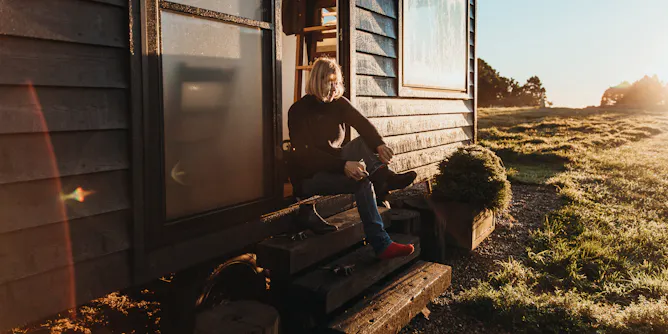
Going off-grid is increasingly appealing for rural residents in conventional homes – and tiny homes on wheels. It’s not just about the power bill.
Articles on Solar power
Displaying 1 - 20 of 390 articles
Democrats will have a stronger hand to play in negotiations with the White House, but policy choices have to consider America’s greatest concerns, including affordability.
Dunkelflaute, the German word for ‘dark doldrums’, can leave renewable energy systems struggling to meet demand.
I have followed the talks for years as a policy expert and former climate envoy for Germany, and I’m seeing growing concern about the rising costs and harm from fossil fuels.

How the ‘super’ El Niño could trigger a polycrisis: interconnected failures that neither the energy system nor the health-care system can prepare for alone.
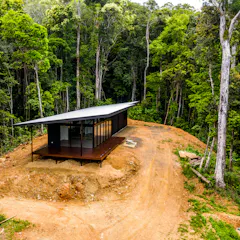
People who have extra funds, suitable homes and a desire to be self-sufficient may consider disconnecting from the grid.

South Africa’s new electricity pricing policy reflects some changes but fails to guarantee more free power for millions who need it.
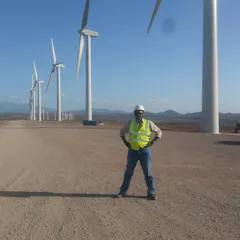
In South Africa and Kenya, some green energy projects have deprived local communities of land and livelihoods instead of sharing the benefits.
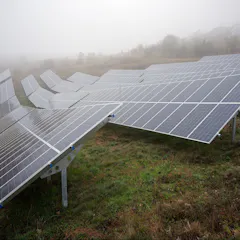
Solar energy is associated with intermittency issues, as it only generates electricity when the sun shines. Certain PV systems can provide cost-effective power reserves for storing electricity.

Solar farms can bring jobs, but the story of one South African community shows that rural residents who give up their land need more say in how benefits are shared.

Gender-based violence responses must include energy access as a structural intervention, not an add-on.

South Africa is struggling to move to renewable energy because of: Eskom’s dominance, weak planning, a poor grid, failing municipal networks and unused solar.
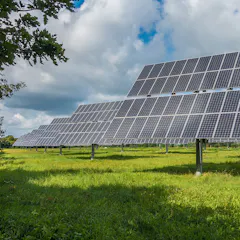
Africa is rapidly expanding electricity generation, but new research shows energy planning must also account for water scarcity and carbon dioxide emissions.
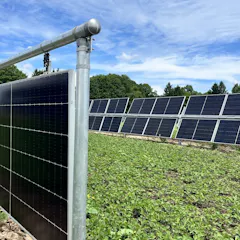
In Canada, agrivoltaics could produce enough electricity to eliminate the need for fossil fuels on the grid entirely, using less than one per cent of the country’s agriculture land.
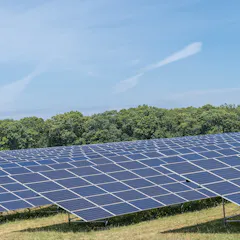
Generating solar power requires a lot of land – but which land should it be? And what else can be done on that land?
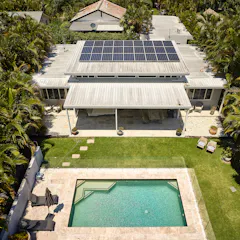
Three hours of free power isn’t a giveaway – it’s meant to help the grid use floods of cheap solar. To succeed, the new scheme has to be fair.
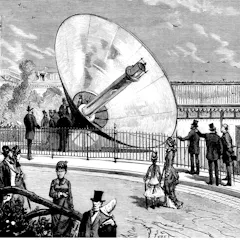
William Adams was convinced that solar energy could change the world. The problem was, he needed more sun to demonstrate it.
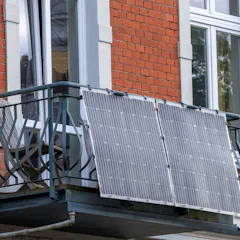
Small-scale solar panels usable by renters and without rooftop installation can boost renewable energy use and reduce the effects of high electricity prices.

Solar energy can cut costs and pollution for South African households, but fear of theft holds people back. Shared mini-grids offer a safer, affordable alternative.
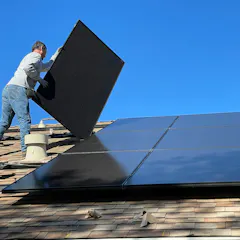
Council staff said human resources and time are essential, with one noting: ‘We have to go through a fair amount of information to explain how solar works.’
Top contributors
-

Professor of Engineering, Australian National University
-
Professor Emeritus, Macquarie Business School, Macquarie University
-
Senior Research Associate, Renewable Energy & Energy Systems Analyst, UNSW
-
Honorary Associate Professor, UNSW
-
Professor of Physics, University of Johannesburg
-
University of Southern Queensland
-
John M. Thompson Chair in Information Technology and Innovation and Professor, Western University
-
Senior Industry Fellow, Environment and Planning, RMIT University
-
Professor of Sustainability, Curtin University
-
Emeritus professor, Australian National University
-
Lecturer in Energy Storage Systems Dynamics, Lancaster University
-
Research Fellow, Stephenson Institute for Renewable Energy, University of Liverpool
-
Professor in International Relations / International Political Economy, UNSW
-
Research Scientist, The University of Texas at Austin
-
Associate Professor, Renewable Energy, Monash University