
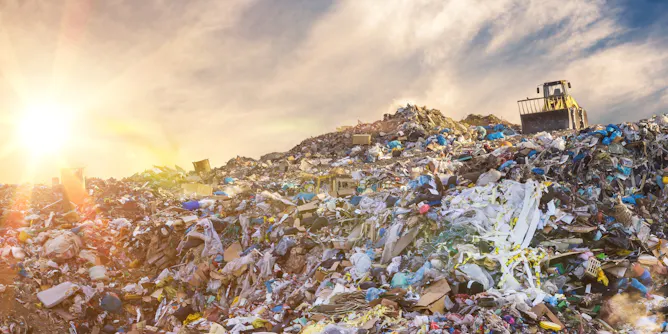
Old landfills could be, quite literally, untapped gold mines.
Articles on Recycling
Displaying 301 - 320 of 416 articles

Incineration of household waste has gotten a bad name, argues an economist, who sees today’s recycling crisis as an opportunity to reconsider how the U.S. handles its waste.
To reduce the impact of its activity on the environment, a company must take into account not only the effects generated by its production, but also the end of life of its products.
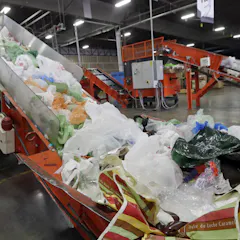
Since China stopped importing ‘foreign garbage’ in March 2018, scrap – especially plastic – has built up in the US. Will this shock trigger long-overdue investments in plastic recycling here?
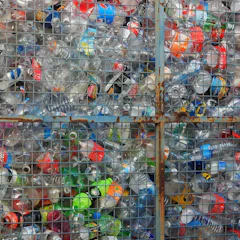
Research is yielding strategies for making plastics greener and more sustainable. But without support as they scale up, new versions will struggle to compete with well-established synthetic plastics.
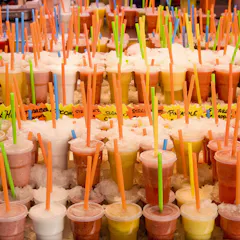
In 2015, over 320 million tons of polymers, excluding fibers, were manufactured across the globe.
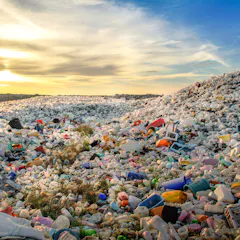
Every day we throw away plastic and every day we’re reminded of its environmental impact. Why can’t something be done about it?
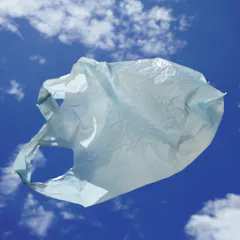
New types of biodegradable or compostable plastic products seem to offer an alternative to conventional plastics. But they may be no better for the environment.
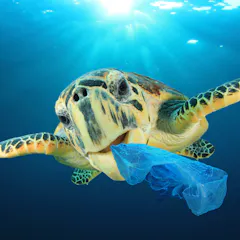
Plastic bags are commonly mistaken for food by sea animals. They require a lot of energy and resources to be made, and have caused floods in some countries.
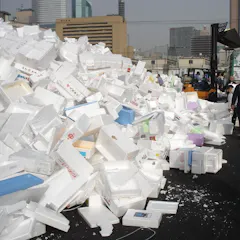
You might know expanded polystyrene as packing foam, but it’s a nightmare to recycle. Why not just turn it into something useful (or beautiful) instead?

Stop me if you’ve heard this one before, but plastic straws are ruining the ocean.

The residents of Freetown Christiania have lived by degrowth values for decades.

Waste byproducts from rice and glass combined with fungus can create a construction material with the potential to save lives and the planet.

Illegal dumping is costing governments millions – but satellite technology could help put a stop to it.
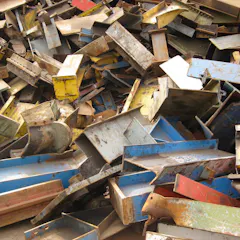
If the US were to stop dumping these valuable metals in landfills and to cease exporting them as cheap scrap, its imports could fall, and there would be less of these metals being made from scratch.

In Asia, human hair is sold and recycled into products, but in the West it is treated with either disgust or veneration. A new exhibition explores our bizarre attitudes to hair.
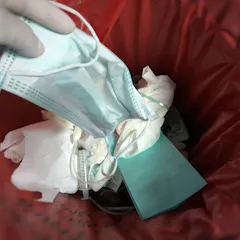
Health care produces 7% of Australia’s carbon emissions. And hospitals produce about half of this. Not to mention all the single-use items thrown away every day.
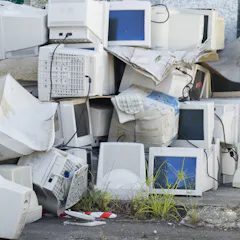
No amount of post-consumer recycling can recoup the waste generated before consumers purchase their devices.
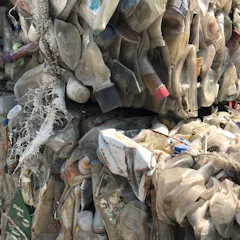
Plastic can only be recycled a few times before it becomes useless. But even non-recyclable plastic can be used to help produce petrol and diesel. Could this process help overcome the recycling crisis?
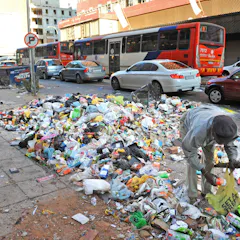
Littering in protest is indicative of a discordant society, and a culture of littering can tell us a lot about a society’s ethos.
Top contributors
-

Senior Research Fellow, BehaviourWorks Australia, Monash University
-
Lecturer, School of Life and Environmental Sciences, Deakin University
-
Associate Professor and Research Director, Institute for Sustainable Futures, University of Technology Sydney
-
Professor of Applied Environmental Science, University of Southampton
-
Professor of Global Environmental Politics, University of California, Berkeley
-
Research Principal, Institute for Sustainable Futures, University of Technology Sydney
-
Chair professor - Circular Economy, The University of Melbourne
-
Research Chair, Indigenous Approaches to Environmental Management, Keele University
-
Associate Professor at School of Property, Construction and Project Management, RMIT University
-
Associate Dean and Head of Project Management, RMIT University
-
Professor of Sustainable Development, Keele University
-
Research Director, Institute for Sustainable Futures, University of Technology Sydney
-
Research associate, Loughborough University
-
PhD Candidate in Environmental Science, Policy, and Management, University of California, Berkeley
-
Birkbeck, University of London