
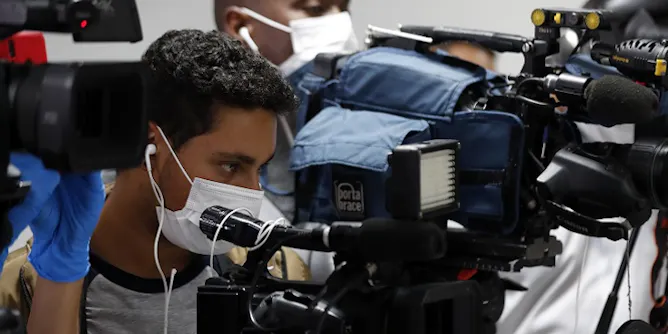
While Pacific communities need robust public health reporting, local media face harassment and arrest while covering the crisis.
Articles on Press freedom
Displaying 101 - 120 of 222 articles
The BBC’s audiences have grown as it provides high quality news an information about the pandemic. But is it doing enough to hold the government to account?
New laws in Albania show one approach to dealing with disinformation – and highlight some pitfalls of selective regulation.
In dismissing the case, Justice Wendy Abraham drew attention to a huge gap in the protection of journalists’ sources under ‘shield laws’, which don’t apply to most search warrants.
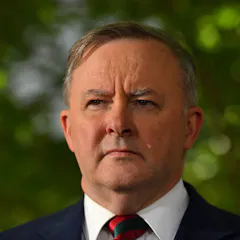
In this third “vision statement”, the Labor leader has condemned online platforms for being unwilling to filter out false information.
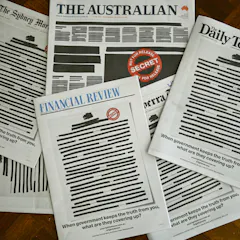
Our national security laws are uniquely broad and complex – and media freedom too often becomes entangled in them. It’s time to enshrine this freedom as a central part of our democracy.
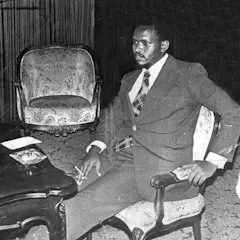
Black consciousness in South Africa changed blacks and whites.
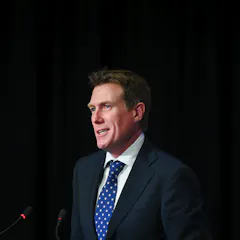
As the battle over press freedom continues, the Attorney-General has ordered that any prosecution of a journalist for offences related to national security must have his approval.
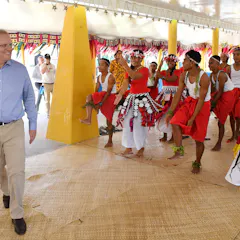
Michelle Grattan reviews another busy week in federal politics, and take a look at the prime minister’s major speech on Monday on the public service.
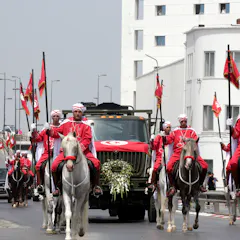
In death, President Mohamed Beji Caid Essebsi has left behind an unfinished revolution which now needs a new leader.
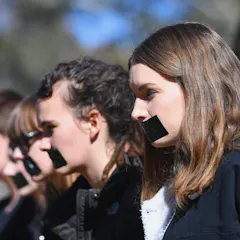
We have a serious deficit in legal protection for human rights in Australia, rights that have been in regression for 20 years. We need a legislated charter setting out the rights we care about.
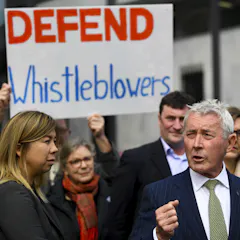
Australian laws make it inevitable for whistleblowers to be charged whenever national security might be involved, even when the information is in the public interest.
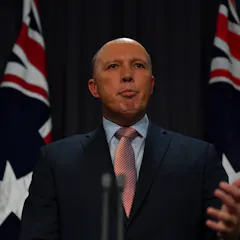
While the ministerial direction represents a genuflection in the direction of press freedom, it provides nothing by way of protection for whistleblowers.
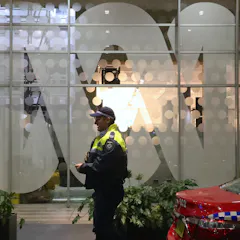
Despite media companies’ revenue declining in recent years, a nine-year study reveals that the greatly feared death of investigative journalism has not occurred.
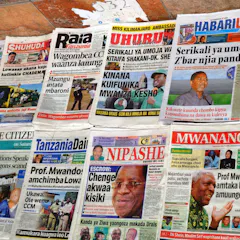
In a surprising change in trends, citizens in many African countries increasingly support government restrictions of press freedom.
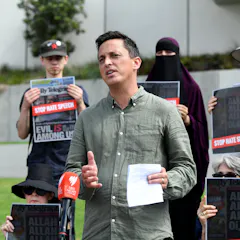
Paul Oosting responds to GetUp’s critics
The Conversation, CC BY29.1 MB (download)
GetUp's national director Paul Oosting joins Michelle Grattan to respond to critics who accuse the organisation of "creating an environment...[of] abuse, harassment, intimidation".
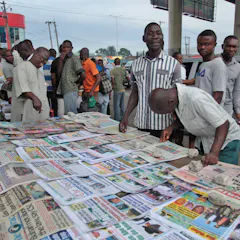
Western aid has resulted in an Anglo-American culture of journalism education which has proved impractical to implement in African countries with illiberal political regimes.
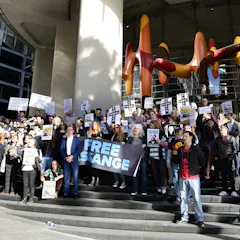
A parliamentary inquiry into press freedom is merely a public relations exercise designed to buy time until the public anger over last month’s police raids dies down.

Labor is proposing establishing a new parliamentary committee to look into press freedom; one that will deal with whistle blowers and have crossbench representation.
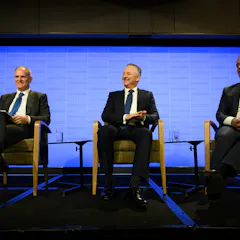
The heads of News Corp, Nine and ABC talked tough on the need for stronger legal protections for journalists. But unity is meaningless unless it brings meaningful action from the government.
Top contributors
-

Professorial Fellow, University of Canberra
-
Professor of Journalism and Communications, Macquarie University
-
Senior Research Fellow, Centre for Advancing Journalism, The University of Melbourne
-
Full Professor in Journalism, Dublin City University
-
Reader in International Journalism, City St George's, University of London
-
Professor, TC Beirne School of Law, The University of Queensland
-
Professor in Media and Communication, Goldsmiths, University of London
-
Associate Professor in International Relations & Academic Director of the Royal Air Force College Cranwell, University of Portsmouth
-
Caxton Professor of Journalism, University of the Witwatersrand
-
Emeritus Professor of Journalism, Cardiff University
-
Senior Lecturer, School of Arts and Social Sciences, Department of Journalism, City St George's, University of London
-
Professor and Lee Hills Chair of Free Press Studies, University of Missouri-Columbia
-
Professor of Communications, University of Westminster
-
Director of Undergraduate Studies, School of Journalism, Media and Cultural Studies, Cardiff University
-
Professor of Media Industries, University of Nottingham