

The campaign so far has been rough for Labor. One Nation is also having a bumpy ride.
Articles on Democracy
Displaying 1 - 20 of 1731 articles
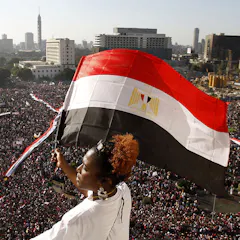
The effects of mass mobilisation have changed dramatically over time.
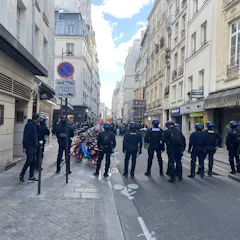
Two researchers explore the parallels between how the police handle mass protest rallies and maintain public order in France and its overseas territories during periods of heightened civil unrest.
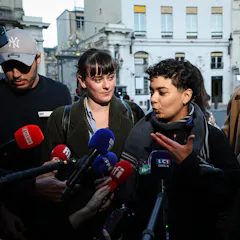
As student protest action spreads across France, controversy over media pluralism exposes deeper inequalities in who gets to speak for the youth-led movement and how it is portrayed.
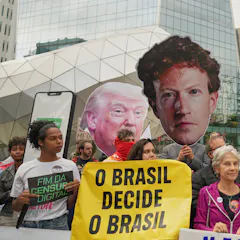
The company’s actions show that, above users’ rights, public interest, and democracy itself, prevails its economic interests and the maximization of their profits
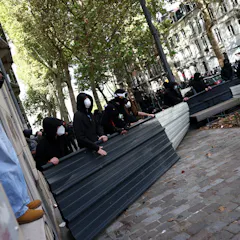
Masks that were a thing of the not so distant pandemic past are making a comeback on the streets. They now serve a dual purpose: protecting protesters from tear gas and covering up their faces.
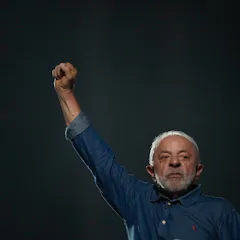
First round result was a warning against complacency, but the runoof comeback does not resolve the structural tensions facing a fourth Lula administration.
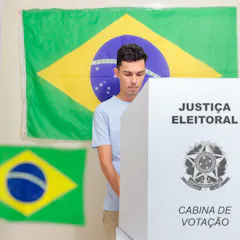
Brazil has just made civic education compulsory in schools. Whether it takes hold will depend less on the law than on what happens in the classroom.
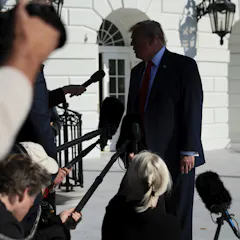
Presidential power has limits. But these midterms could test safeguards on the integrity of US elections like never before.

Younger Americans’ pop culture favorites have multipartisan appeal, but male creators dominate the list of top influencers, podcasters and comedians.
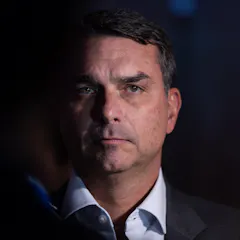
The shock and fear of the victory of far right candidate Flávio Bolsonaro in the first round brought about a change in attitudes and a spontaneous mobilization in the street and social media.
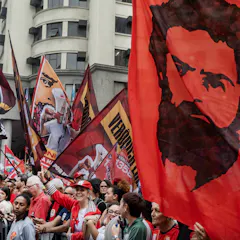
President Lula’s spectacular reelection sends a clear warning to the global far right after seven conservative presidential wins in Latin America in 18 months.

A crucial US Senate election in Alaska is the latest target among many Trump administration efforts this year to assert unconstitutional control over federal election administration by states.
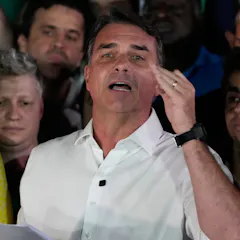
Flávio Bolsonaro is no mere conservative, but a representative of the radical right and a member of an international movement that critics say threatens democracies around the world.
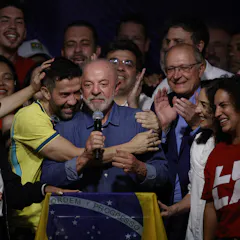
The real antidote to polarisation will not come from a single election or a single leader.

Iván Cepeda’s defeat in Colombia served as a wake-up call for the left in Brazil. The campaign shifted its focus from rhetoric about sovereignty to issues that directly affect people’s daily lives, pushing foreign policy into the background
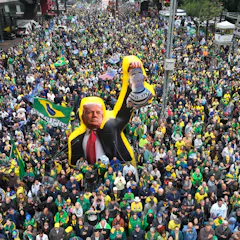
A victory for Flávio Bolsonaro could keep Brazil trapped in a model of extractivism that has been part of the country’s history since the arrival of the Portuguese settlers in the 16th century.
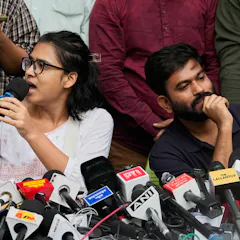
The protests challenge the government’s view of who “the people” are, what democracy means, and who speaks for youth, women and the politically marginalized.
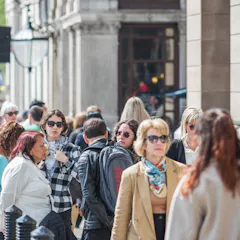
Cities can provide a place for citizens to assert their democratic values.
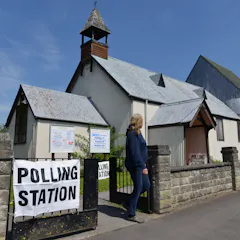
Some systems leave voters feeling more positive about their choices than others.
Top contributors
-

Senior Lecturer in Democracy Studies, University of Canberra
-
Professor of Politics, University of Sydney
-
Professor of Democracy, University of Birmingham
-
Professorial Fellow, University of Canberra
-
Assistant researcher, University of Sydney
-
Adjunct professor, Charles Sturt University
-
Senior Research Fellow, Centre for Advancing Journalism, The University of Melbourne
-
Senior Visiting Scholar with the Center for the Study of Genocide and Human Rights, Rutgers University
-
Professor of Communication Studies, Colorado State University
-
Professor of World Politics, SOAS, University of London
-
Professor of Politics and Public Policy, University of East Anglia
-
Associate Researcher, Arnold Bergstraesser Institute
-
Nonresident Research Fellow, Rice University
-
Honorary Professor of International Relations, University of the Witwatersrand
-
Professor, Department of Communication Arts, University of Waterloo