
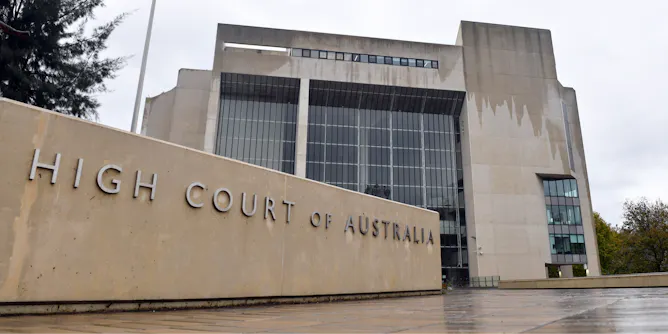
The High Court’s landmark decision will dictate when secretly recorded footage can be published, including by journalists, advocates and whistleblowers.
Articles on Press freedom
Displaying 1 - 20 of 222 articles
The women mentioned the effect of his media presence in their victim impact statements.
As student protest action spreads across France, controversy over media pluralism exposes deeper inequalities in who gets to speak for the youth-led movement and how it is portrayed.
The far-right activist could face prison for harassing two Daily Mail journalists.
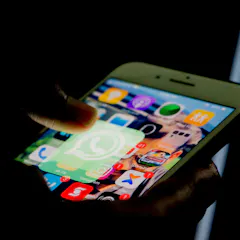
Many fact-checkers are moving away from declaring claims as true or false, and trying to help people judge information for themselves.
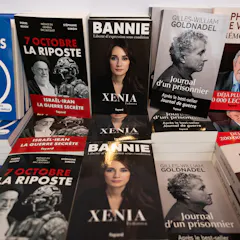
The Fedorova case is emblematic of a rhetorical method used by Russian propaganda: appealing to the targeted public’s critical thinking to convince them to disregard sources seen as “official” and “dominant.”

Whether the public rallies to defend journalists can depend on whether audiences believe they deserve that support.

A judge has sided with the three news organizations President Donald Trump barred from the White House – for now.

When President Trump barred three news organizations from the White House, a lawsuit followed. In it, the news outlets invoked their Fifth and First amendments rights.

The Trump administration claims to defend free speech, but is quick to attack any critical journalists or media outlets.

The ruling is a catastrophic result for all plaintiffs involved.
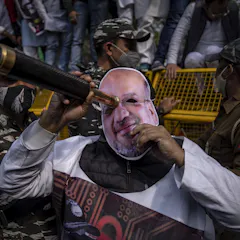
Democracies can either defend rights in the digital age, or drift into complicity as the architects of a new, global authoritarianism enabled by AI.

The EU’s Media Pluralism Monitor research project assesses the health of national media ecosystems but what about the bigger picture beyond compliance and the risks to Europe’s information space as a whole?

When activists film animal cruelty illegally, who owns the footage? And who gets to see it? A case in the High Court of Australia will answer these questions.
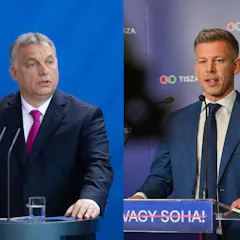
Even controlling 80% of the media wasn’t enough in the face of a well-organised opposition.
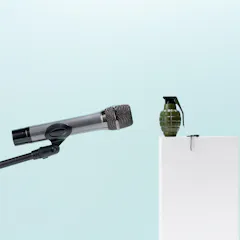
Americans have been able to know what troops at war are facing, and make informed decisions about the war’s cost, because a free press has been able to tell the story − good or bad. Can it still?
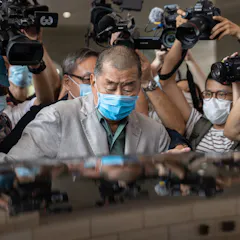
Journalists are self-censoring and negotiating shifting ‘red lines’ to avoid falling foul of the territory’s draconian national security law.

Trump’s second term has seen an intensifying of attacks on media freedom.

A vast amount of information has not necessarily meant more reliable information.
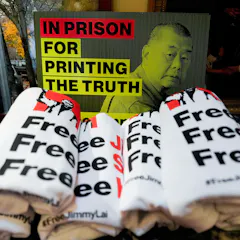
In the years since the 2020 introduction Hong Kong’s National Security Law, press freedom has slowly been limited. Lai’s conviction symbolises its end.
Top contributors
-

Professorial Fellow, University of Canberra
-
Professor of Journalism and Communications, Macquarie University
-
Senior Research Fellow, Centre for Advancing Journalism, The University of Melbourne
-
Full Professor in Journalism, Dublin City University
-
Reader in International Journalism, City St George's, University of London
-
Professor, TC Beirne School of Law, The University of Queensland
-
Professor in Media and Communication, Goldsmiths, University of London
-
Associate Professor in International Relations & Academic Director of the Royal Air Force College Cranwell, University of Portsmouth
-
Caxton Professor of Journalism, University of the Witwatersrand
-
Emeritus Professor of Journalism, Cardiff University
-
Senior Lecturer, School of Arts and Social Sciences, Department of Journalism, City St George's, University of London
-
Professor and Lee Hills Chair of Free Press Studies, University of Missouri-Columbia
-
Professor of Communications, University of Westminster
-
Director of Undergraduate Studies, School of Journalism, Media and Cultural Studies, Cardiff University
-
Professor of Media Industries, University of Nottingham