
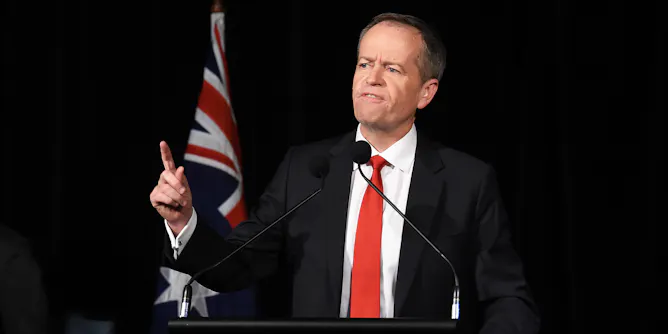
There is nothing in the Constitution to deal with the situation in which neither side can form a majority government.
Articles on Political history
Displaying 141 - 160 of 255 articles
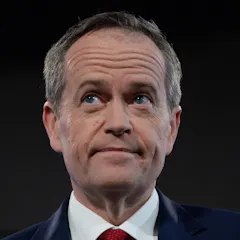
After the tumult of the Rudd-Gillard years, Bill Shorten has steered his party back to traditional Labor policy ground and made it an unlikely serious contender in this election.
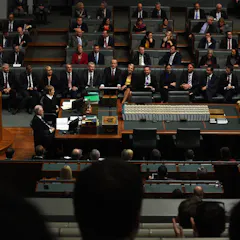
The ‘party discipline’ that has its roots in the Labor Party’s precursor of the 1890s has stifled real political debate, making even the smartest politicians sound like hacks and act like sheep.
James Scullin’s prime ministership was ultimately cut short because, in the face of a great economic crisis, he did not appear to have a coherent plan.

The Institute of Public Affairs was founded by rich men with rich men’s interests at its core, albeit with obligatory nods to the national interest.
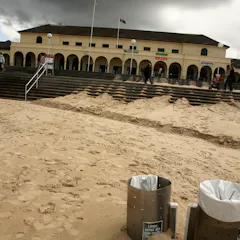
The story of the Builders Labourers Federation campaigns that saved historic locations and green spaces in the 1970s still speaks to contemporary Australians’ concerns about urban development.
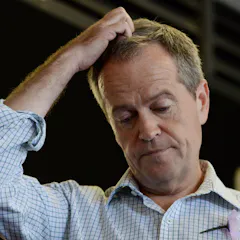
History suggests Labor should be more concerned than it currently appears to be about the effects of its populist rhetoric in mobilising opposition from business.
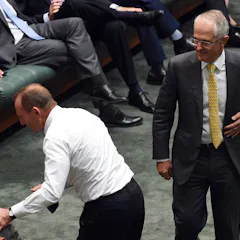
The decline in Malcolm Turnbull’s popularity and the increasingly explicit critiques of his leadership have raised the question of whether the Liberal Party has a unifying ideology.
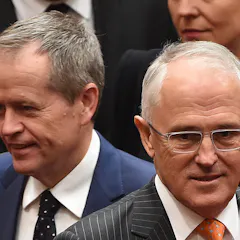
The recent history of elections in Australia is a varied one, with some spectacular crashes and own goals along the way.

Ken Livingstone may be at the centre of the latest argument, but Labour is divided by a rift that dates back much further.

Ballooning borrowing to invest in the housing market is impeding investment in the real economy, holding back investment in skills and jobs, and driving up inequality.

As a political speaker, either you pick your key phrases or they get picked for you.
It is unusual to invoke the caretaker conventions so far out from an election. So why is Labor clamouring for them to kick in?
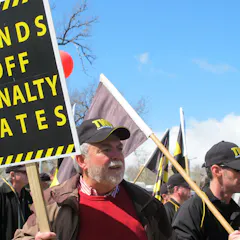
While trade unions still exert some influence on the ALP, it is nowhere near as much as it once was.

Commitment to a stronger, ongoing and more bipartisan federal reform process is one of the true tests of modern political leadership.

There have been policy issues in recent Australian history considered too important for playing party politics. Sadly, those days are long gone.
The damaging polarisation around queer issues in Australian politics is out of step with community sentiment.
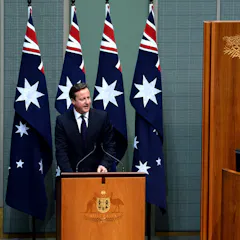
Despite its distance from Europe, Euroscepticism can be observed in Australia. What would a ‘Brexit’ from the EU mean for Australia?
If the word “reform” implies genuine public benefit, then real reform has been in short supply for all of the 106 years of electronic media regulation in Australia.

The US’s seventh president was a populist the establishment tried to lock out of the White House. Sound familiar?
Top contributors
-

Professor of History and Politics, School of Humanities and Social Inquiry, University of Wollongong
-
Senior Lecturer, School of Humanities and Social Sciences, Deakin University
-
Director, Vice-Chancellor's Centre of Public Ideas (CoPI) and Donald Horne Professor of History and Public Ideas, University of Canberra
-
Emerita Professor of Politics, Adelaide University
-
Professorial Fellow, University of Canberra
-
Associate Professor of Political Science, Erie Campus, Penn State
-
Emeritus Professor of Politics, La Trobe University
-
Senior Lecturer, School of Political and Social Inquiry, Monash University
-
Honorary lecturer, School of Social Sciences, UNSW
-
Emeritus Professor of Politics, Monash University
-
Dennis Altman is a Friend of The Conversation.
Vice Chancellor's Fellow and Professorial Fellow, Institute for Human Security and Social Change, La Trobe University
-
ANU Law, Australian National University
-
Senior Lecturer in Law, Charles Sturt University
-
Emeritus Professor, Department of Government and International Relations, University of Sydney
-
Research Manager and Doctoral Candidate, Centre for the Study of Australian Politics, Australian National University