
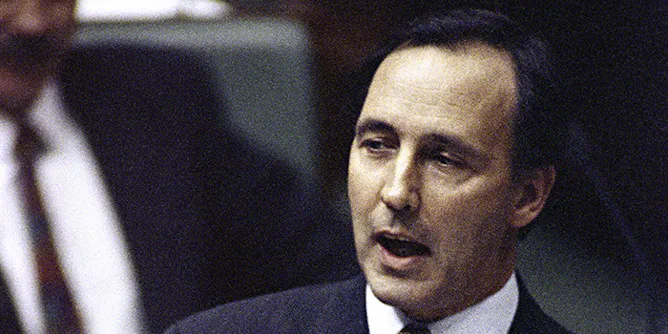
Labor’s project of economic transformation hit some harder realities as Paul Keating assumed the top job. And a new push on remaking Australia stirred a brooding reaction of its own.
Articles on Political history
Displaying 121 - 140 of 255 articles
For Australians to vote in favour of a republic, it may require something more than just crossing out ‘governor-general’ in the Constitution and writing in ‘president’.
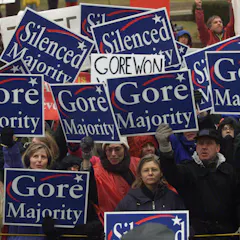
With two of the past five presidential election winners losing the popular vote, it’s hard to justify the continuation of the Electoral College.
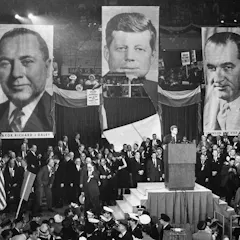
While it’s unprecedented to call an election ‘rigged’ before voting has even taken place, there is a history of candidates crying foul after suspicious results.

In a globalised world, the credibility of the birthright lottery as grounds for excluding people from protection may be diminishing.
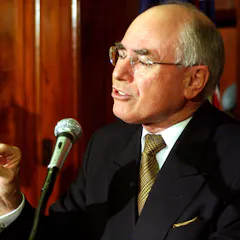
How do the media management strategies devised in haste 15 years ago affect how asylum seekers are portrayed today?

The Liberal Party is increasingly preselecting parliamentarians of firm, values-based ideas, leading to a more ideological and riven party.
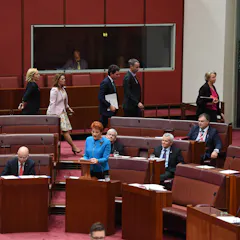
The normal rules of political engagement – coherence, consistency, fact, logic, proportion – do not apply to members of the paranoid right like Pauline Hanson.
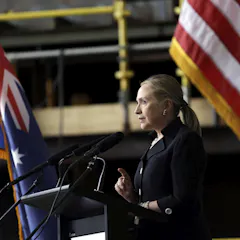
US presidents over the past 25 years have had varying views of the alliance with Australia. While none have questioned its value, commitment has not been even across the board.
There can be no doubt that Australia became modern between 1949 and 1966, the year Robert Menzies retired as prime minister.

The history of foreign investment in land and real estate shows the global movement of people and capital is closely linked to the prevailing geopolitics.
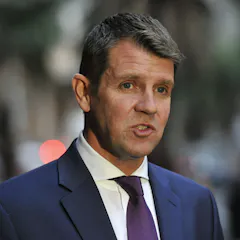
In office, to what extent has New South Wales Premier Mike Baird acted according to liberal principles?
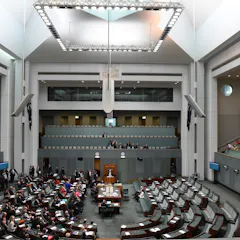
As the government hints the marriage equality plebiscite may be delayed until 2017, calls intensify for the parliament to legislate on the issue instead. So what is parliament’s role here?

Since his ascendancy, the currently trim and muscular-looking Malcolm Turnbull has – for an Australian prime minister – had unusually little to say about sport.

Temporary migrants are excluded from the benefits and rights of Australian citizenship. Is such immigration policy compatible with Australia’s democratic principles and values?

In the last 12 months, under the leadership of an eastern suburbs small-l liberal, the Liberal Party has decided it wants to look more like the party of Hewson than the party of Howard.
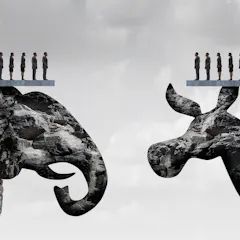
Elected officials and the media are in cahoots. Both have succumbed to a two-party system that treats voters not as independent thinkers, but as blind partisans.
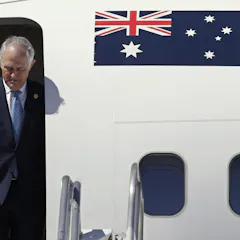
Australia needs a clear bipartisan vision of its role in the world and a strategic agenda for the long-term national interest.
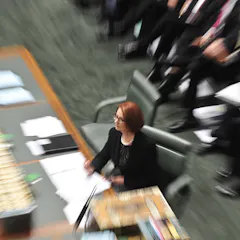
Minority governments can successfully prosecute their policy agendas even while being destabilised.
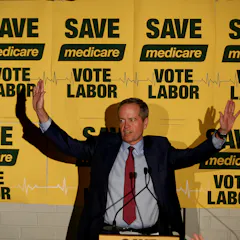
The idea of hitting voters with a powerful message on election day is just the culmination of three trends in Australian campaign communication that have been brewing for decades.
Top contributors
-

Professor of History and Politics, School of Humanities and Social Inquiry, University of Wollongong
-
Senior Lecturer, School of Humanities and Social Sciences, Deakin University
-
Director, Vice-Chancellor's Centre of Public Ideas (CoPI) and Donald Horne Professor of History and Public Ideas, University of Canberra
-
Emerita Professor of Politics, Adelaide University
-
Professorial Fellow, University of Canberra
-
Associate Professor of Political Science, Erie Campus, Penn State
-
Emeritus Professor of Politics, La Trobe University
-
Senior Lecturer, School of Political and Social Inquiry, Monash University
-
Honorary lecturer, School of Social Sciences, UNSW
-
Emeritus Professor of Politics, Monash University
-
Dennis Altman is a Friend of The Conversation.
Vice Chancellor's Fellow and Professorial Fellow, Institute for Human Security and Social Change, La Trobe University
-
ANU Law, Australian National University
-
Senior Lecturer in Law, Charles Sturt University
-
Emeritus Professor, Department of Government and International Relations, University of Sydney
-
Research Manager and Doctoral Candidate, Centre for the Study of Australian Politics, Australian National University