
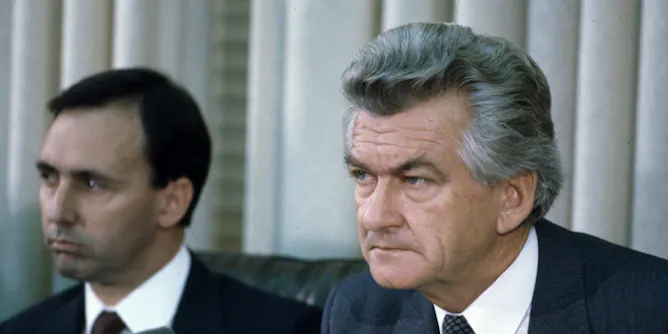
The Prices and Incomes Accord was a series of agreements between Labor and the ACTU where unions would moderate their wage demands in exchange for improvements in the ‘social wage’.
Articles on Political history
Displaying 101 - 120 of 255 articles
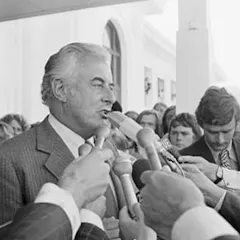
The Dismissal soured politicians’ taste for brinkmanship. It revealed the likely consequence of a loss of political legitimacy.
Viewed from today’s post-Cold War and secularised society, the conflicts at heart of the Labor split appear curiously arcane. Yet its ghosts remain.
It’s not the first time Australia has grappled with concerns about affordable housing. History offers insights that can help inform contemporary debates and policies.
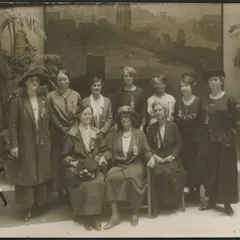
The suffragists who gained women the right to vote offer a model of Australia’s role in the world that remains as important as ever.
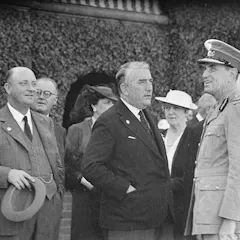
The formation of the Liberal-National coalition significantly changed Australian politics. But the Nationals’ influence has waned as Australia has become more urbanised.
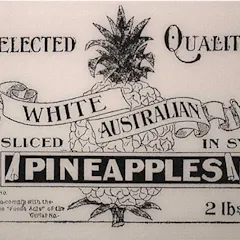
While contemporary Australia is proud of its multicultural status, the White Australia policy shows this wasn’t always the case.
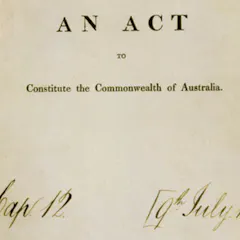
Australia’s Constitution is a product of foreign and domestic political influences. It has become one of the enduring aspects of Australian politics and law, for better and worse.

In Tasmania, a changing cast of actors has colluded to grant extreme riches to a single family, extracted in large part from the state’s most disadvantaged citizens.

Governments have come to realise that no one sector acting alone has the capacity or capability to solve complex social policy problems.
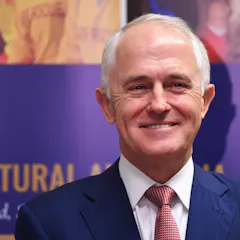
The government’s multicultural statement stays fairly much in the place where rhetoric around the issue has been located for the past generation – social control and integration.
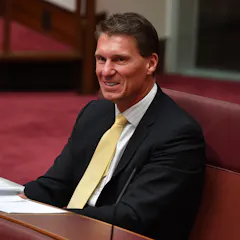
Politicians should be subject to a penalty regime similar to the far more stringent one that applies to company directors.

The current system of determining which organisations can receive tax-deductible donations and which cannot is overly complex and ad hoc.
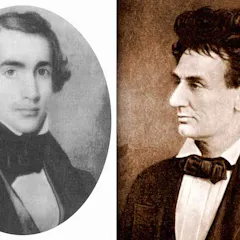
Would Abraham Lincoln ever have become president if he didn’t stumble into a dry goods store in Springfield, Illinois, and strike up a friendship with its owner, Joshua Speed?
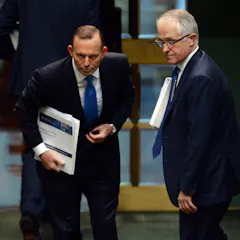
The way times have changed is exemplified in the frequency of party coups against sitting prime ministers.
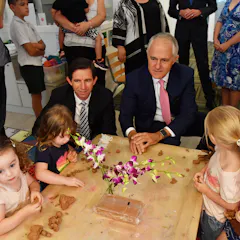
By far the most significant projected savings in the government’s omnibus bill is the phasing out of end-of-year supplements for family tax benefit recipients.
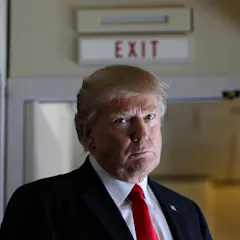
Australian and American leaders over the years have, from time to time, disagreed or said things to cause embarrassment. But, for the most part, such disagreements have been kept out of the limelight.

For once in its life, under the premiership of Don Dunstan, South Australia felt like the very centre of the universe.
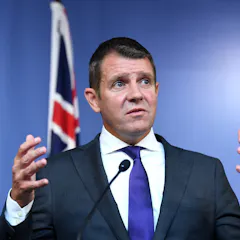
Mike Baird is the fifth New South Wales premier in ten years, and only one of them lost their job to an election. There’s little time, it seems, to learn and grow as a political leader.

Leaving aside party-politics, there are good reasons why Australia should consider changing its Constitution to abolish state governments.
Top contributors
-

Professor of History and Politics, School of Humanities and Social Inquiry, University of Wollongong
-
Senior Lecturer, School of Humanities and Social Sciences, Deakin University
-
Director, Vice-Chancellor's Centre of Public Ideas (CoPI) and Donald Horne Professor of History and Public Ideas, University of Canberra
-
Emerita Professor of Politics, Adelaide University
-
Professorial Fellow, University of Canberra
-
Associate Professor of Political Science, Erie Campus, Penn State
-
Emeritus Professor of Politics, La Trobe University
-
Senior Lecturer, School of Political and Social Inquiry, Monash University
-
Honorary lecturer, School of Social Sciences, UNSW
-
Emeritus Professor of Politics, Monash University
-
Dennis Altman is a Friend of The Conversation.
Vice Chancellor's Fellow and Professorial Fellow, Institute for Human Security and Social Change, La Trobe University
-
ANU Law, Australian National University
-
Senior Lecturer in Law, Charles Sturt University
-
Emeritus Professor, Department of Government and International Relations, University of Sydney
-
Research Manager and Doctoral Candidate, Centre for the Study of Australian Politics, Australian National University