
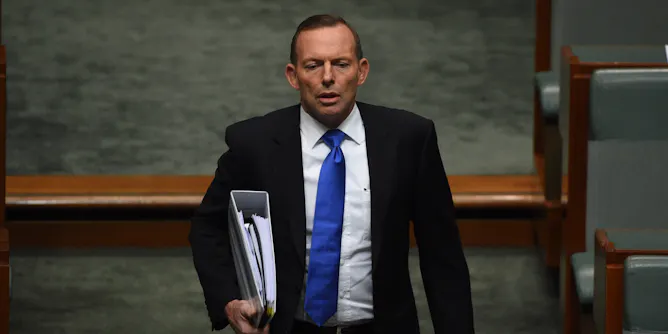
Every generation in the last 150 years has seen in Australia a contest over marriage which reflects shifting positions on its defining features, and its associated rights and obligations.
Articles on Political history
Displaying 201 - 220 of 255 articles
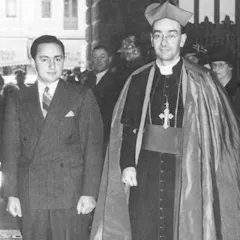
Gerard Henderson has produced a rounded and at times fascinating portrait of B. A. Santamaria. His broad conclusion is that Santamaria was a compelling, skilled and persuasive man who was enormously devoted to his causes.
Given that retaining the socialist objective hasn’t prevented the ALP from developing pro-market policies, why is it still seen as such a significant issue?
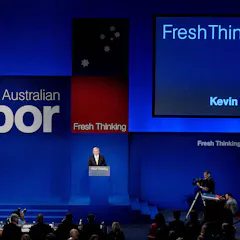
The ALP national conference has lost its policymaking significance of the past. Instead it has become a reflection of the leader’s standing within the party.
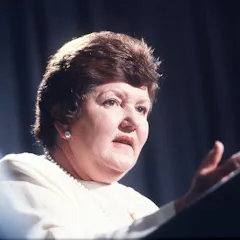
The career of late former Victorian premier Joan Kirner illustrated the story of the Australian Left from the Whitlam era to the present day.
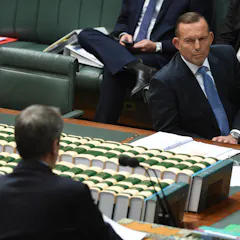
As opposition leader Bill Shorten prepares to introduce an amendment on Monday to the Marriage Act to legalise same-sex marriage, why has Australia lagged so far behind?
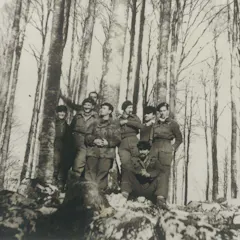
Everyone learns about the French resistance but what about the freedom fighters across the Alps?

George Osborne’s favourite catchphrase has a long tradition.
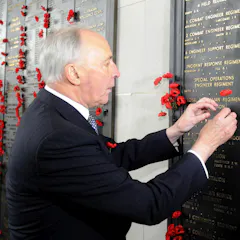
There is a complicated story involving the Anzac legend and the left between the 1920s and the 1960s which historians have barely begun to untangle.
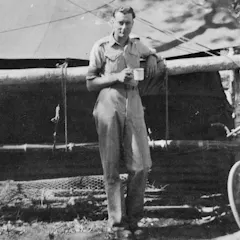
While serving in the RAAF, future prime minister Gough Whitlam led his first political campaign, agitating among his own squadron in support of the 1944 referendum.
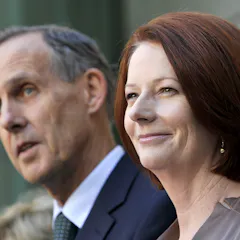
A political party that isn’t sure what it stands for isn’t really a party.
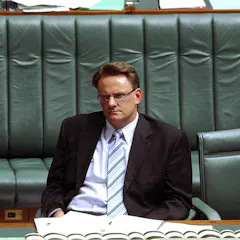
The Latham Diaries remains a seminal piece – not only having revealed the ALP’s inner workings, but having highlighted policy issues and structural problems which continue to be of concern.
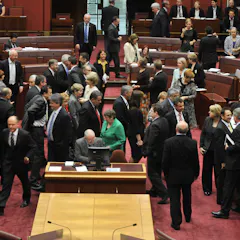
Instead of treating crossbenchers in parliament as a source of chaos and an aberration, we should recognise that they play a crucial role in shaping legislation as the constitution provides.
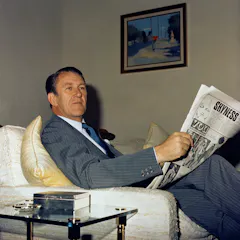
Malcolm Fraser’s relationship with the Australian media waxed and waned, from enthusiasm, pragmatism and caution to something, in the end, approaching mutual respect and perhaps even affection.
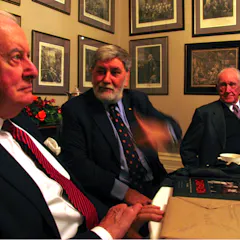
Malcolm Fraser used to argue that he had not changed his political position, but he had in significant ways. This personal evolution was a wonderful quality in the former prime minister.
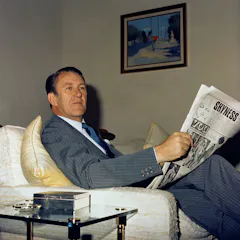
In his time in office, Malcolm Fraser oversaw the acceptance of southeast Asian refugees and led economic and social welfare reforms.
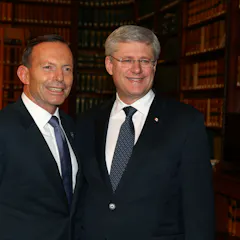
In recent years, a political “state of nature” has replaced what had been the civilised practice of political life in Australia.
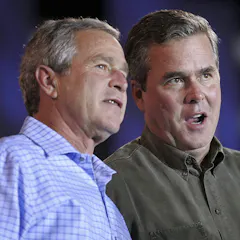
Political dynasties have played a significant role throughout America’s history. Their ongoing existence and prominence convey a level of inequality in access to political influence.
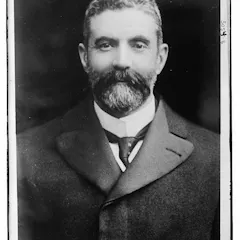
Alfred Deakin knew what he believed in; it helped him to believe in himself, and to survive three terms as prime minister.
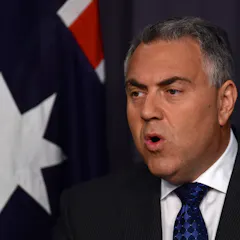
Whenever an Australian government runs into trouble we hear calls for a clearer narrative. The latest contribution comes in a thoughtful article from Waleed Aly. Aly points to the similar undermining of…
Top contributors
-

Professor of History and Politics, School of Humanities and Social Inquiry, University of Wollongong
-
Senior Lecturer, School of Humanities and Social Sciences, Deakin University
-
Director, Vice-Chancellor's Centre of Public Ideas (CoPI) and Donald Horne Professor of History and Public Ideas, University of Canberra
-
Emerita Professor of Politics, Adelaide University
-
Professorial Fellow, University of Canberra
-
Associate Professor of Political Science, Erie Campus, Penn State
-
Emeritus Professor of Politics, La Trobe University
-
Senior Lecturer, School of Political and Social Inquiry, Monash University
-
Honorary lecturer, School of Social Sciences, UNSW
-
Emeritus Professor of Politics, Monash University
-
Dennis Altman is a Friend of The Conversation.
Vice Chancellor's Fellow and Professorial Fellow, Institute for Human Security and Social Change, La Trobe University
-
ANU Law, Australian National University
-
Senior Lecturer in Law, Charles Sturt University
-
Emeritus Professor, Department of Government and International Relations, University of Sydney
-
Research Manager and Doctoral Candidate, Centre for the Study of Australian Politics, Australian National University