
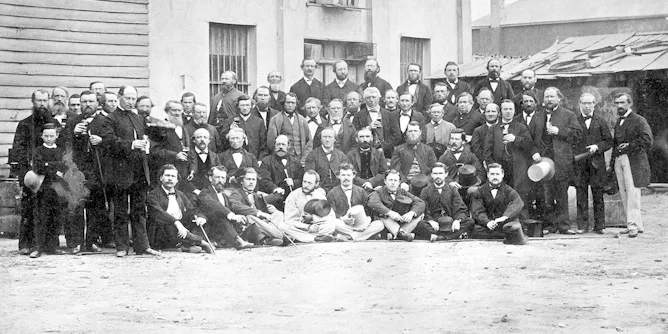
The story of German migration to South Australia can highlight the experience of diverse communities, and what can happen to them in a time of serious conflict.
Articles on Political history
Displaying 181 - 200 of 255 articles

If Anthony Albanese becomes Labor leader, Australians will have the strongest ideological and stylistic contrast in major party leaders since Malcolm Fraser and Bob Hawke 33 years before.
Debate, serious discussion and deliberation are valued highly in a democracy not just for their own sake, but because they are considered essential to testing the quality of ideas and arguments.
In the 1980s Australians grappled with the challenges of living in an era that brought together boom and crisis, nationalism and globalisation, confidence and anxiety, and conservatism and exuberance.

The story of Australia’s multicultural future needs to be informed by an understanding of the past. Those who do not know history’s mistakes are doomed to repeat them.

History offers countless examples of social change that is now consolidated and popularly supported, but which was only achieved through protests that were judged at the time to be extreme.
Is the Dismissal a moment that will become even more significant if the push for Australia to become a republic gains momentum?

The way in which Bob Wilesmith’s footage has come to dominate Australians’ recollection of The Dismissal is a story of prescience, luck and the limitations of the TV news technology of the day.
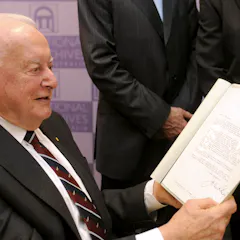
Sir John Kerr probably made his own decision to dismiss the Whitlam government much earlier than he acknowledged publicly while alive – but he came to this conclusion in discussion with others.
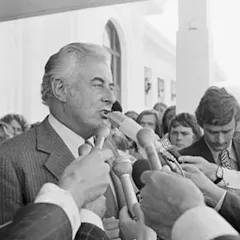
In comments reported in a new book to mark the 40th anniversary of the dismissal of Gough Whitlam, Malcolm Turnbull and Tony Abbott offer sharply differing views.

Tax reform will be a hard sell, even for a prime minister of Malcolm Turnbull’s standing and imagination.

Tony Abbott’s Margaret Thatcher Lecture, delivered in London on Tuesday night, provides a fitting epitaph to his government.
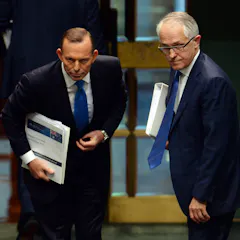
In leadership contests in particular, the media’s role is often markedly different from the competition between parties.
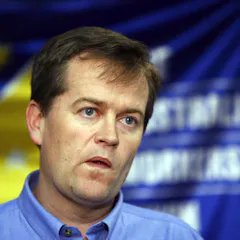
Faction Man is a product of Black Inc. From their perspective, Bill Shorten – and his fascination with grimy Labor machine politics – is an alien figure.
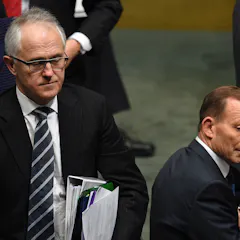
The Abbott government resisted the disruptive changes of the 21st century. To succeed, the Turnbull government will need to shed this reactionary mindset and embrace inevitable change.
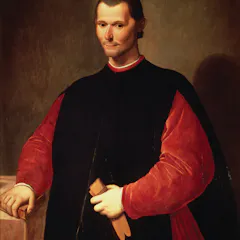
In our modern age, reform means essentially mastering necessity – taking what steps are necessary to ensure that one’s country survives and prospers.

Since 2007 Australia has not really had prime ministers of sufficient calibre. Instead, we have had an incessant struggle for power by those who believed they had the goods.

We need to see Australia’s response to the Syrian refugee crisis in perspective – in relation to what’s been done elsewhere and to what Australia has done on similar occasions in the past.
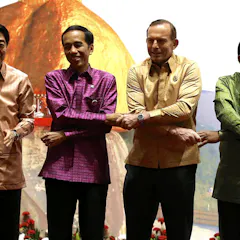
For the past two centuries, Australia got many of the big calls on global engagement right. In our third century, there are worrying signs that we have not fully grasped what the rise of Asia means.
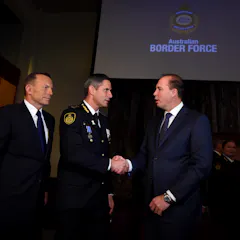
The Australian Border Force represents a significant departure from earlier ways of managing the border.
Top contributors
-

Professor of History and Politics, School of Humanities and Social Inquiry, University of Wollongong
-
Senior Lecturer, School of Humanities and Social Sciences, Deakin University
-
Director, Vice-Chancellor's Centre of Public Ideas (CoPI) and Donald Horne Professor of History and Public Ideas, University of Canberra
-
Emerita Professor of Politics, Adelaide University
-
Professorial Fellow, University of Canberra
-
Associate Professor of Political Science, Erie Campus, Penn State
-
Emeritus Professor of Politics, La Trobe University
-
Senior Lecturer, School of Political and Social Inquiry, Monash University
-
Honorary lecturer, School of Social Sciences, UNSW
-
Emeritus Professor of Politics, Monash University
-
Dennis Altman is a Friend of The Conversation.
Vice Chancellor's Fellow and Professorial Fellow, Institute for Human Security and Social Change, La Trobe University
-
ANU Law, Australian National University
-
Senior Lecturer in Law, Charles Sturt University
-
Emeritus Professor, Department of Government and International Relations, University of Sydney
-
Research Manager and Doctoral Candidate, Centre for the Study of Australian Politics, Australian National University