

Humans tend to suffer from a negativity bias – we notice and dwell more readily on negative experiences than positive ones.
Articles on Philosophy
Displaying 181 - 200 of 754 articles

Work cannot be meaningful if it not only fails to help others but actually harms them.

Introspection, argument, exploring paradoxes: These are hallmarks of great artists, not just philosophers.
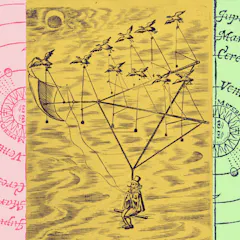
When scientists observed planets revolved around the Sun, they posited we were now like other planets. And if other planets were like Earth, then they most likely also had inhabitants.
In 1908, the English philosopher J. M. E. McTaggart published an important paper on the logic of time.

Storyselling, unlike narration, attempts to eradicate uncertainty. It cannot perform the important task of imagining the future.

The political thought of Hannah Arendt reminds us that we are more than our successes and failures.
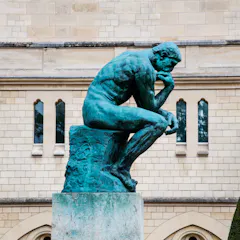
Svend Brinkmann’s idea of thoughtfulness is not just about exercising our rational powers to solve puzzles, but the existential dimensions of thinking.
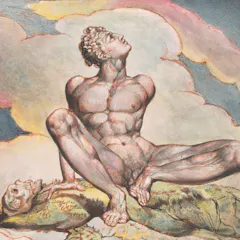
A subtle and thoughtful show, full of shimmering connections that put Blake back in touch with European art figures and influences.

What if there’s no experiment to work out which theory of consciousness is correct?
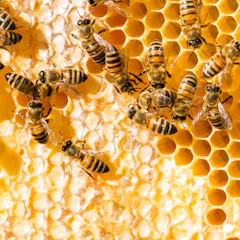
What makes us human? Greek and Roman thinkers were preoccupied with this question. And some of their observations of animals foreshadowed recent findings in the behavioural sciences.
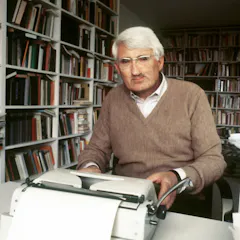
German philosopher Jürgen Habermas, now 94, is a thinker of global significance. Duncan Ivison explains two of his most important ideas.
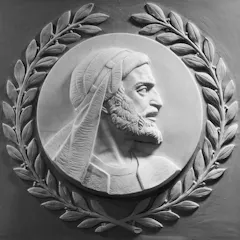
Faith and reason are often treated as opposites. But some philosophers believe they can only strengthen each other, including the Jewish sage Maimonides, who wrote the famous ‘Guide to the Perplexed.’

Words have power, and what vocabulary you have at your disposal to describe your relationships with other people can shape what directions those relationships can take.

What is healthy self-love? Psychology experts and philosophers have long debated the question.

We are constantly talking to ourselves, but our internal monologues have received surprisingly little attention from philosophers, until now.

When it feels like so many people are in need of compassion, how do we decide where to direct it?
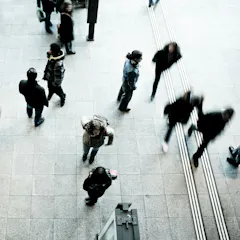
Finding common ground is a crucial first step in overcoming differences of opinion and perspective.

Philosophers of art have, at times, entertained quite seriously the claim that art can come to an end.

Intellectual humility doesn’t mean anyone can change your mind, a philosopher writes – but it might mean learning from the ‘other side’ in surprising ways.
Top contributors
-

Professor in Philosophy, Australian Catholic University
-
Associate Professor of Philosophy, Deakin University
-
Associate Professor of Philosophy of Education, University of Birmingham
-
Professor of Philosophy, La Trobe University
-
Senior Lecturer in Philosophy and Education; Curriculum Director, UQ Critical Thinking Project, The University of Queensland
-
Deputy Director, Institute for Ethics, Governance & Law, Griffith University
-
Associate Lecturer, University of Notre Dame Australia
-
Honorary Associate in Philosophy, University of Sydney
-
Professor, Philosophy of Science, The University of Melbourne
-
Professor of Philosophy, University of Pretoria
-
Senior Lecturer in Philosophy and Ethics, Nottingham Trent University
-
Assistant Professor in Philosophy and History, Bond University
-
Researcher, UQ Critical Thinking Project, The University of Queensland
-
Associate Professor in Philosophy, University of Nottingham
-
Lecturer in Philosophy, Queen's University Belfast