

In Light Sleeper, award-winning Jewish journalist David Leser struggles with the limits of tribal loyalty, and pressure to support Israel amid the realities of Gaza.
Articles on Book reviews
Displaying 1 - 20 of 977 articles

The Weight of Witness reveals what it’s like to treat the thousands of wounded Palestinians who flood into the hospitals and treatment centres on the Gaza Strip.

Gen Z is leading an eating revolution, akin to ‘activism on a plate’. It might include eating insects – and social media plays a central role.

‘Gonzo journalist’ John Birmingham returns to his home town of Ipswich, Queensland, to start his investigation of Pauline Hanson’s dramatic resurgence.

Sentinels offers hope without sugarcoating. It’s a vital call for action on capitalism and climate change.

The letters in Julia Baird’s book, co-edited with her son, contains some beautiful pieces. But it’s a pity the book isn’t called ‘Becoming a Human’.

Sabr has been carefully designed to avoid pointing fingers, though the cracks under the surface are easy enough to detect.

The unlikely origins of Australia’s unique super scheme help explain the ongoing ideological divide.

In Tim Winton’s new collection of essays and reflections, we glimpse the world-making of Cloudstreet, via his parents’ stories, but also a loving ruthlessness.
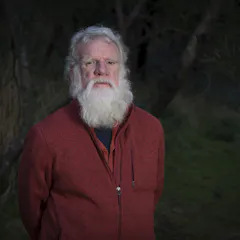
The author of Dark Emu returns to agriculture in The European Mind, a collection of essays big on denunciation.

Tari Long’s memoir, My Neighbour, The Dictator, remembers a chaotic adolescence in the shadow of Indonesia’s 1965 military coup – and surviving her parents’ absence.
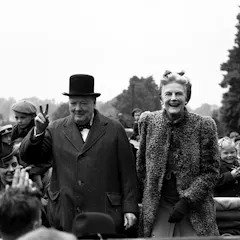
Like Guns, Germs and Steel, this book is ambitious, provocative and imperfect. It’s also difficult to put down.
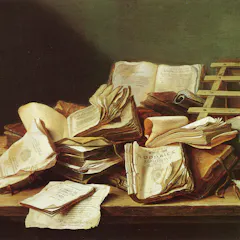
The essay has been virtually obliterated as a form of assessment by the promiscuous use students make of AI. These students are plagiarists.
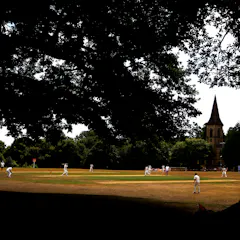
Christian Ryan’s Eleven: We Burn Them in the Sun weaves idiosyncratically through the stories of 11 men and women whose lives were defined, if briefly, by cricket.
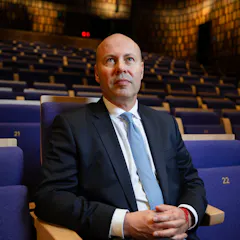
In his memoir, former federal treasurer Josh Frydenberg sets out a moderate manifesto for the Liberal Party.
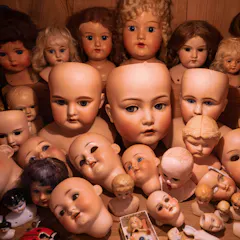
The Boy Who Loved Dolls looks back to French surrealism and post-war European cinema, and the way they responded to the horrors of fascism and war.

Nicholas Humphrey’s new book, Why Is the World So Beautiful?, posits a theory of beauty – but is beauty too manifold to surrender its mysteries to one theory?

Siân Valvis has managed to artfully translate this series of stories with skill and sensitivity, maintaining their cultural ruggedness and power.

Switzy is an impressive, surprising novel that tackles a big topic: assisted dying, and how we might meet our own cognitive decline.
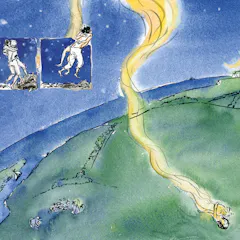
Orlando is nearly 100 years old – but its ideas about gender and identity are strikingly contemporary.
Top contributors
-

Distinguished Professor Emerita of Creative Practice, Faculty of Arts and Design, University of Canberra
-
Dennis Altman is a Friend of The Conversation.
Vice Chancellor's Fellow and Professorial Fellow, Institute for Human Security and Social Change, La Trobe University
-
Adjunct Researcher, English and Writing, University of Tasmania
-
Emeritus Professor of Creative Writing, The University of Melbourne
-
Professor in Politics and Journalism, University of Notre Dame Australia
-
Professor, Chair of Australian Literature, The University of Western Australia
-
Senior Lecturer, Writing, Department of Media and Communication, Swinburne University of Technology
-
Adjunct Professor, Australia-China Relations Institute, University of Technology Sydney
-
Professor of Communication, Deakin University
-
Senior Lecturer, Discipline of English and Writing, University of Sydney
-
Professor of Psychology, The University of Melbourne
-
Senior lecturer, Canberra School of Government, University of Canberra
-
Professor of English Literature, University of Southern Queensland
-
Senior Lecturer in Humanities, University of Southern Queensland
-
Emeritus Professor, Institute for Culture and Society, Western Sydney University