

GTA 6 lets players run over innocent pedestrians and blow off their heads. The ethics of such virtual crimes are surprisingly complex.
Articles on Philosophy
Displaying 1 - 20 of 754 articles

Philosopher Søren Kierkegaard is best known for his writing on faith and existentialism, but love is also a central focus.
Agentic AI systems are not conscious – not even maybe.

Paul Virilio, a French philosopher, died in 2018. But his writings on technological ‘accidents’ help explain dilemmas the world faces today amid increasing use of artificial intelligence.

There is an irony in Anne Carson’s Nobel win: The highest award in literature has gone to a writer who has spent her career exploring the emptiness of a desire fulfilled.
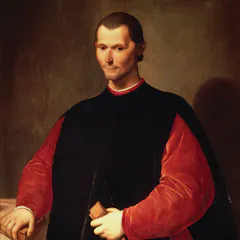
In an era when political campaigns are a mix of strategy, spectacle and survival, Machiavelli’s The Prince is a straight-talking classic.

Montesquieu’s philosophy on the need for counter-powers for safeguarding against revolt in societies serves as a reminder for France amid a climate of enduring unrest.

We infer what animals experience from how they behave. But can we rely on those same inferences after substantially altering their brains?
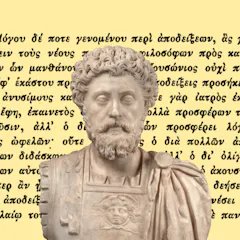
Marcus Aurelius told himself to be a good man but what did he mean by that?

Being ‘apolitical’ sounds like being neutral – but it isn’t. Can Macklemore’s removal from the Loop tour over his ‘free Palestine’ stance be defended at all?

Taylor Mill cut to the heart of issues in political thought such as patriarchy, socio-economic justice and freedom.

My new study poses nine vital questions for children growing up in the ‘brain-as-interface era’.

Star Trek has endured because it repeatedly returns to a universal question: what does it mean to be human?

You might be surprised by how many researchers who went on to make important contributions considered whether animals could have telepathy.

If you’re looking to be loved, Simone de Beauvoir would warn you to look away from AI.

Importantly, even if we don’t believe in free will, our sense of accountability stays intact, according to new research.

People in prison may be uniquely placed to rethink justice and morality.

Are there potential benefits to artificial friendships, or is the idea of a mechanical friend sadder or more pathetic than having no friends at all?

Gramsci was writing in the face of the collapse of revolutionary hopes. But he rejected the dominant Marxist thinking of his day.

The concept of ‘Cultural Marxism’, which can be traced back to the 1930s, has become a staple of contemporary right-wing discourse.
Top contributors
-

Professor in Philosophy, Australian Catholic University
-
Associate Professor of Philosophy, Deakin University
-
Associate Professor of Philosophy of Education, University of Birmingham
-
Professor of Philosophy, La Trobe University
-
Senior Lecturer in Philosophy and Education; Curriculum Director, UQ Critical Thinking Project, The University of Queensland
-
Deputy Director, Institute for Ethics, Governance & Law, Griffith University
-
Associate Lecturer, University of Notre Dame Australia
-
Honorary Associate in Philosophy, University of Sydney
-
Professor, Philosophy of Science, The University of Melbourne
-
Professor of Philosophy, University of Pretoria
-
Senior Lecturer in Philosophy and Ethics, Nottingham Trent University
-
Assistant Professor in Philosophy and History, Bond University
-
Researcher, UQ Critical Thinking Project, The University of Queensland
-
Associate Professor in Philosophy, University of Nottingham
-
Lecturer in Philosophy, Queen's University Belfast