
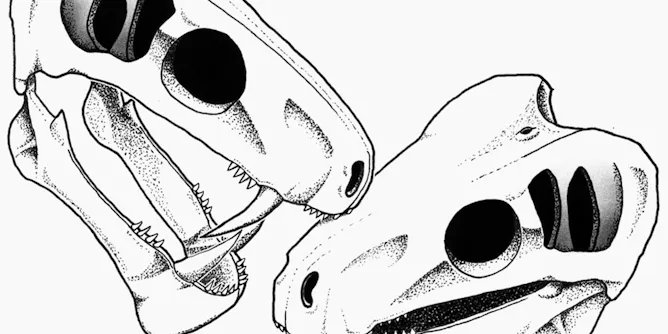
Finding a fossil tooth embedded in bone is always great news for palaeontologists, as it is the gateway to some otherwise out-of-reach understanding of the behaviour of extinct animals.
Articles on Palaeontology
Displaying 101 - 120 of 239 articles
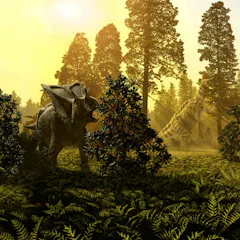
Today, Earth’s biodiversity is highest at the equator – but it hasn’t always been this way.

Our research has also uncovered major long-term changes in ancient animal populations at Denisova Cave, and has provided the first direct evidence of Homo sapiens having lived there.

A spectacular series of fossilised footprints from sauropod dinosaurs and other ancient animals opens a window onto life in northeast Australia 95 million years ago.

This is a crucial dinosaur for palaeontologists; the variety of fossils available means researchers can study the species’ growth through its whole life span.
Ancient climate change doomed the monk seals that lived in Australian waters millions of years ago.
Tilly Edinger was the first person to apply a deep-time perspective into different species’ brain evolution. She did this by focusing on the hollow space within a dead animal’s skull.
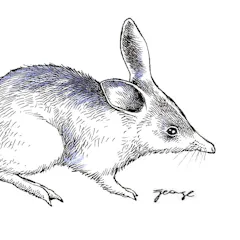
Very few bilby and bandicoot fossils have ever been found. Four new discoveries help fill in the picture of how these elusive animals evolved.
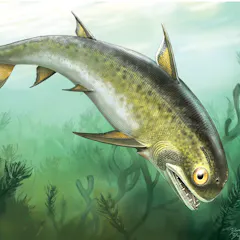
Scientists have long believed that sharks were the first vertebrates to evolve teeth. Our new study reveals a more complex history.
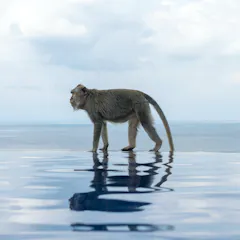
Given tens of millions of years, wildly improbable events – like primates crossing oceans – are almost a given.
A transcript of episode 11 of The Conversation Weekly podcast, including an interview on Israel’s foreign policy options following its recent election.
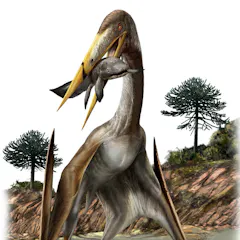
Gigantic flying reptiles had impressive wingspans of up to 12 metres – and a special trick in their necks.

The environmental, cultural and scientific sensitivity of some sites, and rarity of some fossils, means amateur fossil collecting comes with huge risks.
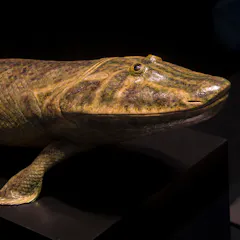
‘Tetrapods’ were the first fish to evolve lungs and walk onto land. They were also our ancestors. Now, a new study sheds light on the size and shape of these unique animals’ brains.
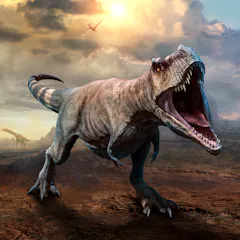
Our new study has found younger tyrannosaurs would have hunted small prey.
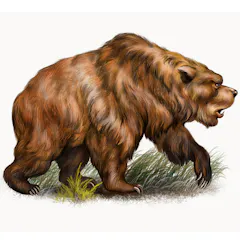
This is the oldest genome recovered from a non-permafrost environment.
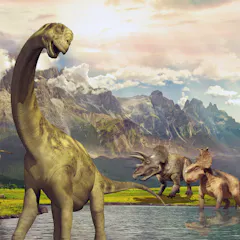
The study reveals changes in the functions of melanin over 500 million years.
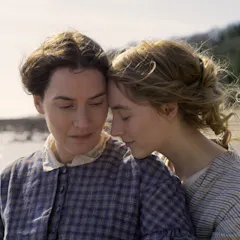
Kate Winslet plays palaeontologist Mary Anning in the film Ammonite. The love story may be fictional — but how does the science stand up?
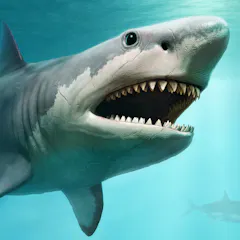
New fossil detective work sheds light on the life of megalodon, the biggest predatory shark ever discovered.
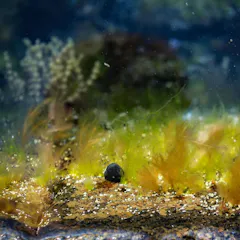
Ancient fatty molecules, once believed to be traces of some of the first animals to live on Earth, may have been produced by algae instead.
Top contributors
-

Professor of Vertebrate Palaeontology, University of Bristol
-
Associate professor in Vertebrate Palaeontology, University of the Witwatersrand
-
Senior Lecturer in Paleontology and Evolutionary Biology, Life Sciences at the University of Bath, University of Bath
-
Professor in Geochronology and Geochemistry, Southern Cross University
-
Technical Specialist in Earth Sciences, University of Bristol
-
Emeritus Strategic Professor in Palaeontology, Flinders University
-
Senior Research Scientist, South Australian Museum; Flinders University
-
Professor in Geochronology, School of Natural Sciences, Macquarie University
-
Professor, Palaeobiology, University College Cork
-
Chancellor's Fellow in Vertebrate Palaeontology, University of Edinburgh
-
Research Associate in the College of Science and Engineering, Flinders University
-
Research Associate, African Centre for Coastal Palaeoscience, Nelson Mandela University
-
Professor of Palaeobiology, University of Portsmouth
-
Lecturer in the School of Applied Sciences, Edinburgh Napier University
-
Professor of Dinosaur Paleontology, University of the Witwatersrand