
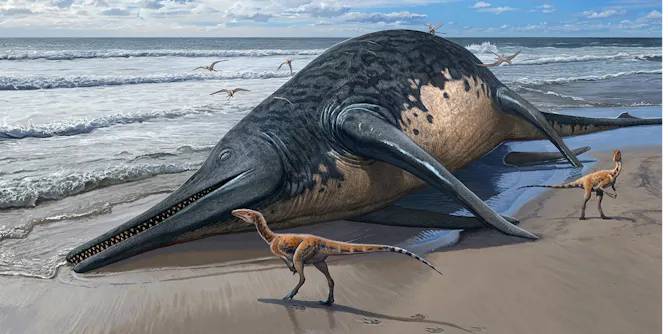
Ichthyosaurs were the last giant reptiles to rule our oceans.
Articles on Palaeontology
Displaying 61 - 80 of 239 articles
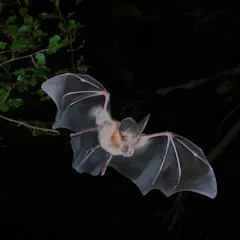
The scarcity of bat fossils is more than a palaeontological puzzle: it has implications for bat conservation strategies today.
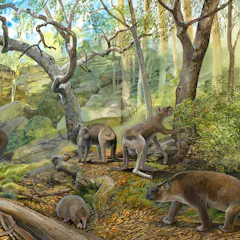
Some extinct kangaroos may barely have hopped at all.

The origin date for flowers is a source of debate among scientists – but a new approach may help bring clarity to the question.
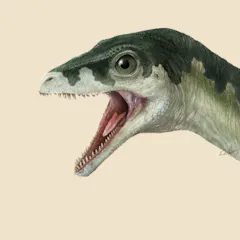
By examining fossilized bone tissue, a new study finds rapid growth was an asset for survivors of the Great Dying 250 million years ago, Earth’s largest mass extinction event.
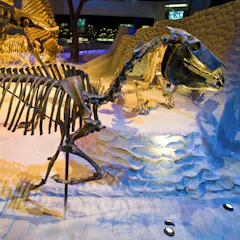
Horse fossils are abundant and widespread across North America. Scientists often use their long history to illustrate how species evolve in response to a changing environment.
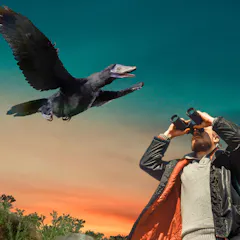
If you love learning about dinosaurs don’t let crowdpleasers like the T Rex distract you from the fascinating birdlife that once roamed the Earth.
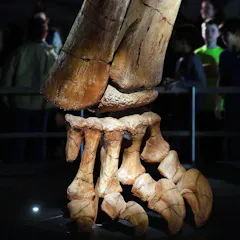
Some of these giant vegetarians were as tall as a 3-story building. Microscopic analysis of their teeth, bones and eggshells reveals how they grew, what they ate and even their body temperature.
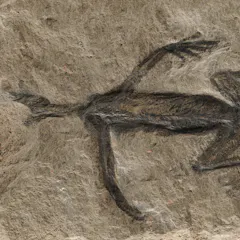
A lizard fossil that was thought to be the best preserved ever has turned out to have fake skin.
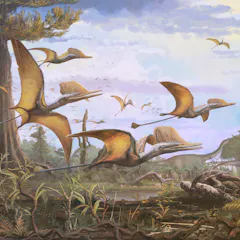
The Isle of Skye has a rich palaeontological heritage, so perhaps it’s no surprise scientists made an important discovery there.
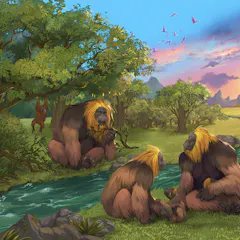
What happened to the three-metre tall apes that once lived alongside orangutans? A new study suggests they were too slow to adapt to a changing world.
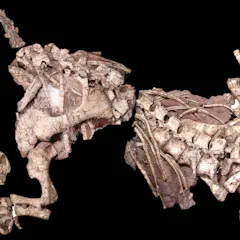
Some time between 1100 and 1700 AD, a Massospondylus bone was discovered and carried to a rock shelter in Lesotho.
Impress your niece or nephew with these T rex facts.
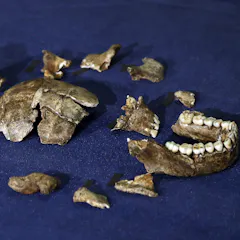
How, when and where did modern humans evolve? Nobody has all the answers, but studying rock and dirt can put the debate on firmer footing.

Small holes in baby dinosaur bones add to the growing mass of evidence that the ancient creatures were warm-blooded and highly active.
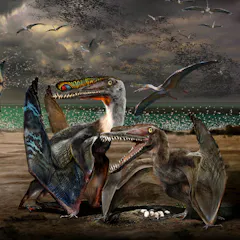
Reptiles don’t generally care for their offspring, but some pterosaurs may have bucked the trend.

New evidence from contested Laos cave site shows humans reached Southeast Asia at least 68,000 years ago.
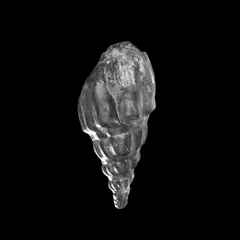
Digital scanning offers a new window on Australia’s unique fossil history, from early multicellular lifeforms to gigantic ‘marsupial lions’.
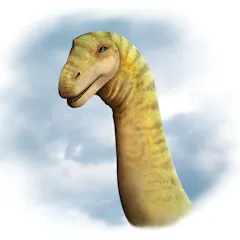
Meet Ann: a toothy 95 million-year-old Diamantinasaurus from outback Queensland.
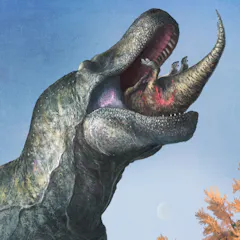
Although we’re used to seeing lipless dinosaur carnivores, our new data suggests they had lizard-like lips and probably couldn’t snarl.
Top contributors
-

Professor of Vertebrate Palaeontology, University of Bristol
-
Associate professor in Vertebrate Palaeontology, University of the Witwatersrand
-
Senior Lecturer in Paleontology and Evolutionary Biology, Life Sciences at the University of Bath, University of Bath
-
Professor in Geochronology and Geochemistry, Southern Cross University
-
Technical Specialist in Earth Sciences, University of Bristol
-
Emeritus Strategic Professor in Palaeontology, Flinders University
-
Senior Research Scientist, South Australian Museum; Flinders University
-
Professor in Geochronology, School of Natural Sciences, Macquarie University
-
Professor, Palaeobiology, University College Cork
-
Chancellor's Fellow in Vertebrate Palaeontology, University of Edinburgh
-
Research Associate in the College of Science and Engineering, Flinders University
-
Research Associate, African Centre for Coastal Palaeoscience, Nelson Mandela University
-
Professor of Palaeobiology, University of Portsmouth
-
Lecturer in the School of Applied Sciences, Edinburgh Napier University
-
Professor of Dinosaur Paleontology, University of the Witwatersrand