

New crime novels by Mark Brandi and Jennifer Trevelyan are enthralling dramas about the loss of innocence and the possibility of redemption.
Articles on Fiction
Displaying 61 - 80 of 387 articles
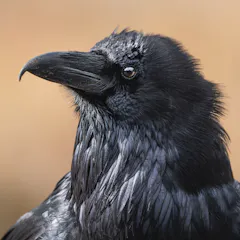
Max Porter’s stories of people on the margins are told in fragments, flickering images, surprising swirls of language and wit.
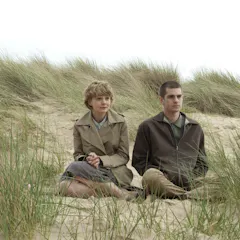
In Never Let Me Go, Kazuo Ishiguro summons our liberal sentiments only to turn them against us.
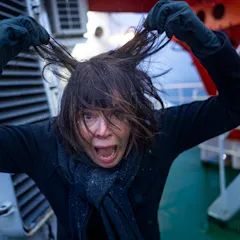
Antarctica is a harsh continent, which in both history and fiction can trigger disturbing behavior and even madness.

Young writers in Germany are challenging one-dimensional stereotypes about Jewish and Muslim identities.

The Name of the Sister begins in classic genre territory: a young woman is found stumbling down an outback road, without the power of speech and without an apparent identity.
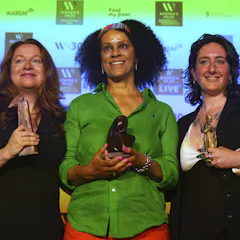
Some ways we will know we no longer need women’s book prizes: when men read as much writing by women as that by men, and when women begin to dominate prizes for prestige genres such as non-fiction.
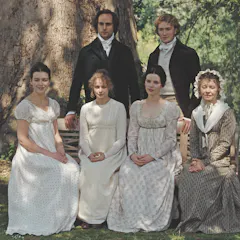
Jane Austen paid attention to the women novels had been invented to ignore, allowing readers to see their thoughts far more clearly.

The inexorable passage of an incorruptible body gives this strange, spare story its shape.
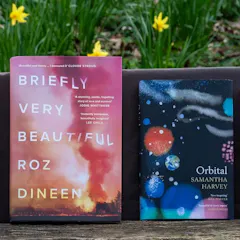
From a longlist of nine, five novels have been shortlisted for the 2025 Climate Fiction Prize. Our academics review the finalists.

When Georgia Rose Phillips’ inner poet takes centre stage, The Bearcat rises to great heights. But the novel contains some anachronisms.
Andrea Goldsmith’s handling of the alignment between domestic abuse, coercive control, cults, brainwashing and terror is subtle, yet powerful.

‘If the book we are reading doesn’t wake us up with a blow on the head, what are we reading it for?’
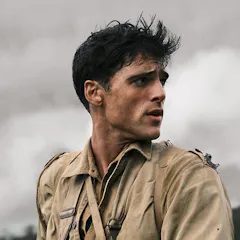
Richard Flanagan’s novel is about to hit screens. How do its depictions of heroism and valour land in 2025? And were the raves right – or the pans?
Twist is a richly allusive novel, with echoes of Herman Melville, Joseph Conrad and Philip Roth.
Yumna Kassab’s vignettes and fragments present a kaleidoscopic view of contemporary society.

Dream Count is another bold, honest endeavour from Adichie to cut through hackneyed schema and really see people.
Participants in a study were willing to spend just as much time and money on an AI-generated story as one they were told was written by a human.
Signs of Damage is ostensibly a realist novel, it stretches the limits of the genre, introducing psychological and mystical elements.

Céline portrays the vertigo of the human condition with an intensity that still has no equal, eighty years on. But this English version is not quite Céline.
Top contributors
-

Distinguished Professor Emerita of Creative Practice, Faculty of Arts and Design, University of Canberra
-
Professor of English Literature, University of Southern Queensland
-
Professor, Chair of Australian Literature, The University of Western Australia
-
Associate Professor in Literary Studies, RMIT University
-
Senior Lecturer in English Literature, Adelaide University
-
Lecturer, Creative Writing, Adelaide University
-
Professor of English, Institute for Humanities and Social Sciences, Australian Catholic University
-
Senior Lecturer, Writing, Department of Media and Communication, Swinburne University of Technology
-
Adjunct Lecturer, English and Creative Writing, UNSW Canberra, UNSW
-
Senior Lecturer in Humanities, University of Southern Queensland
-
Dean of Research (Creative), Adelaide University
-
Director of Creative Writing, Macquarie University
-
Senior Lecturer in Writing, Literature and Culture, Deakin University
-
Professor, English and Creative Writing, Adelaide University
-
Professor of Creative Writing, University of Technology Sydney