
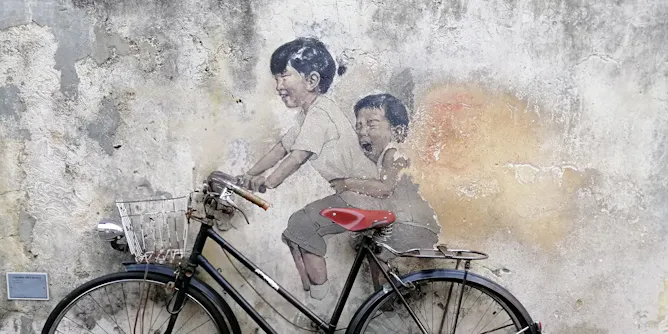
The tension between the novelistic attention to psychology and detail and the epic tendency to breadth of scale and form makes – and unmakes – this book.
Articles on Fiction
Displaying 41 - 60 of 387 articles

In The Hiding Place, the hollow ethics of Kate Mildenhall’s characters are exposed as exploitative and mercenary.

Summer reading can mean anything you want it to – from a crime or romance novel to a fat classic you didn’t have time for during the year. What will you read?

A should book features three concepts for rethinking masculinity: relationality, vulnerability, and inclination.

In her latest novel, Merlinda Bobis envisions the past not as a grand narrative, but an organic process – entangled, living and mutable.
At the centre of this novel is a lonely man, the son of a Greek migrant cafe-owning family, who finds a home in a newsroom at a time of turbulence.
Jane Harper’s novels do not include any significant First Nations characters or perspectives. Nor do they acknowledge the deeper meaning and consequence of their Gothic conventions.
With Shadow Ticket, Pynchon reminds us the line between chaos and order, corruption and truth, remains as thin, porous and perilous as ever.
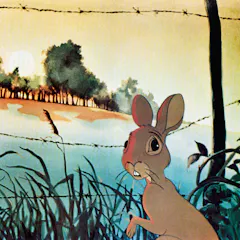
The fragility of life and the terror of loss is terrifyingly exposed through this tale about rabbits.
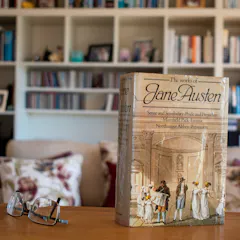
Jane Austen’s interconnected webs of thought and feeling help readers to better understand other people.
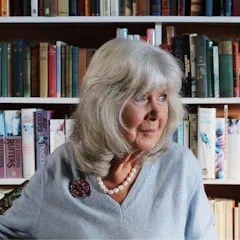
Many of Cooper’s depictions of sex are very funny. However, there is a clear message throughout.

What can a grisly meth-fuelled murder in northern Minnesota’s Iron Range tell us about post-industrial decline and the malaise of contemporary America?

Vineland is set in Reagan’s America: an era of conservative backlash and retreat from progressive ideals. Paul Thomas Anderson’s adaptation reflects similar trends now.
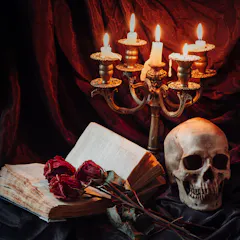
Students in this literature course read a range of novels, short stories and more on grave robbing, murder, terror and grief.

Written in Kelly’s vernacular, this Booker Prize- winning novel is a masterclass in mimicry. But in exploring injustice, there are telling erasures.

The genre of migrant autofiction, especially coming-of-age work, is blooming, but Raaza Jamshed’s book stands out.

In his thoughtful new novel about people turning into trees, Rhett Davis puts postmodernism and myth through the figurative woodchipper.

In Desolation, inexplicable elements, often in the form of coincidence, disrupt and distort causal chains. Dreams and imagination have a subversive role.
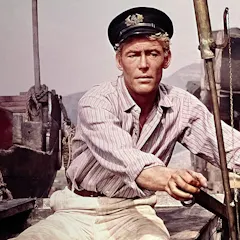
Conrad suggests our sense of being good derives from our belonging – yet that to which we belong is not necessarily good.
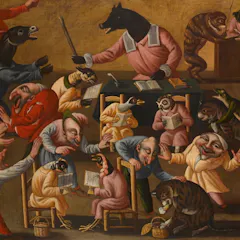
The inventive fictions of Michael Farrell, Lucy Nelson and Alex Cothren display flashes of brilliance and humour.
Top contributors
-

Distinguished Professor Emerita of Creative Practice, Faculty of Arts and Design, University of Canberra
-
Professor of English Literature, University of Southern Queensland
-
Professor, Chair of Australian Literature, The University of Western Australia
-
Associate Professor in Literary Studies, RMIT University
-
Senior Lecturer in English Literature, Adelaide University
-
Lecturer, Creative Writing, Adelaide University
-
Professor of English, Institute for Humanities and Social Sciences, Australian Catholic University
-
Senior Lecturer, Writing, Department of Media and Communication, Swinburne University of Technology
-
Adjunct Lecturer, English and Creative Writing, UNSW Canberra, UNSW
-
Senior Lecturer in Humanities, University of Southern Queensland
-
Dean of Research (Creative), Adelaide University
-
Director of Creative Writing, Macquarie University
-
Senior Lecturer in Writing, Literature and Culture, Deakin University
-
Professor, English and Creative Writing, Adelaide University
-
Professor of Creative Writing, University of Technology Sydney