

In Tim Winton’s new collection of essays and reflections, we glimpse the world-making of Cloudstreet, via his parents’ stories, but also a loving ruthlessness.
Articles on Australian literature
Displaying 1 - 20 of 339 articles
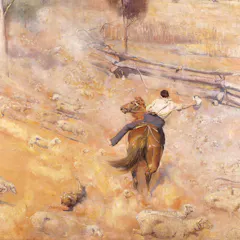
Adam Lindsay Gordon was once labelled ‘Poet of Australia’. Though his poetry hasn’t aged well, it still matters for its insights into the colonial mind.
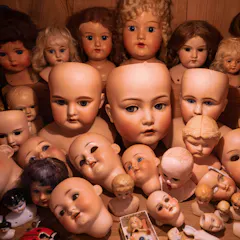
The Boy Who Loved Dolls looks back to French surrealism and post-war European cinema, and the way they responded to the horrors of fascism and war.
An astounding and deeply engaging account of the complexity of one small organ is about so much more.
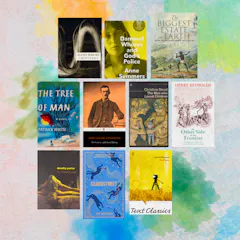
ABC Radio National is about to reveal Australia’s top 100 books, chosen by popular vote. Ahead of the countdown, The Conversation has asked our experts for theirs.
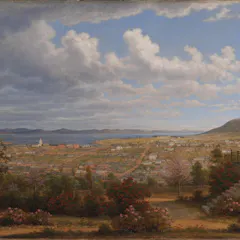
A riches to rags tale written by a convict was published in Hobart in 1830. On mainland Australia, an Irish widow published a gothic melodrama in 1838.
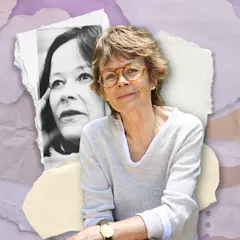
Hilary McPhee co-founded McPhee Gribble, the legendary Australian publishing house responsible for Monkey Grip, Puberty Blues and Cloudstreet.
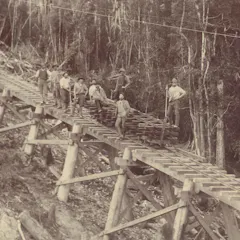
In Mine, Adam Ouston reveals the contradictions between Tasmania’s conception of itself and its history of human and environmental devastation.

The Broad Bean Sermon, while not his best-known poem, shows why Les Murray is considered by some to be Australia’s preeminent poet.
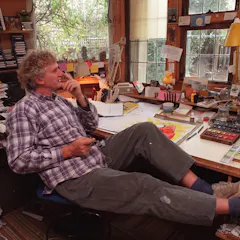
Terry Denton was wickedly funny, unpretentious and won multiple awards for his illustrations – and sold millions with Andy Griffiths. He will be dreadfully missed.
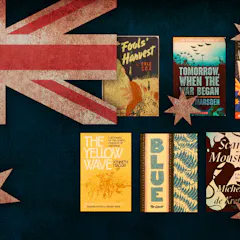
Foreign ‘invasion plots’ have featured in Australian literature for more than a century. Though critiqued by some authors, fears of white erasure endure.

Blanche d'Alpuget had a long and successful career as a writer, but it was her stunning biography of Bob Hawke that brought her fame – and influence.

Richard Flanagan is a natural raconteur. While some of his essays seethe with anger, his passion for literature is infectious.
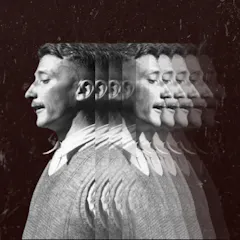
Francis Webb was the first Australian poet to openly discuss mental health crises and the stigmatisation of mental patients.
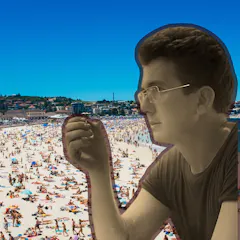
David Malouf declared John Forbes ‘the most elegant and inventive poet’ of his
generation.
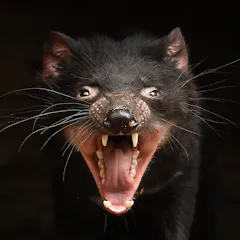
Read together, these very different books ask a question: do we have to choose between hope for the future and accepting life in all its bizarre banality?
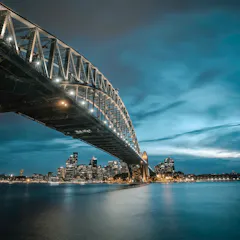
Five Bells is an elegy for Kenneth Slessor’s friend Joe Lynch, an artist who drowned in Sydney Harbour in 1927 after falling from a ferry.
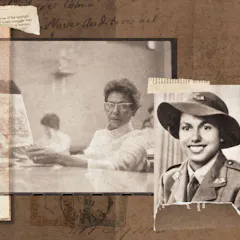
Oodgeroo’s debut collection We Are Going was the first ever book of poetry published by an Aboriginal person.
The End of Romance is a relatable dystopia that amplifies humanity’s burning problems – but offers a glint of hope

Kris Kneen’s Rite of Spring is a pulsing story that moves energetically across its terrain, delivering a sense of alien understanding.
Top contributors
-

Distinguished Professor Emerita of Creative Practice, Faculty of Arts and Design, University of Canberra
-
Professor, Chair of Australian Literature, The University of Western Australia
-
Professor in Politics and Journalism, University of Notre Dame Australia
-
Dean of Research (Creative), Adelaide University
-
Associate Professor in Literary Studies, RMIT University
-
Professor of English Literature, University of Southern Queensland
-
Emeritus Professor of Creative Writing, The University of Melbourne
-
Director of AustLit, Associate Professor in Digital Cultural Heritage, The University of Queensland
-
Senior Lecturer in English Literature, Charles Sturt University
-
Associate Professor of English, Australian National University
-
Director of Creative Writing, Macquarie University
-
Associate Professor, Creative Writing and Literary Studies, Victoria University
-
Associate Professor in Literary Studies, Monash University
-
Professor of Writing and Literature, Deakin University
-
Senior Lecturer, Creative Writing and English, Edith Cowan University