

From rising global temperatures to the fast-warming Arctic, early climate models predicted the changes half a century ago.
Articles on Extreme weather
Displaying 181 - 200 of 716 articles

AI models can deliver localized forecasts faster and cheaper than traditional models. The challenge is getting this technology where it’s needed.
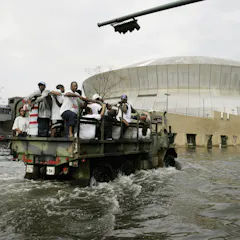
The 2005 hurricane was a disaster made worse by a lack of coordination and communication among governments and emergency leadership on the ground.

South Africa’s G20 presidency is working on getting communities ready to survive disasters.

More powerful storms and melting glaciers are flooding communities across the region again, with devastating effects, particularly in the mountains.
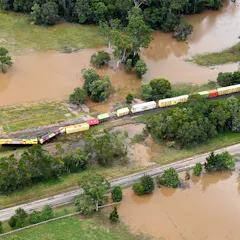
Climate-proofing Australia’s 29 rail networks won’t be easy – but here’s how it can be done.
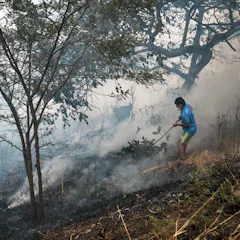
Even though you may mostly hear about fires in the US, Canada, Europe and Australia, it’s Africa that has far and away the most acreage burned and people exposed to fire.

Businesses have no option but to become more resilient in the face of extreme weather events.
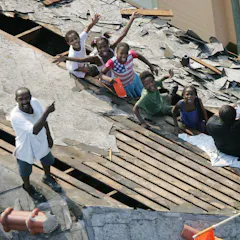
Looking back on New Orleans 20 years after Hurricane Katrina is a reminder that while such hazards may be natural, the death and destruction is largely human-made.
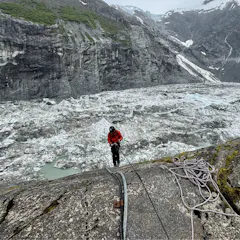
Suicide Basin, an ice-dammed lake on an arm of Mendenhall Glacier, has filled up with meltwater and sent destructive surges of water into Juneau for 3 straight summers.
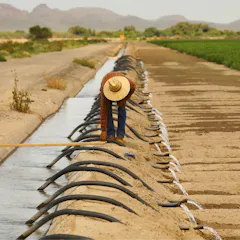
The drought has been linked to the Pacific Decadal Oscillation, a natural climate pattern. A new study finds global warming is now influencing that natural phenomenon.

New technologies are making it easier to find these urban heat islets, opening the door to new strategies for efficiently improving community health.

Current models for weather forecasting tend to ignore outlier data; learning how to incorporate these can help reduce risk and increase community resiliency.
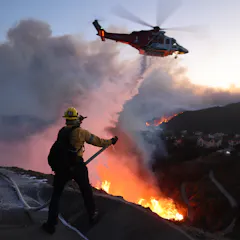
Parts of California are seeing fire season start more than 10 weeks earlier now than in the 1990s.

States used to be on their own when a disaster hit. Then the Great Mississippi River Flood of 1927 and the Dust Bowl showed why federal coordination was essential.

Low-income communities in Africa have done nothing to cause climate change but are worst affected by climate-related disasters, which are expensive to recover from.

Trees in full leaf are more likely to fall, which is why summer storms can be particularly disruptive.

Claimants in climate liability cases will benefit from a new emissions attribution method.

The ruling stems from the harm island nations are suffering as sea level rises, and it opens a door for future claims for reparations. But getting to that point isn’t so simple.
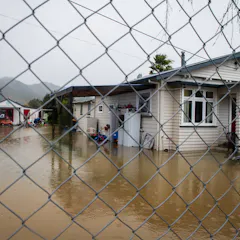
If businesses are already pricing in climate risks in New Zealand, then the benefits of mandatory reporting may be overstated, new research has found.
Top contributors
-

ARC Future Fellow and Associate Professor in Climate Science, ARC Centre of Excellence for 21st Century Weather, The University of Melbourne
-
Adjunct Professor of Environmental Geography, CQUniversity Australia
-
Professor of Climate Science, UMass Lowell
-
Principal Research Scientist in Extreme Weather, The University of Melbourne
-
Regius Professor of Meteorology and Climate Science, University of Reading
-
Professor of Economics and Environmental Studies, Wesleyan University
-
Associate Professor of Landscape Architecture and Urban Planning, Texas A&M University
-
Professor of Geology and Environmental Geosciences, University of Dayton
-
Professor emeritus, The University of Melbourne
-
Atmospheric Science Educator, Georgia Institute of Technology
-
Honorary Associate Professor of Climate Science, The University of Melbourne
-
Director, ANU Institute for Climate, Energy & Disaster Solutions, Australian National University
-
Meteorologist and Research Program Manager, University of Wisconsin-Madison
-
Senior Lecturer in Climate Science, Imperial College London
-
Professor of Natural Resources and Environmental Science, University of Vermont