
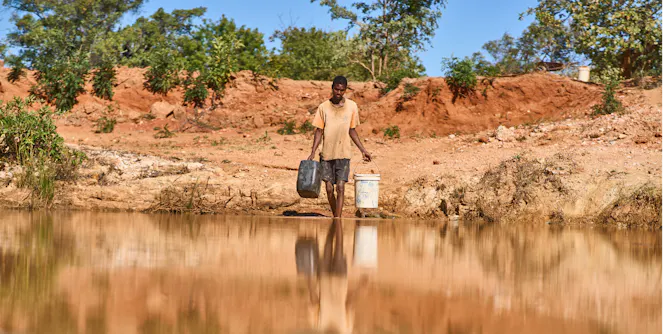
Climate change disrupts community stability, especially when it leads to food shortages and displacement. Governments must work with communities to set up policies to prevent this.
Articles on Drought
Displaying 141 - 160 of 767 articles
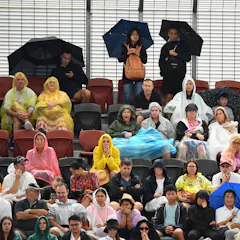
Signs of this potential La Niña are emerging fairly late. But new research may help make predictions earlier.

Smallholder farmers in Nigeria have told researchers they’d benefit from livestock index insurance which pays farmers when weather stations indicate that a severe drought or storm has hit the area.
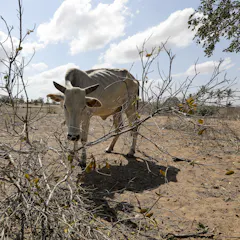
El Niño tends to cause heatwaves and droughts in southern Africa particularly.

Adding biochar to degraded soils boosts how much water soils can hold and help farmers survive droughts.

Builders knew how to keep people cool in hot, dry climates thousands of years ago. It’s time to get that knowledge back.

Kenyans and Malawians are paying high prices for maize: regional markets aren’t working well.
The drought is driven by El Niño, an unusual warming of surface waters in the eastern tropical Pacific Ocean that shifts weather patterns.
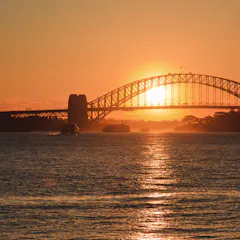
New research underscores the need to counter the effects of urban growth on drought by ensuring cities have enough green spaces to keep them liveable.
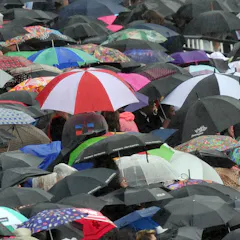
Mounting evidence shows rainfall is becoming increasingly variable, making the dry times drier and the wet much wetter. New findings confirm research into rainfall variability in Australia.
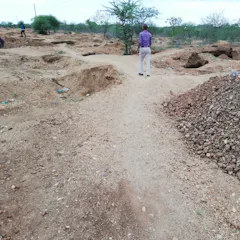
Smallholder farmers in Gwanda, rural Zimbabwe face droughts and rising temperatures from climate change. Their environment is also being damaged by artisanal gold miners, new research has found.

Calgarians have been asked to reduce their water use. These simple steps can help us all to reduce our water footprint and save money at the same time.
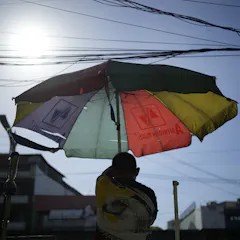
Climate change poses clear risks to human rights around the world. It is essential that people hold governments and decision-makers to account.
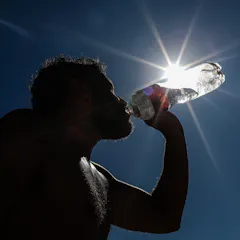
On a regional scale, global warming exceeded the Paris agreement’s upper climate target in the northern hemisphere.

African cities with over 10 million residents are getting hotter fast. Millions face disaster in these urban heat islands unless the cities start greening and adapting to climate change soon.

In the lead-up to the 2024 federal budget, there was hope for investments in water management and water-related infrastructure. Those hopes were misplaced.
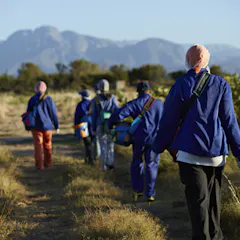
The University of Cape Town’s new report on the impacts of climate change in South Africa found that heatwaves and water stress will affect jobs, deepen inequality, and increase gender-based violence.
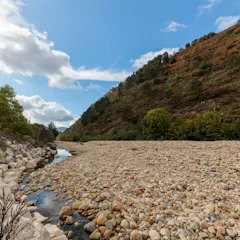
As droughts become more widespread in tourist hotspots, research finds that timers in showers help tourists and university students shorten their showers and save water.
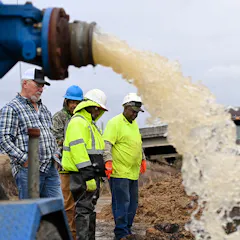
Extreme downpours and droughts, both fueled by rising global temperatures, are taking a toll. Communities trying to manage the threats face three big challenges.

Natural variability in Australian rainfall can produce “mega-droughts” lasting 20 years or more. Add in human-caused climate change, and future droughts may be far worse than imagined.
Top contributors
-

ARC Future Fellow and Associate Professor in Climate Science, ARC Centre of Excellence for 21st Century Weather, The University of Melbourne
-
Professor, Water and Landscape Dynamics, Fenner School of Environment & Society, Australian National University
-
Adjunct Professor (Practice) in Climate Science, School of Earth, Atmosphere and Environment, Monash University
-
Professorial Fellow, University of Canberra
-
Regents Professor Emeritus and Morris K. Udall Professor of Law & Public Policy Emeritus, University of Arizona
-
Climate Scientist, Australian Bureau of Meteorology
-
Climate scientist, Australian Bureau of Meteorology
-
Associate Professor in Environmental Science, Western Sydney University
-
Climate Scientist, Australian Bureau of Meteorology
-
Lecturer, School of Agriculture, Food and Ecosystem Sciences, The University of Melbourne
-
Associate Professor of Civil Engineering, Boise State University; United Nations University
-
Professor of Physical Geography, University of the Witwatersrand
-
Regius Professor of Meteorology and Climate Science, University of Reading
-
Visiting Adjunct Professor, School of Governance, University of the Witwatersrand
-
Senior Climatologist, Australian Bureau of Meteorology