
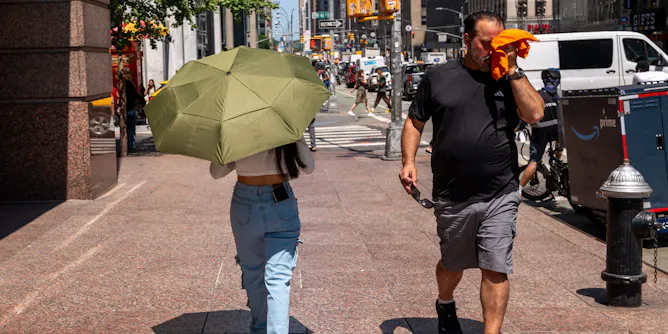
A National Academy of Sciences report examined the latest advances in extreme event attribution science. As four of the authors explain, the type of disaster makes a difference.
Articles on Drought
Displaying 41 - 60 of 767 articles
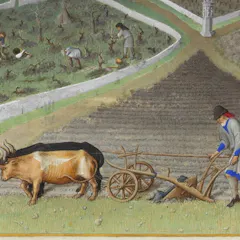
Monks wrote chronicles about the devastating heat of the 13th century, and detail what happened.
Brazil holds 12% of the world’s freshwater reserves and yet growing water insecurity reveals some of the country’s deepest sanitation inequalities, which are particularly relevant to Marajó, its largest coastal island.

Four experts explain how we can protect the rare – and increasingly at risk – spidery wattle.
Previous rains and grain stocks could reduce the impact of the expected drought.
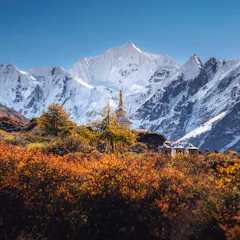
Researchers designed a new way of collecting data about snowfall in the Himalayas which is much more accurate than the ones used before.

Too often, Australian authorities have relied on ad hoc preparations for the droughts and bushfires made more likely by El Niño.
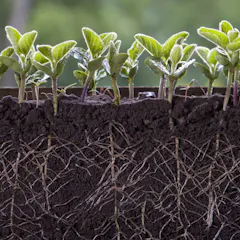
Too much fertilizer disrupts the hidden world of soil-dwelling microbes that were sustaining healthy crops long before synthetic fertilizer was invented.
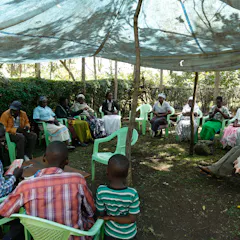
A powerful Super El Niño is looming. Africa has learned hard lessons from past climate disasters that could help the world prepare.

Every year, the number of human-caused fires spikes on July 4, and many of them are related to fireworks. When trees and grasses are dry and the temperature high, the risk rises even more.
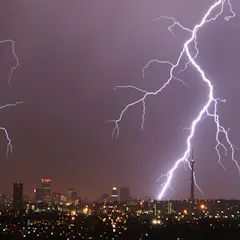
Citizens don’t just respond to disasters. They also respond to how governments manage them.

The science will tell us what is likely to happen. The harder question is whether that knowledge reaches people in a form they can feel and act on.
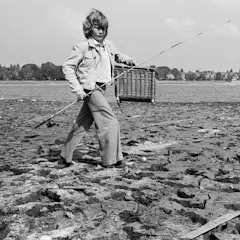
For 15 consecutive days, temperatures were over 32°C. Today, heatwaves are 3°C or 4°C hotter.
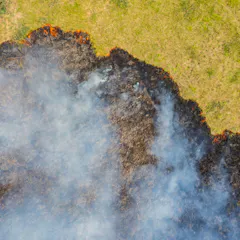
Studying the scale and intensity of previous fires can help us to detect thermal hotspots earlier and support faster, smarter crisis response and post-fire restoration.

Public trust in UK water companies is low, and this could be a challenge when the country faces another serious drought.
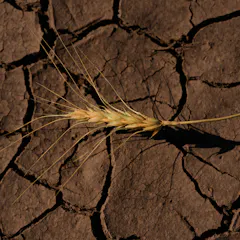
The modern food system was built on the expectation that geography would spread out the risks from droughts and floods. Climate change is testing all of that at once.
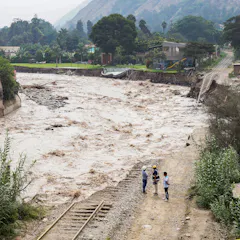
This atmospheric phenomenon can cause floods and droughts across the world.
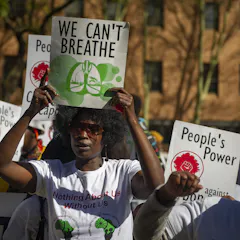
A landmark climate case before the African Court asks what African states must do to protect human rights, phase out fossil fuels, and tackle climate change.
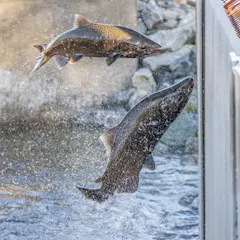
Salmon have faced a boom-bust cycle for years. Making their recovery last longer will require some big changes, including how hatcheries produce fish.

Even though annual precipitation is rising nationally, the landscape is drying out more rapidly. That’s changing the water cycle.
Top contributors
-

ARC Future Fellow and Associate Professor in Climate Science, ARC Centre of Excellence for 21st Century Weather, The University of Melbourne
-
Professor, Water and Landscape Dynamics, Fenner School of Environment & Society, Australian National University
-
Adjunct Professor (Practice) in Climate Science, School of Earth, Atmosphere and Environment, Monash University
-
Professorial Fellow, University of Canberra
-
Regents Professor Emeritus and Morris K. Udall Professor of Law & Public Policy Emeritus, University of Arizona
-
Climate Scientist, Australian Bureau of Meteorology
-
Climate scientist, Australian Bureau of Meteorology
-
Associate Professor in Environmental Science, Western Sydney University
-
Climate Scientist, Australian Bureau of Meteorology
-
Lecturer, School of Agriculture, Food and Ecosystem Sciences, The University of Melbourne
-
Associate Professor of Civil Engineering, Boise State University; United Nations University
-
Professor of Physical Geography, University of the Witwatersrand
-
Regius Professor of Meteorology and Climate Science, University of Reading
-
Visiting Adjunct Professor, School of Governance, University of the Witwatersrand
-
Senior Climatologist, Australian Bureau of Meteorology