
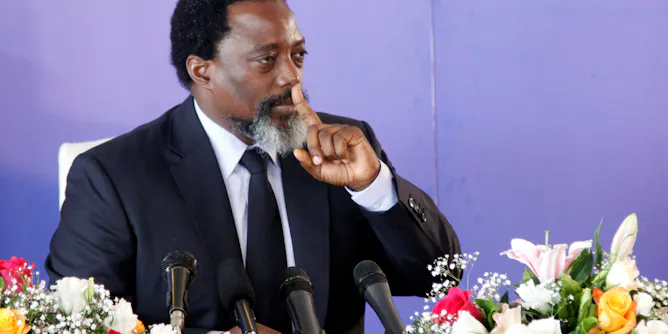
Africa needs strong institutions. But they can only be built if there’s a change in leadership.
Articles on Democracy in Africa
Displaying 181 - 200 of 258 articles
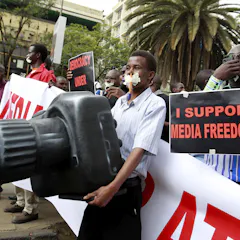
Not since the bad old days of former President Daniel Moi’s regime has Kenya witnessed such a swift and calculated assault on the media.
Kenya’s government has brought the role of the media into sharp focus after shutting down three main television stations.
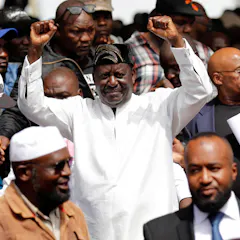
Raila Odinga’s swearing-in has rattled Kenya’s government thanks in part to the large crowds that turned up.
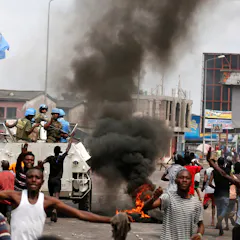
Too often developments in one country are seen in isolation. In southern Africa events in one affect others in the region.
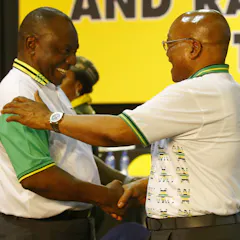
President Jacob Zuma’s camp is pushing to have him replaced by an interim leader as an excuse to prolong his disastrous rule for their own benefit.
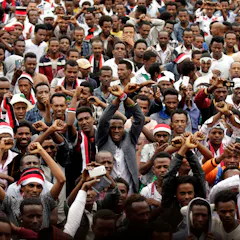
For the first time in years Ethiopia’s ruling coalition faces real political competition from two parties within its own ranks. Can they usher in democracy after nearly 30 years of authoritarianism?
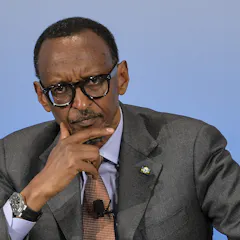
The Rwandan model can’t be replicated easily given that it depends heavily on political dominance and tight, centralised control of patronage networks.

Robert Mugabe’s rule in Zimbabwe is over. But the country’s road to democracy remains a bumpy one as Zanu-PF, the new president and the military go about entrenching power.
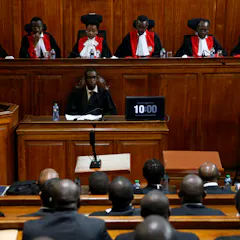
The past 12 months provided further evidence of the danger of democratic backsliding in Africa. But it also saw powerful presidents suffer embarrassing setbacks in a number of countries.
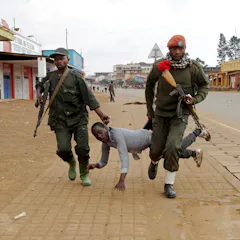
President Joseph Kabila was supposed to step down at the end of his term in 2016. By clinging on to power he threw the Democratic Republic of Congo into a vicious cycle of deadly conflict.
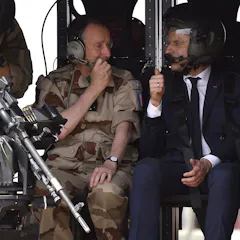
Some African countries present a facade of democracy. The absence of substantive democracy is contributing to instability on the continent.
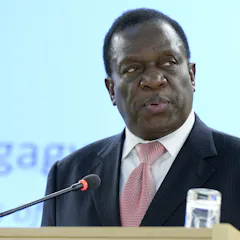
After the fall of autocratic ruler Robert Mugabe, Zimbabwe faces a difficult choice between the stability of a transnational government or a potentially divisive election contest.
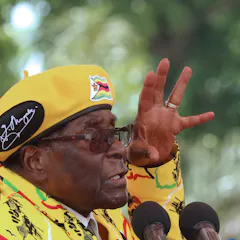
Are we witnessing the end of an era in which dictators stayed in power for decades? If so this must be good not only for Angola and Zimbabwe but for southern Africa as a whole.

The protracted political crisis in Zimbabwe has worsened since President Mugabe fired vice president Emmerson Mnangagwa. Now the military has entered the fray, raising fears a coup is imminent.
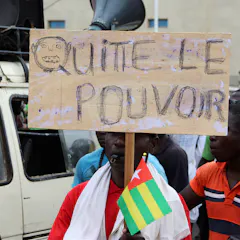
The seeds of discord that were planted in independent Togo have resulted in ethnic divisions, and a state that has long been ruled by family. But recent protests could mean things are about to change.
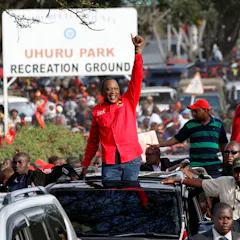
While Kenya’s political leaders often adopt a populist approach to politics, it’s not unimaginable that the courts could also pursue a populist path by claiming to speak for the people.
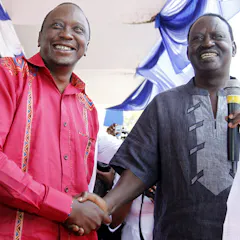
Democracy doesn’t seem to work within societies governed by politics of ethnicity. Instead, elections continue to offer up the hard choice between electoral credibility and political stability.
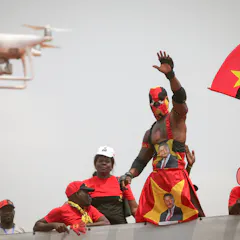
Angola’s recent election results showed the ruling MPLA losing support across the country. If opposition claims are to be taken seriously, the losses could be more severe than they appear.
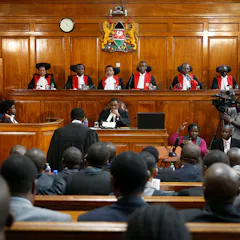
Kenya’s electoral commission faced many legal challenges before the general election, and yet another after the poll. But how will the Supreme Court’s historic ruling impact the country’s democracy?
Top contributors
-

Professor of Democracy, University of Birmingham
-
Extraordinary Professor, Department of Political Sciences, University of Pretoria
-
Professor of Sociology, University of the Witwatersrand
-
Associate Professor of International Studies, University of Nottingham
-
Lecturer in African History, Queen Mary University of London
-
Professor of Political Studies, University of Johannesburg
-
Extraordinary Lecturer, University of Pretoria
-
Research Associate, Dept of Anthropology & Development Studies and Fellow, Clare Hall, University of Cambridge, University of Johannesburg
-
Professor in Political Science, University of South Africa
-
Professor, Department of Political Sciences, University of South Africa
-
Head of Department, Public and Environmental Law Department, University of Limpopo
-
Senior Lecturer of Political Science, Georgia Gwinnett College
-
Emeritus Professor, University of Cape Town
-
Director of the Leaders of Africa Institute and Research Affiliate with Davidson College, Davidson College
-
Honorary Professor of International Relations, University of the Witwatersrand