
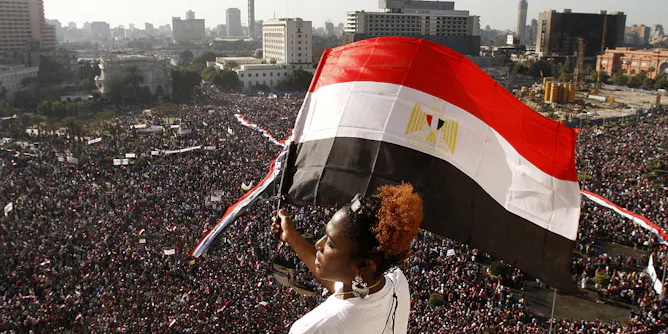
The effects of mass mobilisation have changed dramatically over time.
Articles on Authoritarianism
Displaying 1 - 20 of 367 articles

Can legal proceedings against former ruling families strengthen the institutions that once protected them?

Many fact-checkers are moving away from declaring claims as true or false, and trying to help people judge information for themselves.

In recent years, several governments have placed the very heritage they are charged to protect at risk.

Informant culture is so embedded in everyday Iranian life that there are common Persian terms to describe it.

What do Mali’s military rulers and Burundi’s governing party have in common?

Taiwan pushes back every day against an authoritarian vision of international order that allows dictator regimes to decide who’s allowed to be seen, named and heard.

Rallies hold great significance in Tanzania and are central to everyday political communication.

Music created the networks, identities and spaces of trust that made collective political action possible in Sudan’s 2019 revolution.

Hosting the FIFA World Cup games can prove a propaganda win for authoritarian nations. But the data suggests the tournament favors democracies.

New research indicates that collective forms of governance were more likely.
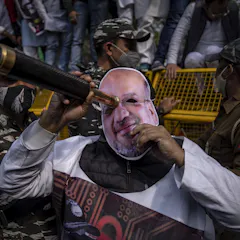
Democracies can either defend rights in the digital age, or drift into complicity as the architects of a new, global authoritarianism enabled by AI.
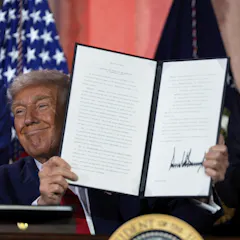
Authoritarian governments, including the Trump administration, are reorienting AI safety provisions away from protecting the public toward coercing support for the regime.

The Trump administration has made many threats against nonprofits whose missions it disagrees with.
Democracy cannot thrive, or even survive, when its leaders see themselves as godlike and divide citizens into believers and heretics, a scholar writes.
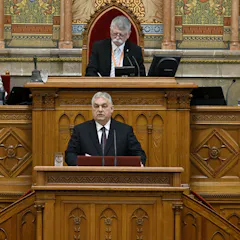
Orbán’s 16-year rule changed Hungary’s religious landscape.

A key challenge facing Magyar will be to undo the system Orbán has put in place to exercise control over Hungary.

Polling in Russia suggests strong support for President Vladimir Putin. Yet below the surface, popular sentiment is more mixed.

Freud’s insights into trauma, repression and the unconscious are finding new relevance and millions of followers.

State resistance to federal immigration enforcement in Minnesota illustrates how federalism keeps authority divided and disputed.
Top contributors
-

Professor of Democracy, University of Birmingham
-
International Affairs Editor, The Conversation
-
Chaired professor for Scholarship in the Public Interest in the Department of English and Cultural Studies, McMaster University
-
Associate Professor of Political Science, Michigan State University
-
Professor of Political Science, Penn State
-
Senior Visiting Scholar with the Center for the Study of Genocide and Human Rights, Rutgers University
-
Professor of Communication Studies, Colorado State University
-
Associate Professor, School of Government and International Relations, Griffith University
-
Professor of Political Science, Director of Center for Islamic & Arabic Studies, San Diego State University
-
Spécialiste de la politique américaine, Sciences Po
-
Professor in the Department of Government, University of Essex
-
Professor in Political Science and International Relations, Durham University
-
Associate Professor of Psychology, Lund University
-
Assistant professor, University of Sussex
-
Professor of Practice in Diplomacy, Fletcher School of Law & Diplomacy, Tufts University