
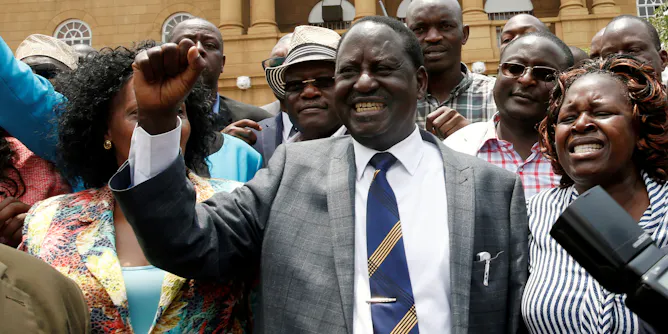
Kenya’s Supreme Court landmark ruling has opened the door to robust conversation around the country’s nascent democracy, paving the way for rule of law and stronger institutions.
Articles on Democracy in Africa
Displaying 201 - 220 of 258 articles
By failing to provide details on what invalidated Kenya’s election, the country’s Supreme Court has created an impossible timeline for organising re-elections within 60 days.
One way to diffuse the tension when Kenyans choose a head of state is to take that decision out of their hands. This could help achieve ethnic cohesion.
Some might see Kenya’s presidential election petition as ‘nuisance legislation’. But legal arbitration must be encouraged as an audit to the democratic process.
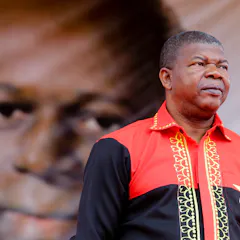
Angola’s president-elect, João Lourenço, has a reputation for relative probity. But, he’s unlikely to rock the boat as Eduardo dos Santos remains party chairman.
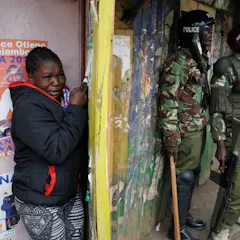
Much international media focus has been on Kenya’s election being a trigger for violence, but that’s only part of the story. The ongoing grievances of Kenyans must be addressed.
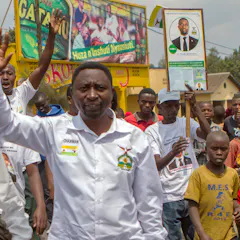
With frequent irregularities, it’s easy to become cynical about elections in Africa. But polls are an essential component of the continent’s growing democracy.
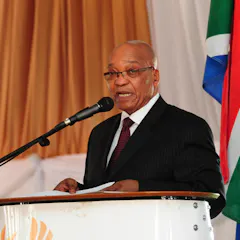
What South Africa’s opposition parties want Parliament and the courts to do would damage the country’s democracy.

President Joseph Kabila remains in office despite upheaval in the DRC. He can still save face and a change of heart could see him become the first Congolese president to relinquish power.
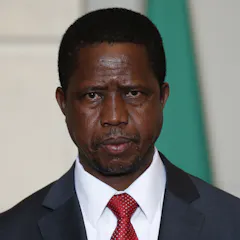
Zambia has gone from a country where people engaged freely in open political debate to one where most people now look over their shoulders to see who’s listening.
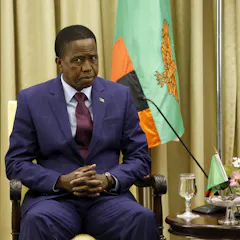
Zambia’s president is securing powers to consolidate his political control while generating ‘plausible deniability’ to whether or not he has fatally undermined democracy.
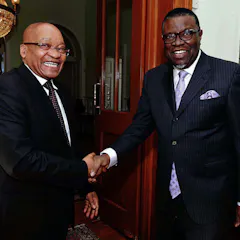
South Africa’s ANC and Namibia’s SWAPO, governing parties, enter crucial leadership elections this year, with presidents Zuma and Geingob both facing challenges.
As we celebrate Africa Day and reflect on how far the continent has come since the Organisation of African Unity was founded in 1963, it’s a good time to assess whether democracy is working.
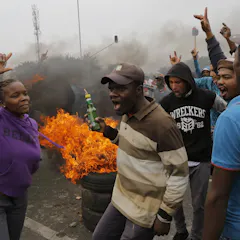
Protests in South Africa are about more than just service delivery of basic services such as water and electricity. They reflect a wider crisis about the failure to build a more equitable society.
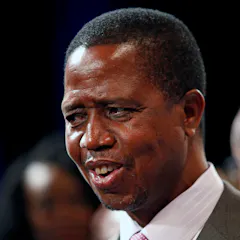
The world’s media, which has in the past found Zambia uninteresting, are suddenly paying more attention to the impoverished nation, for all the wrong reasons.
Most Africans see courts as legitimate but only a slim majority trust them while one in three people believe judges are corrupt.
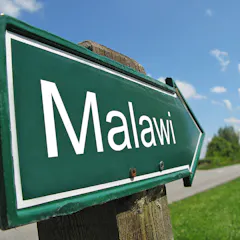
The proposed change to Malawi’s electoral system is straightforward and makes logical sense. Yet it’s more complex and if adopted would revolutionise local politics.

Multiparty democracy came to Tanzania in 1995 but the autocratic rule under the country’s first post-independence leader
Julius Nyerere, seems to be echoed by current President John Magufuli.
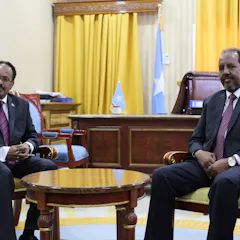
The Somali election didn’t deliver the long-awaited universal suffrage, but was another exercise in limited democracy that extended only to a small part of the population.
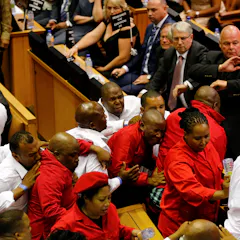
Opposition parties in sub-Saharan Africa struggle to prove themselves worthy to skeptical voters who, unlike in Western competitive systems, don’t trust them over former liberation movements.
Top contributors
-

Professor of Democracy, University of Birmingham
-
Extraordinary Professor, Department of Political Sciences, University of Pretoria
-
Professor of Sociology, University of the Witwatersrand
-
Associate Professor of International Studies, University of Nottingham
-
Lecturer in African History, Queen Mary University of London
-
Professor of Political Studies, University of Johannesburg
-
Extraordinary Lecturer, University of Pretoria
-
Research Associate, Dept of Anthropology & Development Studies and Fellow, Clare Hall, University of Cambridge, University of Johannesburg
-
Professor in Political Science, University of South Africa
-
Professor, Department of Political Sciences, University of South Africa
-
Head of Department, Public and Environmental Law Department, University of Limpopo
-
Senior Lecturer of Political Science, Georgia Gwinnett College
-
Emeritus Professor, University of Cape Town
-
Director of the Leaders of Africa Institute and Research Affiliate with Davidson College, Davidson College
-
Honorary Professor of International Relations, University of the Witwatersrand