

Scientists have come up with a number of theories about the multiverse.
Articles on Curious Kids
Displaying 321 - 340 of 833 articles

The dwarf planets in our Solar System are cold, dark, far away and full of surprises.
Cockroaches have been on Earth far longer than humans and may outlast us. Here are a few reasons why.

It may have had something to do with protecting female purity. No official statute clearly required men to do all the acting back then.

Russian President Vladimir Putin wants parts of Ukraine to be closer to Russia, and would like to prevent Ukraine from becoming part of NATO.
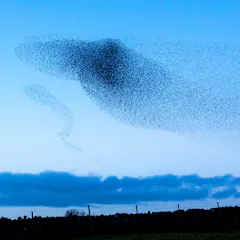
These coordinated movements of a flock of starlings follow no plan or leader. Scientists used to think the animals must communicate via ESP to create these fast-moving blobs.

Some penguins would have been as tall (or even taller) than adults today.

Who are the Ukrainians and when were they part of the same empire as Russia? A scholar answers basic questions on war in Ukraine.

As long as you don’t tune out the world and protect your hearing, it’s hard to overdo it.

The answer comes from how the Romans measured the year.

Scientists need to be good at asking questions, investigating the world to find answers, and keeping in mind that no matter how much they know, there’s always more to learn.

DNA contains all the instructions needed to make your body work.

Hard and strong, or bendy and flexible? A cartilaginous skeleton provides advantages in the ocean, but wouldn’t stand up to life on land.

Humans might one day be able to live somewhere else in the Universe.

Poop comes in many shapes, sizes and textures. The kind that’s too runny might be the result of wayward germs, Crohn’s disease or lactose intolerance.
That brownish/yellowish gunk that comes out on your finger if you scratch deep inside your ear? It actually serves an important purpose in your body.

You can imagine a white hole as being a black hole in reverse — but is such a thing really possible?

Though you might not think so to look at them, plants have a busy day.
Blood plays a vital role in keeping us alive, from delivering oxygen to the body’s organs to fighting off infections.
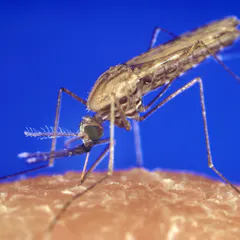
What we call mosquitoes are actually 3500 different types of insects, and they all behave differently.
Top contributors
-

Reader in Astrophysics, Keele University
-
Associate Professor of Science & Medicine, Bond University
-
Professor (Astrophysics), University of Southern Queensland
-
Associate Dean of Innovation and Engagement, Swinburne University of Technology
-
PhD Candidate, University of Southern Queensland
-
Distinguished Professor Emeritus of Anthropology, Binghamton University, State University of New York
-
Professor, Philosophy of Science, The University of Melbourne
-
Professor, Macquarie University
-
Researcher, The University of Melbourne
-
Assistant Professor of Medicine, Bond University
-
Professor of Science Communication and Chemistry, University of Hull
-
Lecturer, University of Southern Queensland
-
Associate Professor, School of Animal and Veterinary Science, Adelaide University
-
Principal Lecturer in Wildlife Conservation, Nottingham Trent University
-
Whale Scientist and Lecturer, Faculty of Science and Engineering, Macquarie University