
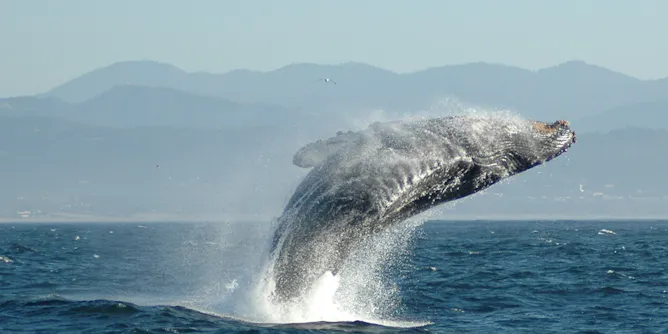
Robbie Arnott’s third novel, Limberlost, is an exquisitely written tale of human and ecological destruction, with a thread of hope.
Articles on Australian literature
Displaying 161 - 180 of 339 articles
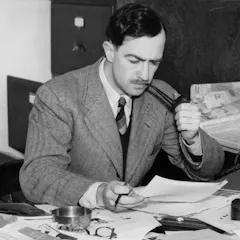
In Emperors in Lilliput, Jim Davidson examines legacy of Clem Christesen and Stephen Murray-Smith.
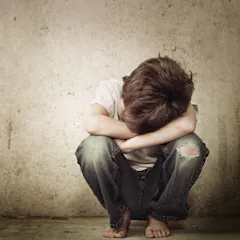
A story of ‘falling upwards’, Childhood examines the author’s painful memories with detachment and unsparing honesty.
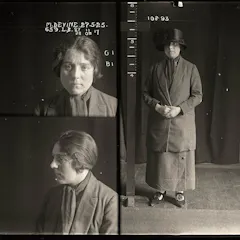
A panoramic tale and an in-depth character study, Iris immerses its readers in a world of impoverishment and struggle.
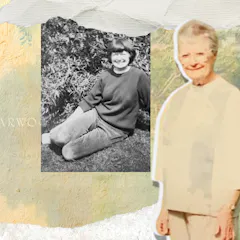
The public image of Gwen Harwood as a suburban housewife is belied by the raw sensuality of her erotic poetry. And in her personal life, she claimed her right to move – and love – where she would.
Shaun Prescott’s second novel is a gothic tale of skin-crawling, psychological dysfunction.
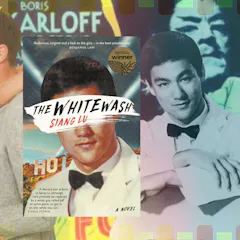
Siang Lu’s debut novel suggests whitewashing Asians for the screen is profitable. ‘People pay to see foreignness repackaged as stereotypes – and thus rendered virtually invisible.’
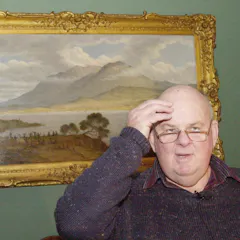
Les Murray’s habit of rearranging and recontexualising his poetry was a reflection of his distinctive way of perceiving the world.
In his third book, An Ordinary Ecstasy, Luke Carman conducts an immersive conversation with literature and life.

Miles Franklin Award winning novelist Amanda Lohrey explores the political and the personal in a way that makes her unique among contemporary Australian writers.
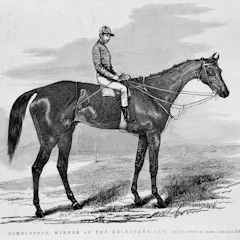
A blend of fact and fiction, Nimblefoot imagines the life of a long forgotten Australian sporting hero.
Hard Joy is an intimate and often idiosyncratic work that speaks of the importance of honest relationships and a rich life of the mind.
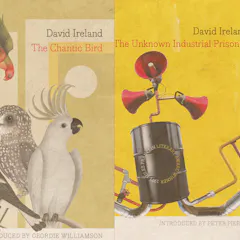
David Ireland’s masterful mosaic novels explored sweeping existential issues and their impact on the lives of those oblivious to them. They were characterised by his vision, compassion and wit.
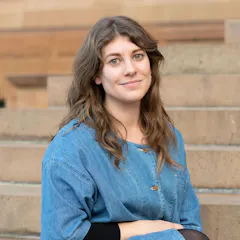
Bodies of Light is brutally precise in its portrayal of the enduring consequences of a traumatic childhood.
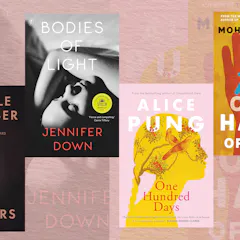
The five shortlisted novels share various threads concern – childhood stories, themes of migration and male violence – but are infused with a sense of play and measured optimism.
Shades of classic literature are discernible in The Diplomat, a novel that delves into the disreputable worlds of art and drug addiction.
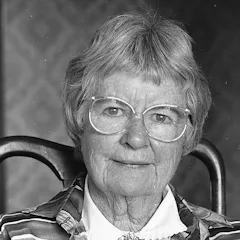
Two new books examine the life and legacy of an inspiring poet whose work resisted patriarchal constraints.
Noongar author Claire Coleman’s new novel forces us to question what we value and how we live by combining dystopia and utopia, in a near-future very like our own.
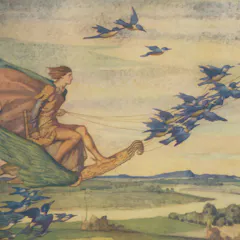
From mythical Moth people, who kidnapped children, to threatening desert fairies in loincloths, early Australian fairy tales helped sanitise white settlement, expressing colonial fears.
Questions of belonging inform a new collection of lyrical, meditative essays that interrogate the distinction between nature and culture.
Top contributors
-

Distinguished Professor Emerita of Creative Practice, Faculty of Arts and Design, University of Canberra
-
Professor, Chair of Australian Literature, The University of Western Australia
-
Professor in Politics and Journalism, University of Notre Dame Australia
-
Dean of Research (Creative), Adelaide University
-
Associate Professor in Literary Studies, RMIT University
-
Professor of English Literature, University of Southern Queensland
-
Emeritus Professor of Creative Writing, The University of Melbourne
-
Director of AustLit, Associate Professor in Digital Cultural Heritage, The University of Queensland
-
Senior Lecturer in English Literature, Charles Sturt University
-
Associate Professor of English, Australian National University
-
Director of Creative Writing, Macquarie University
-
Associate Professor, Creative Writing and Literary Studies, Victoria University
-
Associate Professor in Literary Studies, Monash University
-
Professor of Writing and Literature, Deakin University
-
Senior Lecturer, Creative Writing and English, Edith Cowan University