

Retired football players have a higher risk of developing dementia.
Articles on Alzheimer's disease
Displaying 21 - 40 of 455 articles

Medicine may slow decline for some, but dementia care must also protect dignity, identity and story when speech begins to fade.

New study of older adults in Sweden suggests healthier diets may still be linked to lower dementia risk even after early biological changes are detected.

A woman with advanced dementia appeared to regain speech and independence after psilocybin. The findings are intriguing, but far from proof.

Animal experiments and analysis of patient records suggest that taking glucosamine is safe for a healthy brain but is associated with further decline in diseased brains.
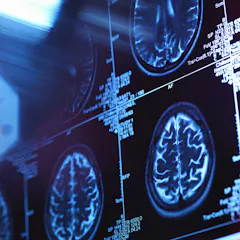
Studying middle-aged populations is important to understanding what Alzheimer’s disease looks like in the earliest stages, to make preventive measures more effective.

As G7 societies age and birth rates decline, we must invest in collaborative open science research, to optimize brain health for every citizen.

Bilingualism may interact with verbal memory and sex steroids to influence dementia risk in unexpected ways.

An in-ear device could help detect the early signs of Alzheimer’s and Parkinson’s, well before symptoms appear.

A major new study offers a complicated, but hopeful, answer this question.

It’s estimated there are more than 100 types of dementia.

Keeping a tiny brain area called locus coeruleus functioning properly may stave off symptoms of Alzheimer’s disease and keep the aging brain healthy

Research has found that older adults who experience persistent difficulties in daily activities like preparing meals, shopping or driving face a higher risk of developing Alzheimer’s disease.

A major new study finds people with type 1 diabetes face nearly three times the dementia risk. But lifestyle changes and new treatments offer real hope.

Around 200 million animals are used in lab research around the world each year. Organoids may one day replace them.

Your mind goes blank in the supermarket. What was it you meant to buy? Here’s what’s going on in your brain and when you need to see your GP.

Investigating sex-specific factors could lead to more targeted therapies and better understanding of diseases, such as Alzheimer’s.

A major US study links air pollution to Alzheimer’s risk in older adults. With fine particles far exceeding safe limits globally, the findings carry urgent implications.

One of the biggest barriers to diagnoses of brain disorders is that symptoms — particularly those of apathy — can be mistaken for depression, resulting in inappropriate treatment and poorer health.

As dementia rises, scientists are exploring whether menopause hormone therapy could support brain health as well as relieve symptoms.
Top contributors
-

PhD Candidate, Neuroscience, University of Sheffield
-
Research Fellow in Neuroimmunology, UCL
-
Professor of Chemistry and Senior Scientist of the Krembil Research Institute, University Health Network, University of Toronto
-
Professor of Biological Psychology, Loughborough University
-
Head of Clinical Services, Dementia Support Australia, & Associate Professor of Psychiatry, Monash University
-
Professor Emeritus of Molecular Neurobiology at the University of Manchester and a Visiting Professorial Fellow, University of Oxford
-
Associate Professor, Turner Institute for Brain and Mental Health, Monash University
-
Professor of Neurology and Neuroscience, University of Florida
-
Étudiant au doctorat en psychologie, Université du Québec à Montréal (UQAM)
-
Post grad student at University of Edinburgh, University of Edinburgh
-
Host, The Conversation Weekly Podcast, The Conversation
-
Professor of Neurology, UCL
-
Associate Professor in Cellular Neuroscience, University of Reading
-
Professor of Psychology in Epidemiology, UCL
-
Affiliate Professor, Department of Family Medicine, McGill University