

There is not much information on artefacts used by Stone Age humans to make sound and music – but the first comprehensive survey is a good start.
Articles on Zimbabwe
Displaying 161 - 180 of 382 articles

Her new book “This Mournable Body” was announced as a Booker Prize contender just days before her arrest for protesting against a government clampdown.
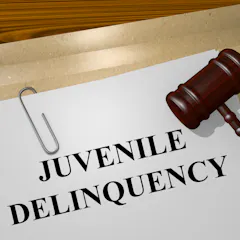
Given their ability to accept correction, children have a better claim to rehabilitation, reorientation and reintegration.
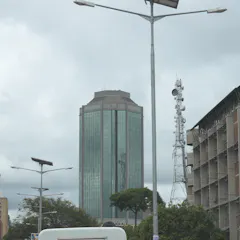
Zimbabwe wants to issue a sovereign bond to raise $3.5 billion it has agreed to pay as compensation to white farmers, but the economic and political conditions aren’t conducive to such an issuance.

Artists are filling the state’s silence by revisiting history so that it can be discussed.
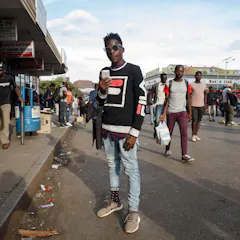
Apps like WhatsApp have connected more voices to participate in live talk radio - but this comes with new challenges.

Sexist slandering has been used not just to describe Grace Mugabe, but to denigrate any women who aspire to political positions.
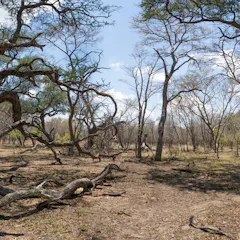
Zimbabwe’s policy makers believe that deforestation is a threat to the economy, but citizens believe environmental degradation is an outcome of the country’s dire political and economic situation.
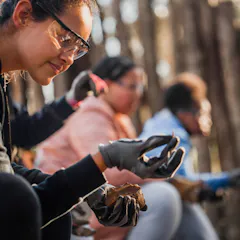
There are some moves towards recognising and redressing archaeology’s colonial history.

Statistical models and the knowledge of on-the-ground rangers are valuable and complementary sources of evidence for biodiversity conservation.

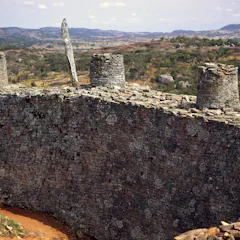
Without a clear framework within which decisions can be made, heritage resources will forever be threatened by development.
Archaeologists have long studied diseases in past populations. They’ve explored the evolution of pathogens and how they interacted with humans.
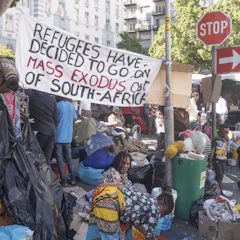
The policy and law applying to refugees and asylum seekers in South Africa is largely progressive. But, in practice, they continue to endure hardship and unfair treatment by officials.
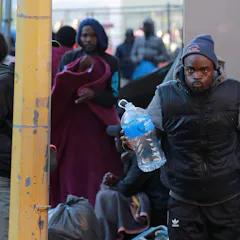
From getting schooling for their children through an app in the wrong language to trouble finding gloves and masks, refugees across the globe face different challenges in dealing with the coronavirus.
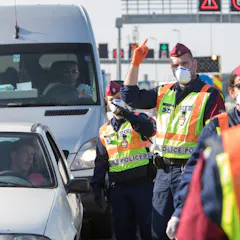
National emergencies allow for the purest expressions of sovereign power, testing the government’s commitment to human rights. Some leaders are failing the coronavirus test, experts say.

Rumours of the collapse of the cryptoworld have been much exaggerated.
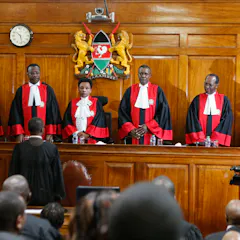
By pushing their usually valid complaints onto the streets and the courts, opposition leaders deny governments the popular goodwill and international credibility they need to govern effectively.
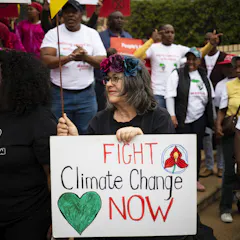
Global cooperation is essential if climate action is to be effective, amid the right-wing onslaught against multilateralism.
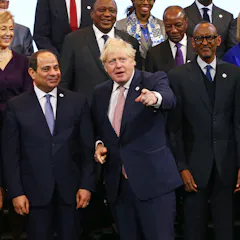
Trade and investment can help reduce poverty, promote women’s empowerment, and support children’s rights. It can also do the opposite.

Mathematical modelling tools may predict where tsetse flies are being driven to extinction.
Top contributors
-

Professor of World Politics, SOAS, University of London
-
Research Associate, Dept of Anthropology & Development Studies and Fellow, Clare Hall, University of Cambridge, University of Johannesburg
-
Professorial Fellow, Institute of Development Studies
-
Senior Research Associate, University of Johannesburg
-
Professor of Sociology, University of the Witwatersrand
-
Senior Lecturer, Stellenbosch University
-
Professor of Democracy, University of Birmingham
-
Professor of Economics, Salisbury University
-
Extraordinary Professor, Department of Political Sciences, University of Pretoria
-
Assistant Professor, Harvard University
-
Visiting Professor, University of Kent
-
DLitt et DPhil Student in Politics, University of South Africa
-
Senior Research Fellow, Centre for the Advancement of Scholarship, University of Pretoria., University of Pretoria
-
Associate Professor in the Politics of Africa, University of Oxford
-
Honorary Senior Research Fellow, University of Stirling