
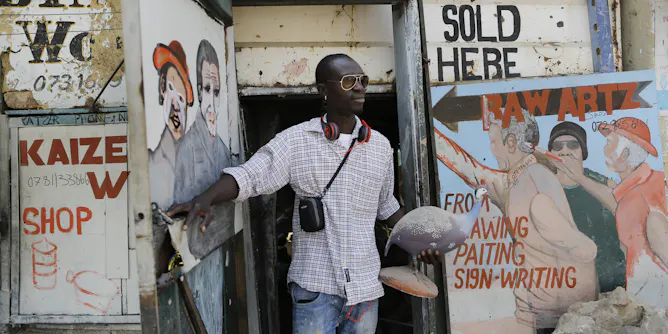
Young black men are often viewed through a criminal lens. A new book based on an 11-year-long study of adolescent men in a South African township upends the stereotypes.
Articles on Youth mental health
Displaying 121 - 140 of 185 articles

COVID-19 is affecting many people’s state of mind, but some of the most vulnerable members of our communities are children and youth with pre-existing mental health challenges.

The way you pursue your goals can be the difference between maintaining happiness or feeling stressed. Try not to overthink it and break big goals up into smaller, more manageable ones.

Here’s what you need to know before you share your mental health story, or ask others to share.

A new report offers data on mental health in young people.
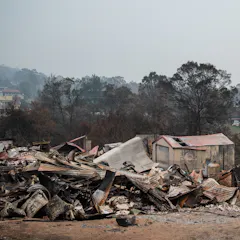
Some students are grieving the loss of their homes or loved ones. Even those not directly affected by fires may be distressed by stories they’ve heard or images they’ve seen. How can schools help?

Important learning takes place through experiences of fun and belonging at an arts-based mindfulness program.

If you suspect your child – whether they are in early childhood education and care, primary or secondary school – has a questionable friend, here are some tips on how to deal with it.

Resilience is the ability to bounce back from stressful life events. Teenagers with at least one close friend and strong family relationships are more resilient than teens without such relationships.

We asked five experts if social media was damaging to children and teens, and four out of five said yes.

Researchers found that between 2008 and 2016, self-harm rates among Danish teenagers actually decreased.

The Productivity Commission has highlighted the growing burden of mental illness in Australia. But to really change things, its final recommendations should have a sharper focus on prevention.

Stress is actually our body getting us ready to take on a challenge. A stress response can increase oxygen to the brain and improve attention, focus, energy and determination.
More than 800 students completed a questionnaire about peer aggression. Nearly 50% said they had been harmed by a peer ,while around 30% said harmful experiences were just “banter”.
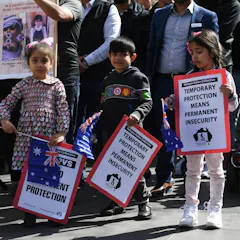
In a recent report, the UN Committee on the Rights of the Child was highly critical of the Australian government for its youth justice failures and the rise of children with mental health issues.

The teen years are filled with fun for some, but many youth begin to experience serious depression, which can set them up for recurring bouts. A new study offers hope: Support and understanding help.

A study has found children between the ages of 8 and 14 who take care of a family member with a drug addiction or mental illness aren’t very happy at, and don’t feel all that safe, at school.

Researchers examined how youth on three continents think about digital technology today and conducted an experiment to learn what youth said after living without their phones for a week.

UK research indicates outcomes for children with mental health problems may have become worse in more recent generations.

Children are still being held in police cells and juvenile detention for low-range offences, under alarming conditions. Here’s how their mental health and future prospects suffer.
Top contributors
-

Tier 1 Canada Research Chair in School-Based Mental Health and Violence Prevention, L’Université d’Ottawa/University of Ottawa
-
Professor, Canada Research Chair in Determinants of Child Development, Owerko Centre at the Alberta Children’s Hospital Research Institute, University of Calgary
-
Professor emeritus, The University of Melbourne
-
Professor of Adolescent Health The University of Melbourne; Director, Royal Children's Hospital Centre for Adolescent Health; and Murdoch Children's Research Institute, The University of Melbourne
-
Associate Professor, School of Psychology, Scientist, Children's Hospital of Eastern Ontario Research Institute, L’Université d’Ottawa/University of Ottawa
-
Assistant Professor of Psychology, Wayne State University
-
Professor of Psychiatry, The University of Melbourne
-
Senior Research Fellow in Mental Health, Victoria University
-
Senior lecturer, Monash University
-
Professor of IT Ethics and Digital Rights, Bournemouth University
-
Assistant Professor of Psychiatry, University of Colorado Anschutz
-
Associate professor, RMIT University
-
Lecturer, School of Education, Edith Cowan University
-
Scientia Professor & Head of the School of Psychiatry, UNSW
-
Assistant Professor of School Psychology, University of Dayton