

The advice might be to spend 20 minutes a day noticing the natural world – whether that’s walking through a park, listening to birds or wildlife gardening.
Articles on Depression
Displaying 1 - 20 of 870 articles

Intrusive thoughts are sudden, unwanted and often negative. And they can be very distressing for new parents.
The research review set out to compare how well different antidepressants help people maintain improvements in depression. Here’s what you need to know.

The link between between this transition and mental health is real but more complicated than the ‘meno-boom’ suggests.

The social media ban for under-16s may stem from concern about a very real mental health crisis. But is it missing the point?

The rates are similar to high-stress workplaces like emergency services.

A new study suggests that sleep patterns may be linked to how people respond to antidepressants, raising the possibility of more personalised treatment.

As the clocks go back and daylight dwindles, our sleep, mood and appetite can change. Here’s what science reveals about the winter slump.

Therapy during pregnancy for those who need it may have advantages for the next generation.
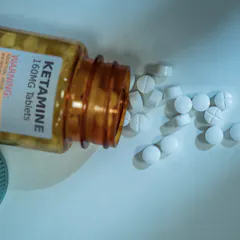
The growing availability of these substances is worsening the already bad problem of sexual assault on campus.
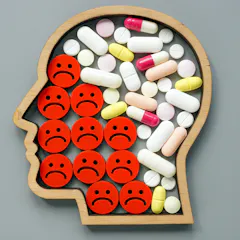
Antidepressant tachyphylaxis describes the loss of a treatment response that was once effective. Here’s what scientists know so far.

School personnel in Detroit and community members in Flint reported concerns about teens experiencing mental health conditions.

Unwanted, intrusive thoughts about infant harm are a normal, common feature of new parenthood, not necessarily a sign that a parent poses a danger to their child.

New research charts how preferences have changed over the past 45 years, and where they stand now.

Counseling in later life isn’t just for coping with loss and illness – it can help people work through questions of identity and how they seek meaning in their lives.

Calls to reduce the use of antidepressants highlight valid issues with long-term use and withdrawal, but blanket efforts to discourage their use overlooks why they are so widely prescribed.

Group interpersonal psychotherapy is an effective way to manage depression among perinatal adolescents.
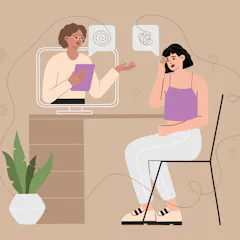
Clear communication is the secret sauce to safe and effective treatment.

Electroconvulsive therapy is supposed to be used only in extreme circumstances, such as when a patient is suicidal or when other treatments have failed.

Symptoms and impacts may fluctuate and it can be difficult to show you’ve tried other treatments.
Top contributors
-

Professor of Psychiatry, Monash University
-
Professor and Personal Chair, Swansea University
-
Professor of Psychiatry, Wayne State University
-
Scientia Professor of Psychiatry, UNSW
-
Professor of Psychology, San Diego State University
-
Professor of Psychology, The University of Melbourne
-
Professor of Clinical Neuropsychology, University of Cambridge
-
Professor of Critical and Social Psychiatry, UCL
-
Professor of Health Sciences, Simon Fraser University
-
Director School of Medicine and Psychology, Australian National University
-
Head of the Department of Psychiatry, The University of Melbourne
-
Visiting Clinical Research Fellow in Psychiatry, UCL
-
Professor of Psychiatry, UNSW & Black Dog Institute, UNSW
-
Associate Professor, Centre for Positive Health Sciences, RCSI University of Medicine and Health Sciences
-
Clinical Psychologist and Professor in the Department of Psychology and Neuroscience, Dalhousie University