

Age provides a clear boundary for law. It cannot, however, provide a complete account of a relationship.
Articles on Young people
Displaying 1 - 20 of 598 articles
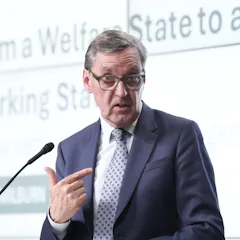
The plans include guaranteed jobs or training for 18 to 24-year-olds as well as cuts to certain benefits.

A characteristic may help identify risk, but it shouldn’t be treated as a prediction of an individual’s future.

Children usually arrive in custody having had significant disruption to their education already.
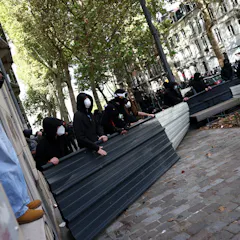
Masks that were a thing of the not so distant pandemic past are making a comeback on the streets. They now serve a dual purpose: protecting protesters from tear gas and covering up their faces.
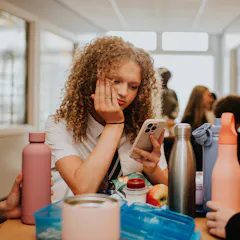
The social media ban for under-16s may stem from concern about a very real mental health crisis. But is it missing the point?

People do not consistently agree on what counts as social media

The anxiety overload at the root of widespread high school closures and protest action explains parents’ show of support for the youth-led movement.

The data showed autistic children were seeking help for suicidal thoughts in A&E at significantly younger ages than their non-autistic peers.
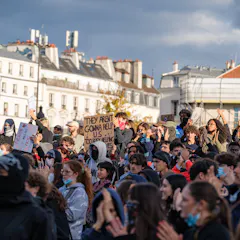
Young people appear to be facing increasing demands while some of the social resources that help them cope are weakening.
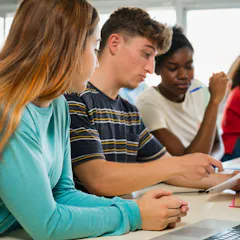
As more young people become detached from education and employment, schools must look beyond academic results to the skills that connect us.
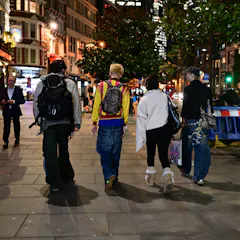
Analysis of police data highlights the scale of youth involvement and concerns over recruitment of students as money mules.
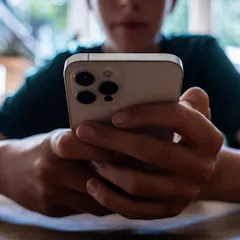
Kids have found ways around most of the safeguards meant to keep them off social media platforms.
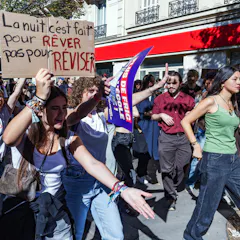
Two researchers explore the connections between France’s ongoing student movement and mental health related to academic pressure and conditions in secondary and higher education.
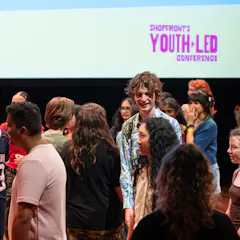
The second annual Shopfront Youth-Led Conference was designed by young people for young people. They wanted to talk about ‘redesigning success’.

For some autistic young people online interactions provide a form of social contact that is more manageable than many physical settings.

schools can provide a supportive environment that allows children to explore, but also to return to safety when they feel vulnerable.

Young people consistently described online spaces as providing opportunities for self-expression and self-discovery.

By the time an Australian student is 15, they will have already spent as many as 11,000 hours at school. What happens here matters for their wellbeing.

Trauma informed care shifts approaches from ‘what is wrong with this person’ to ‘what does this person need?’
Top contributors
-

Professor of Education Policy and Practice, Youth Studies, Monash University
-
Professor of IT Ethics and Digital Rights, Bournemouth University
-
Lecturer in Government, Jeff Bleich Centre for Democracy and Disruptive Technologies, Flinders University
-
Professor of Political Sociology, Institute for Culture and Society, Western Sydney University
-
Associate Professor in Criminology, University of Surrey
-
Lecturer, RMIT University
-
Rosalind Hollis Professor of Education for Social Justice, University of Hull
-
Professor of Information Sciences & Director, Social Change Enabling Impact Platform, RMIT University
-
Research Fellow, The University of Melbourne
-
Research Officer at Medical School, Swansea University
-
Professor, Digital Media Research Centre, Queensland University of Technology
-
Associate Professor in Law, Australian National University
-
Professor of Adolescent Health The University of Melbourne; Director, Royal Children's Hospital Centre for Adolescent Health; and Murdoch Children's Research Institute, The University of Melbourne
-
Chief Policy Fellow, University of Leeds
-
Associate Professor at the Health Services Management Centre, University of Birmingham