
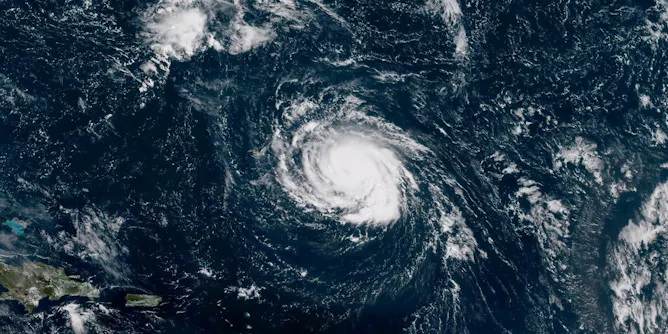
How do experts know when and where the next big hurricane is going to hit? A look at the complicated science of forecasting.
Articles on Weather forecasting
Displaying 81 - 100 of 144 articles

Technology can only go so far in making sense of our vast and intricate atmosphere.

The “red sky” proverb has endured across cultures for centuries, and modern science can explain why this is so.
Winter is here, and many farmers are still waiting on their ‘autumn break’ of heavy rain. Unfortunately, it looks like it will be a dry, warm winter – although the snow season will likely be good.
Why can’t meteorologists call the weather correctly every time? Blame the battle of the weather models.
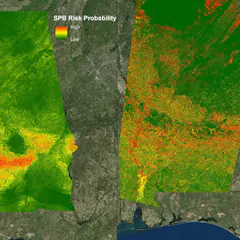
Big data open-access publishing and other advances offer ecologists the ability to forecast events like pest outbreaks over days and seasons rather than decades. But scholars need to seize this opportunity.
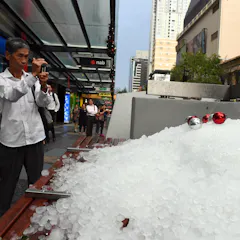
New “dual-pol” weather radars promise to spot large hailstones forming inside thunderstorms, giving people a heads-up when it’s about to hail.
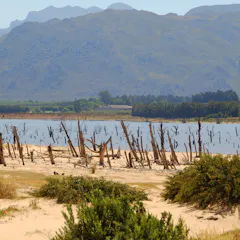
Cape Town promised alternative water sources with the ongoing drought being declared a disaster. Its main strategy is water rationing but climate models are also being used.
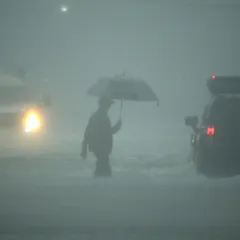
An expert in extreme weather events explains why the rain – and thus flooding – associated with Hurricane Harvey has been ‘unprecedented.’

Meteorology researchers across the country are prepping experiments for the mini-night the eclipse will bring on August 21 – two minutes and 36 seconds without the sun in the middle of the day.

The weather segment at the end of news bulletins has stuck to a familiar format for more than 50 years. But the question of who should actually present the weather has been in a constant state of flux.
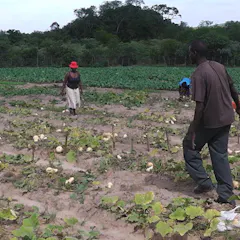
Information to weather changes is often unavailable to Africa’s farmers and even if it does exist, the quality is poor or inaccessible to those who need it most.
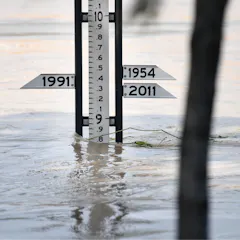
Analysis of flood gauge data suggest that floods are becoming less frequent in many parts of the world. Despite that, more people and property are at risk, particularly in developing countries.
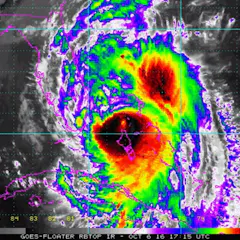
Two atmospheric scientists explain how they weigh evidence such as ocean temperatures, wind speeds and other climate patterns to predict how many Atlantic hurricanes are likely to form this year.
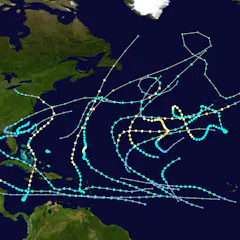
Major hurricanes threaten millions of people and billions of dollars in property along the Atlantic coast. Here experts advise on preparing, understanding forecasts and recovering after a storm.
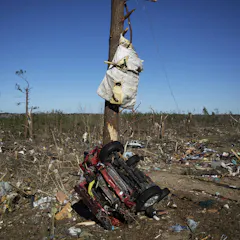
Tornado forecasting has greatly improved in recent decades, but these dangerous storms can still take communities by surprise. Two meteorologists explain what causes tornadoes and how to stay safe.
Weather forecasting stopped looking for patterns in the past, and started using numbers to look solidly at the future.
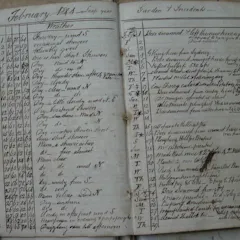
High-quality climate records only go back to the start of the 20th century. But using handwritten letters, journals and tables, researchers have access to data going back to the 18th century.
For the third consecutive year, it’s the hottest year ever. A climate scientist explains how these predictions are made and why they’re completely different from forecasting the weather.
South Africa’s weather is very attractive to international visitors. Climate change could alter their perceptions unless mitigation strategies are put in place.
Top contributors
-

Professor of Atmospheric Science and Colorado State Climatologist, Colorado State University
-
Regius Professor of Meteorology and Climate Science, University of Reading
-
Professor of Practice in Meteorology, Professor of International Affairs & Director Center for Solutions to Weather and Climate Risk, Penn State
-
ARC Future Fellow and Associate Professor in Climate Science, ARC Centre of Excellence for 21st Century Weather, The University of Melbourne
-
Adjunct Professor (Practice) in Climate Science, School of Earth, Atmosphere and Environment, Monash University
-
Professor of Physical Geography, University of the Witwatersrand
-
Professor of Climate Change Impacts, Newcastle University
-
Distinguished Professor of Meteorology, Penn State
-
Associate Professor, School of Civil, Environmental and Mining Engineering, Adelaide University
-
Professor in Tourism Geography, University of Johannesburg
-
Professor emeritus, School of Earth, Atmosphere and Environment, Monash University
-
Senior Meteorologist, Australian Bureau of Meteorology
-
Senior Research Associate, UNSW
-
Principal Research Scientist, CSIRO
-
Professor Emeritus in Climate Science, The University of Melbourne