
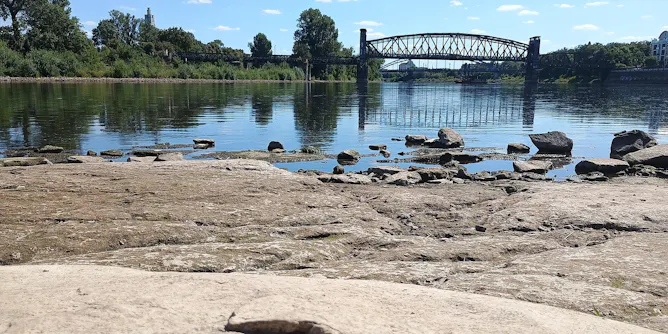
To protect our planet’s waters, we need to better understand these new economic and technological factors that underlie disputes over water.
Articles on Water
Displaying 21 - 40 of 843 articles
Drought and a ruptured pipeline have forced Puerto Rico into revolving water shut-offs. For many people, the disruption started years earlier, as did loss of faith in the utility.
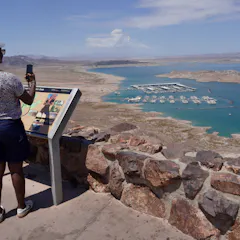
The existing plans and commitments to reduce water use don’t add up to even half of the savings that are needed to keep the river flowing.

A home might appear fine, but toxic contamination isn’t always evident by sight or smell. An engineer share safety tips for the recovery.
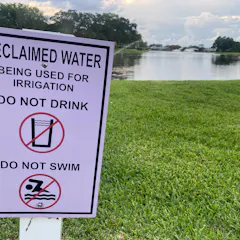
US sewage treatment plants likely don’t get rid of all the disease-causing protozoa, and monitoring discharged wastewater for it is difficult.

Philadelphia’s tap water meets federal drinking water standards but falls far short of public health goals when it comes to cancer-causing chemicals.
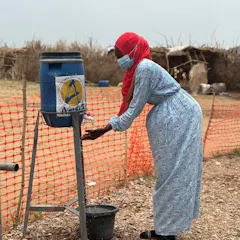
While cholera launched modern epidemiology and has nearly disappeared in many countries, the disease never went away. It has instead retreated to the places least equipped to fight it.

Wastewater from Pennsylvania’s oil and gas wells is salty and radioactive, and doesn’t suppress dust. Two researchers explain why it keeps ending up on rural roads.
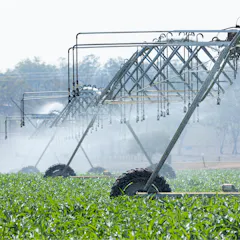
Despite their flaws, well-designed and regulated water markets remain one of our best tools for managing drought.

In its current form, safe drinking water legislation would weaken key legal provisions, particularly those related to rights and governance for First Nations.
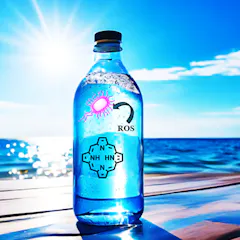
Scientists are exploring light-activated nanoparticles to kill biofilms in stored drinking water, aiming to make household water safer in South Africa.
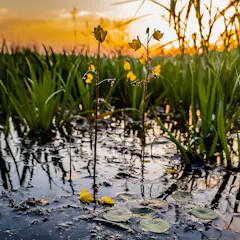
The rules for plants can be different in water.
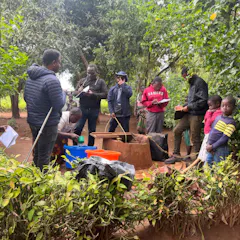
A new continent-wide map is helping identify where Africa’s groundwater can support drinking water and irrigation. Monitoring boreholes tracks aquifer health.
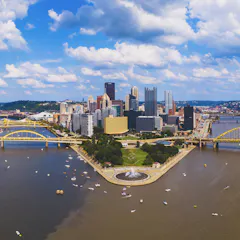
A newly drafted Pittsburgh Steelers player asked whether the city’s rivers are safe for swimming. A water researcher explains what ‘swimmable’ really means regarding the three rivers.
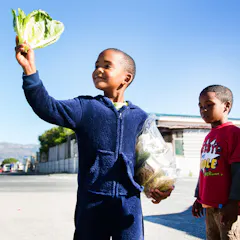
As food and living costs rise, rooftop solar and rainwater harvesting could help low income South African households save money and buy more food.
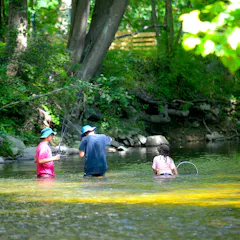
An environmental engineer who mapped microplastic pollution in three of Pennsylvania’s watersheds explains what it means for our health.
Don’t panic about AI data centres and water – it’s energy we should worry about

Even though annual precipitation is rising nationally, the landscape is drying out more rapidly. That’s changing the water cycle.

Years of industrial expansion have boosted water demand, with no new sources coming online since 2016. Desalination and reclaiming sewage wastewater are among the current options.

After years of drought, Lake Kariba’s rising waters are bringing relief to Zimbabwe and Zambia, boosting electricity, fishing, tourism and wildlife.
Top contributors
-

Associate Professor in Environmental Science, Western Sydney University
-
Visiting Adjunct Professor, School of Governance, University of the Witwatersrand
-
Professor of Civil, Environmental and Ecological Engineering, Purdue University
-
Regents Professor Emeritus and Morris K. Udall Professor of Law & Public Policy Emeritus, University of Arizona
-
Senior lecturer, Nelson Mandela University
-
Executive Co-Director, UNU Hub on Empowering Communities to Adapt to Environmental Change, Institute for Water, Environment and Health, United Nations University; University of Calgary
-
Research Associate, Department of Economics, SOAS, University of London
-
Matthew Flinders Professor in Water Economics, Flinders University
-
Professor, School of Biological, Earth and Environmental Sciences, UNSW
-
Distinguished Professor of Engineering, University of California, Merced
-
Distinguished visiting professor, University of Glasgow
-
Research Fellow, Monash Sustainability Institute, Monash University
-
Associate Professor of Environmental Economics and Policy, School of Environment, Science and Engineering, and Fellow of the Marine Ecology Research Centre, Southern Cross University
-
Professor, Fenner School of Environment & Society, Australian National University
-
Senior Lecturer, Melbourne Law School, The University of Melbourne