
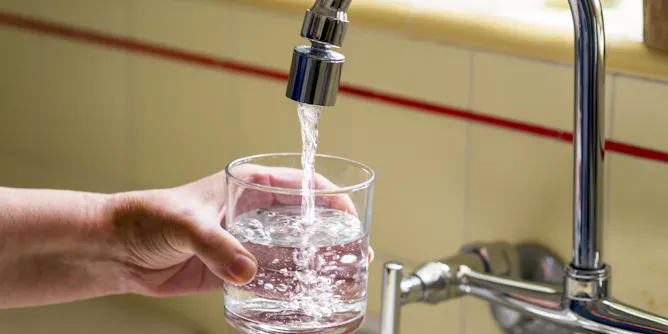
Required reporting on what’s in tap water provides important safety information, but it is not a complete inventory of every substance scientists can detect or are working to understand.
Articles on Irrigation
Displaying 1 - 20 of 129 articles

Timing matters: planting fodder radish in the right months can help South African farmers grow more nutritious livestock feed even without irrigation.
Households with certain assets can diversify into activities that produce higher incomes.
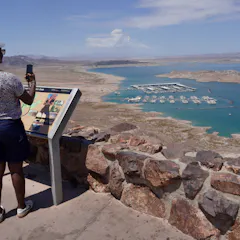
The existing plans and commitments to reduce water use don’t add up to even half of the savings that are needed to keep the river flowing.
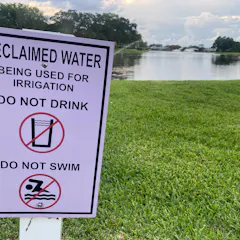
US sewage treatment plants likely don’t get rid of all the disease-causing protozoa, and monitoring discharged wastewater for it is difficult.
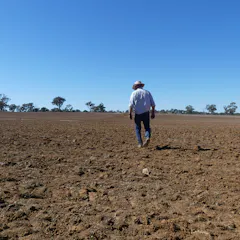
The good news is degraded soil can regain some of its lost heat protection. We can help ‘re-insulate’ the ground with practical farming methods.

Years of industrial expansion have boosted water demand, with no new sources coming online since 2016. Desalination and reclaiming sewage wastewater are among the current options.
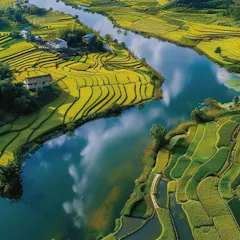
There are ways to reduce emissions without sacrificing yield. A new study shows how, and looks at a technique billed as ‘climate-friendly’ that makes emissions worse.
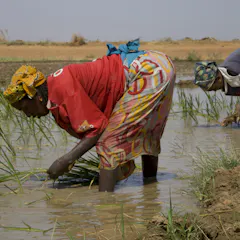
Science can only change the world when societies decide to give it the means to do so.
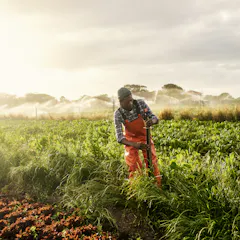
Thousands of hectares of communal land set aside for smallholder farmers’ use in South Africa are lying fallow because of collapsed government irrigation systems.
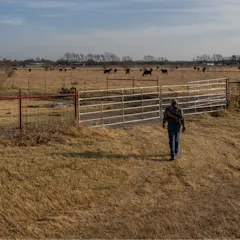
The Southern Plains states get a severe drought about once a decade, but long-lasting droughts lately have been leaving farms, rangeland and water sources with too little time to recover.

Desalination of seawater and sewage treatment plants leave behind water that contains high concentrations of salt, metals and other contaminants. What if that water could be separated from the rest?
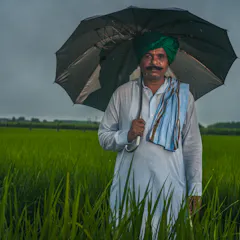
By boosting beneficial microbes, researchers hope to increase crop resilience while reducing the use of synthetic nitrogen fertilisers.
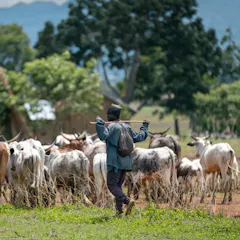
Africa’s drylands need support, but it shouldn’t overlook systems that people rely on.

Iran’s sprawling cities and irrigated agriculture, along with tight market controls, have left the country vulnerable to drought. There are steps that would help.
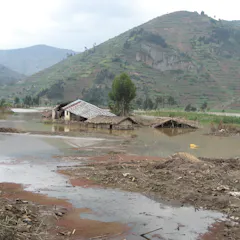
Africa is heavily dependent on agriculture. At this year’s COP30 conference, the continent needs to secure more funding to adapt land to climate disasters.
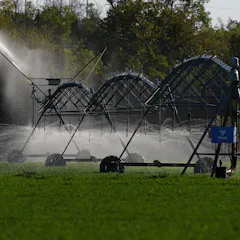
Consumer choices about what to eat and how much of it can affect how much water farmers need to use.

A new study is the first to define a safe operating space for the rivers of the Bangladesh delta.

A research team at Simon Fraser University has developed an AI-powered robot that can autonomously water plants and monitor plant health.
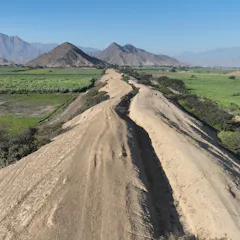
Ancient practices hold important lessons for farmers facing drying lands, but they were often more complex than modern societies realize. Glacier loss adds to the challenge today.
Top contributors
-

Australian Laureate Professor of Economics, Crawford School of Public Policy, Australian National University
-
Professor, Fenner School of Environment & Society, Australian National University
-
Managing Director, Triple Helix Consulting; Honorary Professor, ANU Fenner School for the Environment and Society, Australian National University
-
Professor, School of Biological, Earth and Environmental Sciences, UNSW
-
Matthew Flinders Professor in Water Economics, Flinders University
-
Regents Professor Emeritus and Morris K. Udall Professor of Law & Public Policy Emeritus, University of Arizona
-
Professor of Economics and Head of School, Adelaide University
-
Adjunct Associate Professor, Centre for Regional and Rural Futures, Deakin University
-
Adjunct Professor Environment and Natural Resources, Crawford School of Public Policy, Australian National University
-
Senior Research Associate and Director, Western Water Policy Program, University of Colorado Boulder
-
Professor, Department of Civil, Geological and Environmental Engineering and School of Environment and Sustainability, University of Saskatchewan
-
Associate Professor of Civil Engineering, Boise State University; United Nations University
-
Professor, Business School, Adelaide University
-
Director of the Institute for Water, Environment and Health (UNU-INWEH), United Nations University
-
Professor, Department of Hydrology and Atmospheric Sciences, University of Arizona