

Wars can start due to a disagreement, fear, or a desire for more power.
Articles on US-Iran conflict
Displaying 361 - 380 of 434 articles

How to read the signals in the markets.
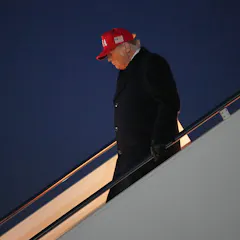
The Trump administration is likely hoping the US can be less involved in the Middle East after this war, if it results in a different Iran.
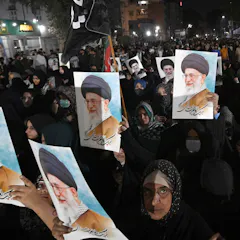
Iran’s authorities have moved fast to show they are still in charge. But selecting a new supreme leader may take some time.
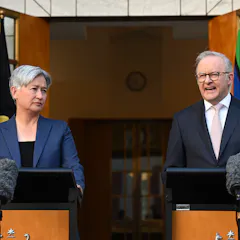
So far, Australia’s response to the US and Israeli strikes on Iran has been ‘say nothing’. But this may not be a successful long-term approach.
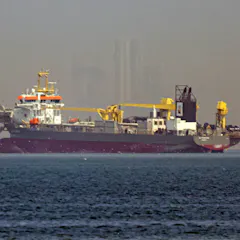
The rise in the oil price so far complicates the outlook, but does not resemble past energy crises.

Regime change has long proved tempting to large states. But it rarely goes to plan.
Qatar, the UAE and other Gulf nations have spent years cultivating an image of being an oasis of stability in the Mideast. The current war risks undoing all that work.
As US bombing operations in Afghanistan, Iraq and Libya have shown, destruction is not the same as political success.
Conflict between the two nations – often via proxies like Israel – has taken many forms since the 1980s.
Khamenei was a deeply polarizing figure in Iran – perceived by some as a martyr and others as an oppressor.
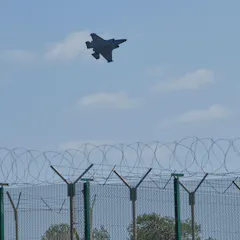
It is possible that Tehran has assumed British complicity in the launching of Operation Epic Fury.
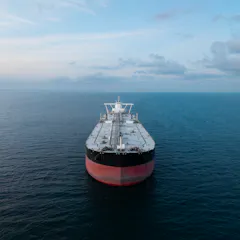
Oil prices are responding to risk – not just supply shortages.
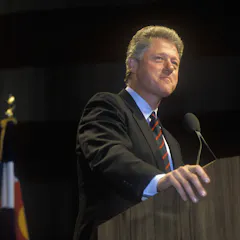
Trump has shifted American policy towards Iran from one of containment to direct confrontation.
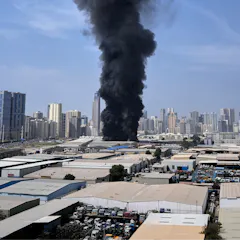
By using its drone and missile arsenal on its neighbours, Iran is telling the region, and the world, the regime will not go quietly.

Questions about ethical AI may go out the window when democratic norms are collapsing.

Oil isn’t a normal commodity – it shapes politics around the world.
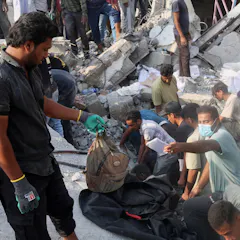
Daily compliance of international law remains the norm. Violations do occur – sometimes brazenly – but they are exceptions.
War has caused chaos for airlines in the Middle East, stranding tens of thousands of passengers.
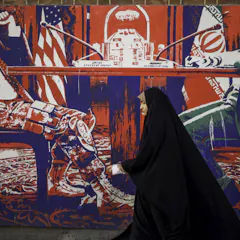
Silence from the US side after a third round of indirect talks and frustration expressed by President Donald Trump set the stage for military strikes.
Top contributors
-

Honorary Research Fellow, Department of International Politics, City St George's, University of London
-
Emeritus Professor of Middle Eastern Studies, Australian National University; The University of Western Australia; Victoria University
-
Professor in International Politics, City St George's, University of London
-
Associate Professor in International Relations, UNSW
-
Lecturer in History and International Studies, Leiden University
-
Professor of International Security, University of Birmingham
-
Adjunct Professor, Defence and Security Institute, The University of Western Australia; UNSW
-
Associate Professor in International Politics, UCL
-
Lecturer in Energy Systems, University of Oxford
-
Professorial Fellow, University of Canberra
-
Professor of International Relations, Lancaster University
-
Professor of the Practice of Political Science and International Relations, USC Dornsife College of Letters, Arts and Sciences
-
Lecturer, Department of War Studies, King's College London
-
Associate Professor, Defence Studies Department, King's College London
-
Fellow for the Middle East at the Baker Institute, Rice University