
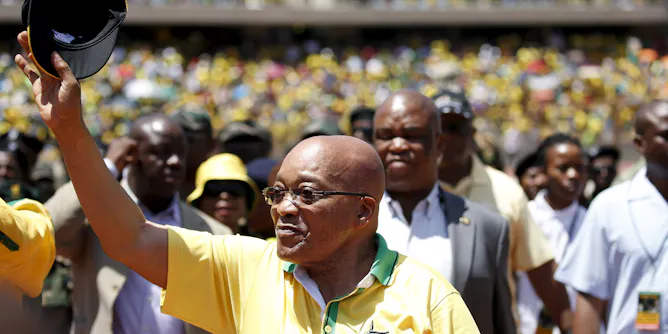
It is unlikely President Zuma will announce a structural changes in his State of the Nation Address. This, despite education being in dire need of fundamental restructuring and an economy in decline.
Articles on South African politics
Displaying 261 - 280 of 336 articles
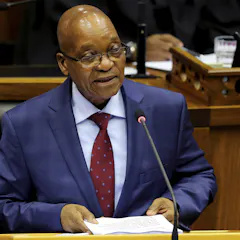
The general loss of faith in the economy is the most important issue President Zuma must address. More radical social and economic transformation, with emphasis on land reform will be most critical.
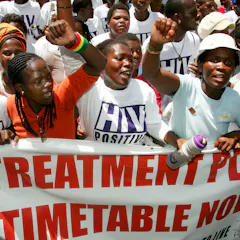
One of the remarkable achievements of South Africa’s Constitutional Court has been its role in improving the quality of the internal democratic processes within the governing ANC.
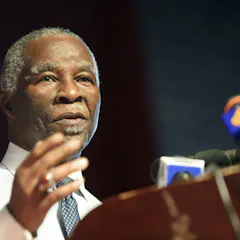
Former President Thabo Mbeki’s critique of South African historiography, and his concomitant attempt to correct this body of work, has set off a significant public discussion.
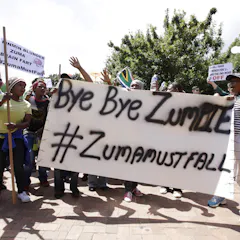
South Africa’s president is direly unpopular and his government on the ropes – but protests against him are just empty symbolism.
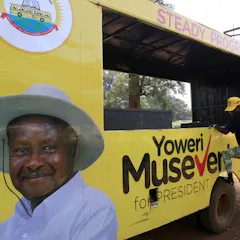
Regular changes of government through free and fair elections that reflect the wishes of the majority of citizens are a critical component of democratisation. But how significant are polls in Africa?
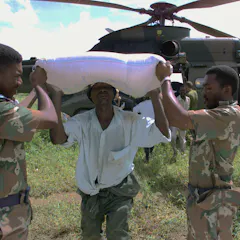
The South African military’s capabilities for socio-economic development are questionable, even in its own country. The force is in critical decline, but is expected to aid humanitarian efforts.
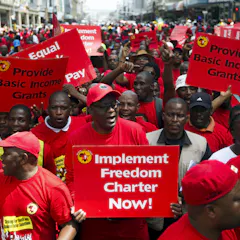
With the local government elections set to take place within the next seven months, it is worth considering what impact the recent upsurge in protests will have on the country’s political future.
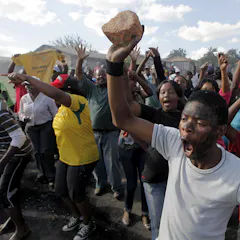
The advent of democracy in South Africa in 1994 is often hailed as peaceful and smooth. But, there are lingering problems. Dissent over unmet expectations has resulted in an increase in protests.
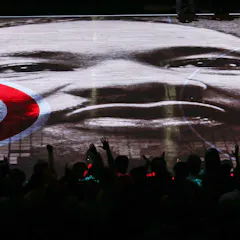
Martin Luther King’s legacy must be contextualised within a larger global struggle against racism and hatred. Africans should revisit the values he espoused and continue with the anti-racism crusade.
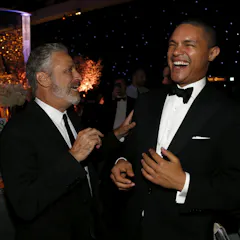
The Trevor Noah phenomenon speaks to an influential comedic revolution that is happening in South Africa. Its comics operate in an increasingly complex, high-risk and conflict-intense society.

The emergence of the restorative justice philosophy responds to the need to change South Africa’s retributive criminal justice system to accommodate African legal practices.
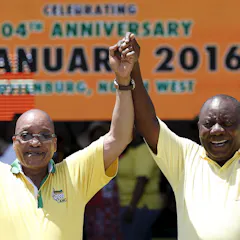
The ANC will be judged by its ability to deliver on its promises to provide basic services and good governance, practise sound financial management and combat corruption this election year.
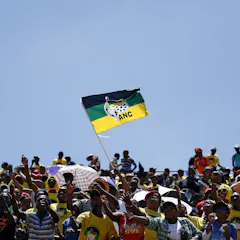
For more than 100 years South Africa’s ruling ANC and its leaders have often been able to speak to and for the nation with resonance and moral authority, their words matching actions. Not any more.
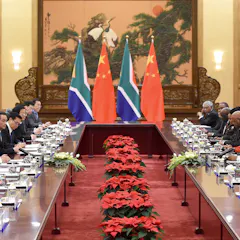
When it comes to the global political economy, no one “talks left and walks right” more than China, a dominant player in global capitalism. South African and Chinese aspirations have much in common.
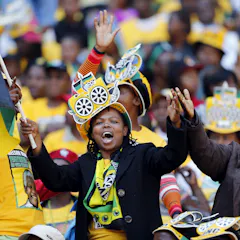
Pundits will closely watch President Jacob Zuma’s January 8 statement to see what he and the governing ANC consider to be priorities for the country in 2016.
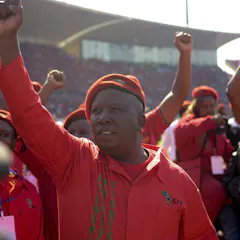
South African opposition politician Julius Malema has blamed economic policies put in place during Nelson Mandela’s era for the country’s high levels of inequality. He may have a point.
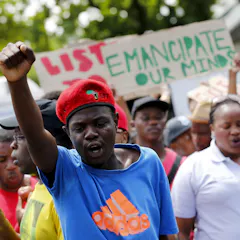
Many works published on decolonisation originate from Ngugi wa Thiongo’s idea of decolonising the African mind. Imperialism, he writes, has left its mark on the minds of the previously colonised.

The central thrust of Haffajee’s book is compelling. It argues that black South Africans, especially the new generation of young, black ‘born frees’ are obsessed with whiteness and white privilege.
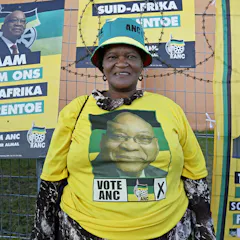
The annulment of the Tlokwe byelection results is a blow for the governing ANC. It has had a torrid 2015 and faces difficult local government elections early next year.
Top contributors
-

Political Scientist, University of the Western Cape
-
Professor of Sociology, University of the Witwatersrand
-
Professor in Political Science, University of South Africa
-
Professor of Public Affairs, Tshwane University of Technology
-
Professor of Political Studies, University of Johannesburg
-
Professor of World Politics, SOAS, University of London
-
Visiting Professor and Professor Emeritus, University of the Witwatersrand
-
Emeritus Associate Professor in Public Law, UCT. Visiting Adjunct Professor, WITS School of Governance; Director, Africa Programme, University of Cambridge Institute for Sustainability Leadership, University of Cambridge
-
Professor and Head of Department of Political and Conflict Studies, Nelson Mandela University
-
Chief Research Specialist in Democracy and Citizenship at the Human Science Research Council and a Research Fellow Centre for African Studies, University of the Free State
-
Lecturer in Politics and International Relations, University of Leicester
-
Professor of Urban Governance, University of the Witwatersrand
-
Distinguished Reserach Professor, Southern Centre for Inequality Studies, University of the Witwatersrand
-
Professor of Digital Society, University of Glasgow
-
Lecturer, Nelson Mandela University