
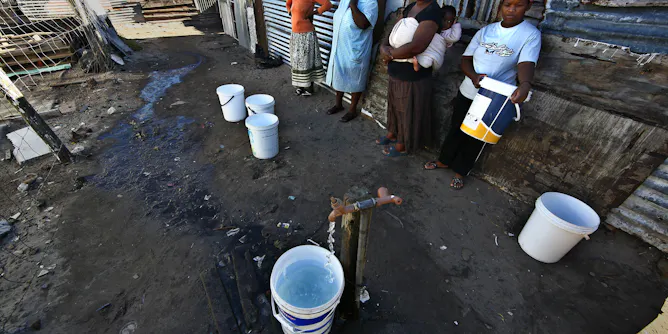
Thomas Piketty’s visit reminds us of the need to reconsider South African inequality-fibbery. His inequality critique is vital, but only if it can withstand the neoliberal embrace.
Articles on South African politics
Displaying 301 - 320 of 336 articles

Could the surge of worker and popular resistance worldwide provide the global trade union movement with an opportunity to take the lead in developing a broad coalition of social forces?
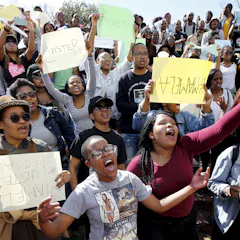
The university should be the bastion of the right to free expression in the promotion of democracy, and has a moral and ethical obligation to provide spaces for fierce debate and critical engagement.

The Marikana massacre of 2012 triggered strikes across South Africa and political realignment. But could this, and the formation of the United Front to rival the ANC, have long-term significance?
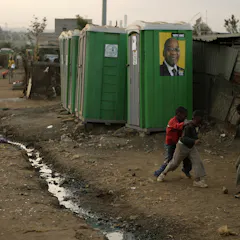
The dismally slow provision of housing in South Africa is such that more than 2.2 million households live in 2700 informal settlements. Waiting is the norm and can take years, even decades.
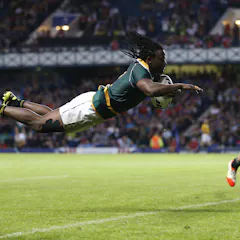
By investing in the 2022 Commonwealth Games, South Africa sacrifices investment in pressing societal needs. Instead, the country should be mobilised around the national goal of fixing schooling.
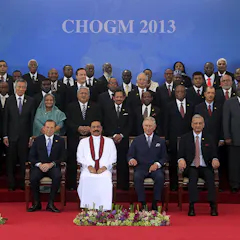
The Commonwealth is politically fraught, with widely divergent members. But, instead of unravelling as some critics wish, it has instead inspired copycats and appears set to grow and endure.
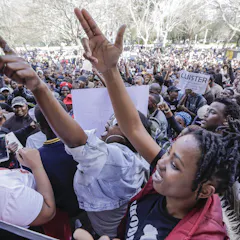
Black youth are grappling with the question of the meaning of freedom in post-apartheid South Africa. They seek an antidote to their reality wherein blackness continues to be mocked and marginalised.
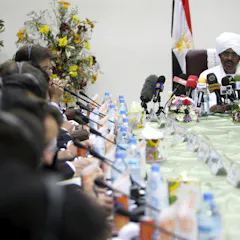
Omar al-Bashir’s planned trip to New York to address a summit on sustainable development at the UN General Assembly involves considerable reputational risk for the US.
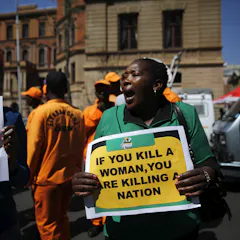
South Africa is emblematic of why violence against women responses in Africa are failing. While good measures are being rolled out, it lacks a united, comprehensive, multi-disciplinary response.
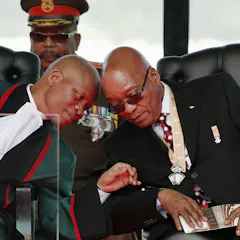
Tensions are probably inevitable in any constitutional democracy that empowers the courts to overrule the executive and legislature. But, judges are worried cabinet undermines the rule of law.
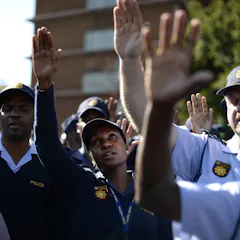
South African police are murdered at a high rate, making funerals and memorial services all too common. What happens and gets said at these services can help us understand aspects of police culture.
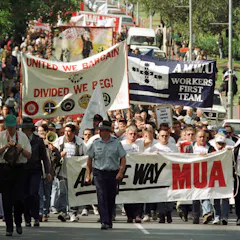
The Anti-Apartheid Movement reminds us that ordinary people can make a difference in the fight for workers’ rights, even halfway across the planet.
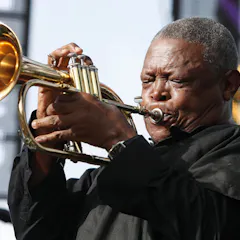
Concert organisers began to compete for government contracts. Often these contracts came with conditions as to who, among musicians, was desirable at government events.
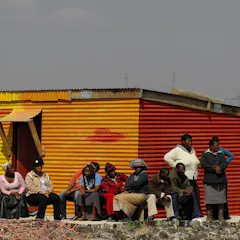
Writing about the women’s and feminist movements is a definitional minefield. The two are often conflated, more so in Africa.
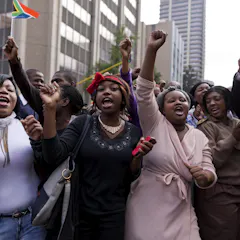
National Women’s Day in South Africa marks the historic protest in 1956 of women against apartheid policies. But, six decades on, black women have yet to fully embrace feminism as a discourse.
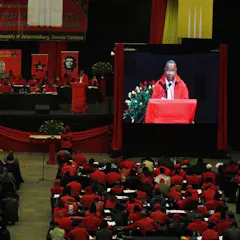
The SACP is the oldest communist party in Africa, formed in 1921. It is one of only 20 parties which survived the anti-communist purge post independence. Its membership went through cycles over years.
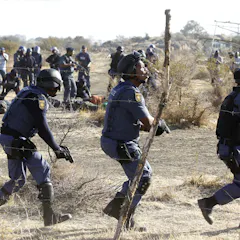
The Farlam Commission has called for implementation of plans to demilitarise the police to prevent a recurrence of the Marikana massacre. But, no-one, including Farlam, has set out what this involves.
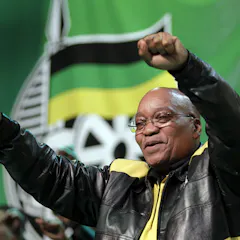
The leaders of South Africa’s governing ANC and its alliance partners, the SACP and Cosatu, are holding an unprecedented week-long meeting at a time of grave difficulties afflicting the alliance.

The Freedom Charter, adopted at a meeting in Soweto on June 25-26 1955, triggered a paradigm shift in thinking about the democratic rights of black South Africans and their protection under the law.
Top contributors
-

Political Scientist, University of the Western Cape
-
Professor of Sociology, University of the Witwatersrand
-
Professor in Political Science, University of South Africa
-
Professor of Public Affairs, Tshwane University of Technology
-
Professor of Political Studies, University of Johannesburg
-
Professor of World Politics, SOAS, University of London
-
Visiting Professor and Professor Emeritus, University of the Witwatersrand
-
Emeritus Associate Professor in Public Law, UCT. Visiting Adjunct Professor, WITS School of Governance; Director, Africa Programme, University of Cambridge Institute for Sustainability Leadership, University of Cambridge
-
Professor and Head of Department of Political and Conflict Studies, Nelson Mandela University
-
Chief Research Specialist in Democracy and Citizenship at the Human Science Research Council and a Research Fellow Centre for African Studies, University of the Free State
-
Lecturer in Politics and International Relations, University of Leicester
-
Professor of Urban Governance, University of the Witwatersrand
-
Distinguished Reserach Professor, Southern Centre for Inequality Studies, University of the Witwatersrand
-
Professor of Digital Society, University of Glasgow
-
Lecturer, Nelson Mandela University