
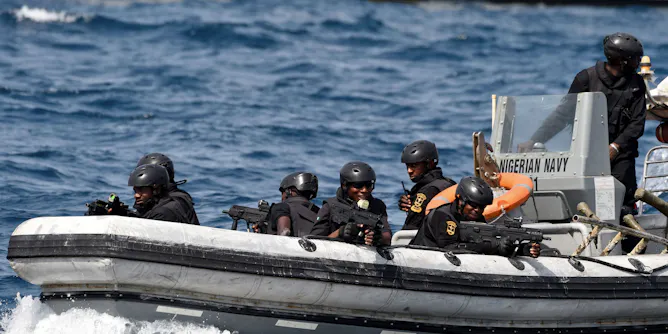
Navies, and other security agencies, won’t be able to improve maritime security as long as root causes on land are not addressed.
Articles on Shipping
Displaying 161 - 180 of 219 articles
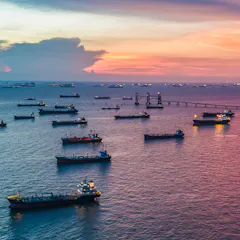
The Great Acceleration inaugurated the Anthropocene in the 1950s. Now, a similar race for resources and space is happening in the ocean.
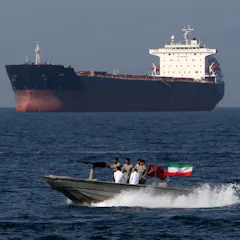
Any disruption to shipping in the narrow seaway could impact oil prices and ratchet up geopolitical tensions.
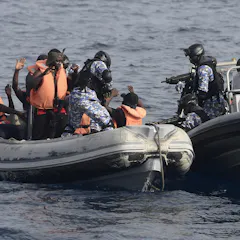
Feeding a simple narrative of piracy without a broader look at other maritime security challenges hinders progress in dealing with it.
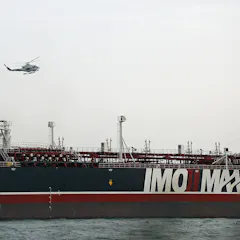
An international maritime lawyer explains whether Iran broke the law of the sea by detaining the Stena Impero.
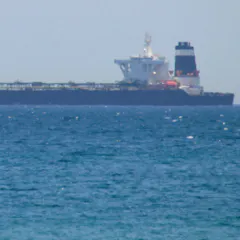
After Brexit, the UK will need to decide whether it supports EU diplomacy or US militarism.
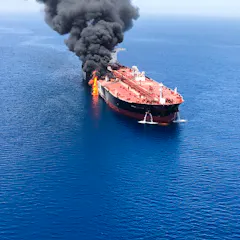
Tensions are rising after two oil tankers were attacked in the Middle East. But what can ships do to protect themselves in risky waters?
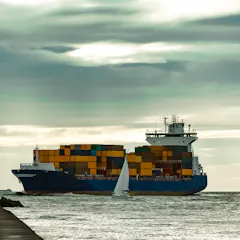
Shipping companies are expected to halve their greenhouse gas emissions by 2050.
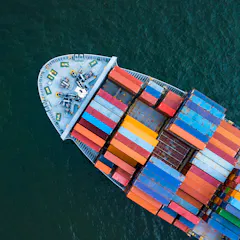
In three decades Australia’s merchant fleet has declined from about 100 ships to 14. It’s mostly to do with ships changing flags to avoid local laws and crews.

Globalization is making it harder to identify and trace outbreaks of foodborne illness. Technology can help, but consumers may also have to rethink their food choices.

Two labor negotiation experts explain how a 2015 dispute that seemed intractable got resolved, with important lessons for the partial government shutdown.
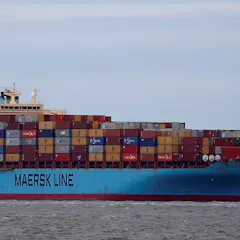
Carbon emissions from maritime freight are everyone’s problem because of climate change.

Rising e-commerce means more delivery trucks and urban gridlock. Lockers at transit centers, where carriers can leave packages for people who live or work nearby, are a potential solution.

Climate change is shrinking Arctic sea ice and opening the region to ship traffic. Whales, seals and other marine mammals could be at risk unless nations adopt rules to protect them.

New shipping opportunities are opening up in the Arctic as sea ice continues to recede. But travel is still dangerous and the region isn’t equipped to deal with more vessel traffic.
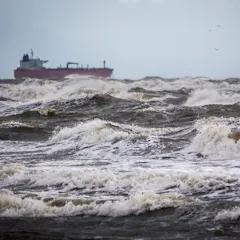
We know how to stop solid minerals converting to a liquid state mid voyage – so why does it still happen?

The complexity of the reforms might jeopardise the necessary cooperation of overseas businesses, and place consumers at risk of paying wrongly charged GST.
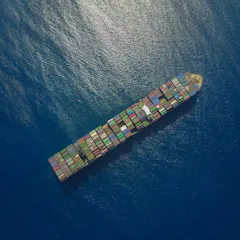
Cyber vulnerabilities in shipping show how far the industry has to go. But proper cyber security of ships is more complex than you might initially think.
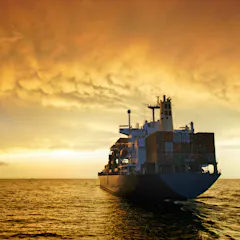
Shipping is becoming greener, but this brings new safety challenges.
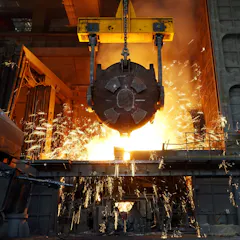
This speed read explores why it’s hard to stop manufacturers in specific countries from dodging trade barriers by pretending that their goods come from somewhere else.
Top contributors
-

Senior Lecturer in Culture & Climate, The University of Melbourne
-
Lecturer in Sustainable Freight Transport and Logistics, University of Leeds
-
Eugene M. Isenberg Chair in Integrative Studies, UMass Amherst
-
Reader in Energy and Transport, UCL
-
Research Associate, Shipping and Climate Change, University of Manchester
-
Associate Professor in Operations and Supply Chain Management, UTS Business School, University of Technology Sydney
-
PhD (Maritime Security)
-
Professor of Climate Science and Energy Policy, University of Manchester
-
Assistant Professor in Circular Supply Chains, University of Bradford
-
Associate Professor of Business, University of Tennessee
-
Senior Lecturer in Ocean and Earth Science, University of Southampton
-
Professor of International Relations, University of Copenhagen
-
Associate professor, Royal Danish Defence College
-
Professeur émérite de géographie, Université de Montréal
-
Professor of Practice & Director, Fletcher Maritime Studies Program, The Fletcher School, Tufts University