
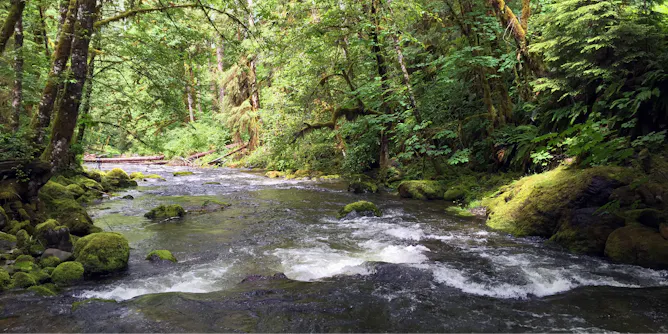
Rivers are among the most embattled ecosystems on Earth. Researchers are testing a new, inexpensive way to study river health by using eDNA to count the species that rivers harbor.
Articles on Scientists at work
Displaying 41 - 60 of 94 articles

Scientists enjoyed informing, exciting and inspiring the public.
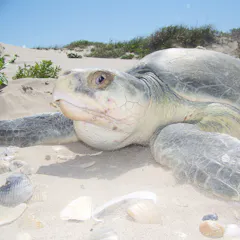
For the endangered Kemp’s ridley sea turtle, every individual matters. A team of veterinarians and biologists has formed a network along the Gulf Coast to save injured sea turtles and the species.

In northwest Mexico, biologists are building a network of radio towers to track how individual migratory birds move among important wetland areas.
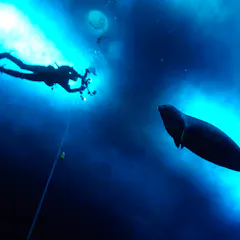
Microphones on the seafloor recorded life under the Antarctic ice for two years – inadvertently catching seal trills and chirps that are above the range of human hearing. Could they be for navigation?
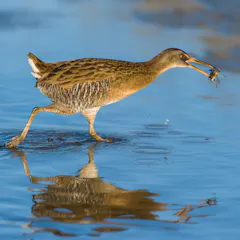
Birds found along the Gulf Coast have evolved to ride out hurricanes and tropical storms. But with development degrading the marshes where they live, it’s getting harder for them to bounce back.
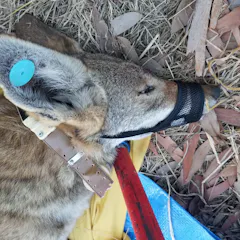
Biologists capture and collar coyotes in urban Los Angeles in order to study the effectiveness of ‘hazing’ as a wildlife management tool.
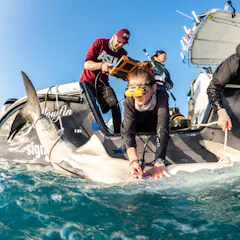
Researchers are using a newly developed satellite tag to study previously unknown aspects of tiger shark reproduction. This approach could be used on other difficult-to-study shark species.
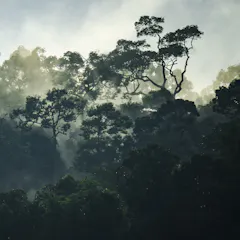
Scientists behind a major new study explain how they discovered these forests are becoming less able to sequester carbon.
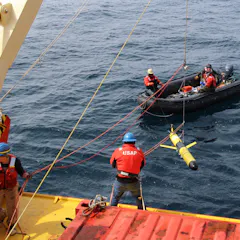
Sending autonomous vehicles to the Southern Ocean can be fraught with anxiety, especially if one of them doesn’t make radio contact when it’s supposed to.

A paleooceanographer describes her ninth sea expedition, this time retrieving cylindrical ‘cores’ of the sediment and rock that’s as much as two miles down at the ocean floor.
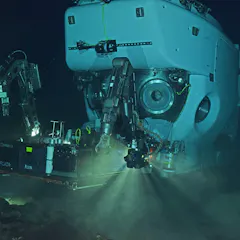
When you study volcanoes at mid-ocean ridges, doing fieldwork means becoming an aquanaut – diving thousands of feet to the ocean floor in the submersible Alvin, trading tight quarters for amazing views.
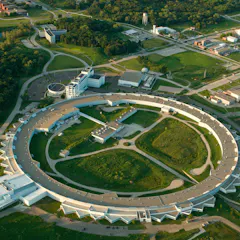
It turns out to be fairly complicated to figure out how electricity will flow through materials – a crucial question for designing new electronics and semiconductor materials.
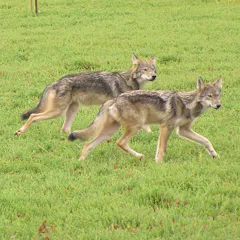
Tracking wild animals can provide lots of valuable data. New research suggests audio recordings of wild wolves can replace the typical radio collars, which can be expensive and intrusive.
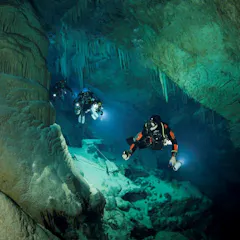
Scientific fieldwork that happens underground and underwater in spectacular but dangerous caves opens a window on a largely unknown world.
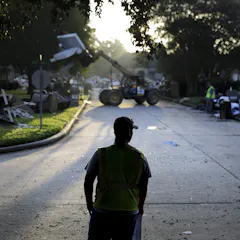
Epidemiologists study disease outbreaks in populations to determine who gets sick and why. In the wake of this year’s hurricanes, they are assessing impacts from mold, toxic leaks and other threats.

Science provides a useful way to explore and understand the natural world. But it also has a richness, diversity and creativity that is often overlooked.
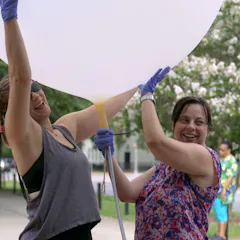
Meteorology researchers across the country are prepping experiments for the mini-night the eclipse will bring on August 21 – two minutes and 36 seconds without the sun in the middle of the day.
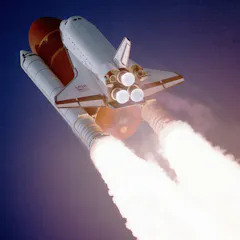
CC BY-ND23.8 MB (download)
In this episode of The Anthill podcast we are off exploring: land, sea and space.
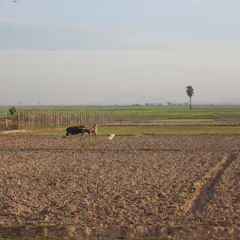
Intensified rice production in Cambodia’s dry season is wreaking havoc on local bird populations.
Top contributors
-

Staff Scientist, Smithsonian Tropical Research Institute, Smithsonian Institution
-
Professor of Planetary and Space Sciences, The Open University
-
Senior Research Associate, Cardiff University
-
Research Associate, Manchester Metropolitan University
-
Spacecraft Engineer, University of Bristol
-
Former Honorary Research Associate for the Endangered Archaeology in the Middle East and North Africa (EAMENA) Project, University of Oxford
-
Researcher, National Renewable Energy Laboratory
-
Professor of Epidemiology and Core Faculty of Disaster Research Center, University of Delaware
-
Head of Specialised Assay Service, University of Edinburgh
-
Professor of Environmental and Forest Biology, State University of New York College of Environmental Science and Forestry
-
Professor of Geosciences, University of Montana
-
Professor of Mathematics at Center for Atmosphere Ocean Science, New York University
-
Assistant Professor of Biology, Carthage College
-
Professor of Wildlife Conservation, Colorado State University
-
Himalayan geologist, Lancaster University