
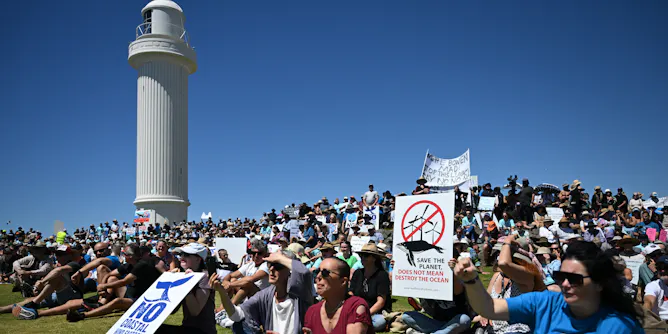
Australia’s clean energy transition cannot succeed unless the government opens debate and decision-making to many more voices.
Articles on Renewable energy
Displaying 321 - 340 of 1566 articles
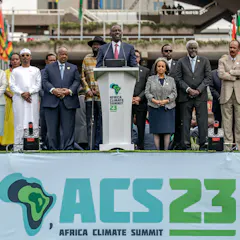
There were three important moments in Africa this year which highlight a mix of progress, priorities and potential pitfalls in the fight against climate change.
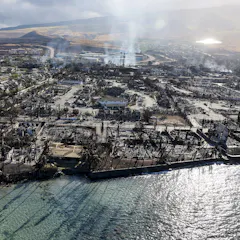
Fed Chair Jerome Powell bristles at talk of managing climate change, but the damage it is doing the US economy is hard to ignore, as the latest National Climate Assessment shows.

South Africa’s experience with renewable energy procurement provides valuable insights – what to do and what not to do – about management of the climate transition.
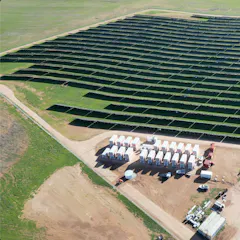
The Australian Labor government’s expanded Capacity Investment Scheme gives us a better chance of hitting high renewable energy targets. It’s not without risk but well worth the rewards.
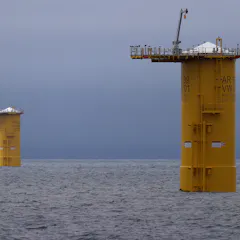
A recent study focusing on how offshore wind farms in Massachusetts waters could affect endangered right whales does not call for slowing the projects, but says monitoring will be critical.

In this podcast, former Labor climate change minister Greg Combet joins The Conversation to discuss net-zero, and Australia's future as a "renewable energy superpower".
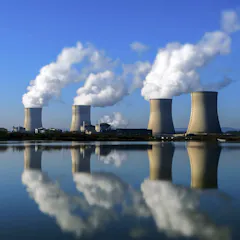
When Australia’s government and opposition argue over how to get to net zero emissions, nuclear power is the flashpoint. The argument against nuclear is stronger, but not for the obvious reason.

E-fuels are materials that reliably and efficiently store energy until we need to use it and can readily be moved from place to place. They could be a major player in Canada’s green transition.

If Alberta prepares to transition from oil and gas to solar energy, the workforce will need retraining. New research shows that this will cost less than expected.

Australia has a massive opportunity to reduce global emissions by as much as 9%, all while renewing its heavy industries and economy. But to seize the opportunity, government needs to move fast.

The oil and gas industry is struggling to retain talent – here’s why.
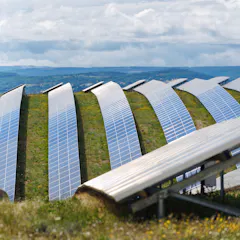
Solar energy is set for a rapid expansion – but only if several barriers are overcome, according to new research.

For developing countries, such as Kenya, there is no template for moving to a low-carbon future while accelerating economic growth and development.

Land is a scarce resource. Restoration enables sustainable and dynamic use of former mining land and creates opportunities for ex-mining towns.
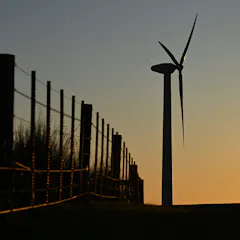
Of all Australia’s climate policies, the Renewable Energy Target has been the most effective. Why have Australian governments moved away from it, and how can they revive it?
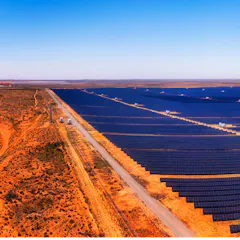
Solar power generation varies greatly depending on the weather. A new study suggests in some parts of Australia, solar has a bright future.
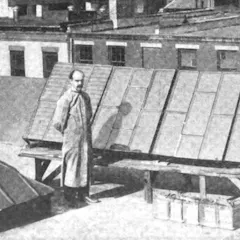
The 1909 incident may have cost the industry decades of progress – and the planet huge amounts of damaging carbon emissions.
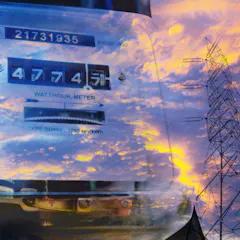
Rather than paying ageing power stations to stay open in the transition to renewable energy, demand flexibility is cheaper and cleaner way to ensure the system has enough capacity.

Australia’s move towards net zero emissoions by 2020 is in danger of stalling. If it is not to fail, the nation urgently needs a government plan, aligned with industry and with public support.
Top contributors
-

Professor of Engineering, Australian National University
-
Professorial Fellow, University of Canberra
-
Senior Research Associate, Renewable Energy & Energy Systems Analyst, UNSW
-
Senior Fellow in Energy and Climate Change, Grattan Institute
-
Professor, Crawford School of Public Policy and Director, Centre for Climate and Energy Policy, Australian National University
-
Professor Emeritus, Macquarie Business School, Macquarie University
-
Professor of Physics, University of Johannesburg
-
Senior Industry Fellow, Environment and Planning, RMIT University
-
Honorary Associate Professor, UNSW
-
Associate Professor, Renewable Energy, Monash University
-
Professor, School of Economics, The University of Queensland
-
Professor and Director, Victoria Energy Policy Centre, Victoria University
-
Honorary Associate Professor, Centre for Climate Economics and Policy, Australian National University
-
Research Principal, Institute for Sustainable Futures, University of Technology Sydney
-
Associate Professor of Economics, Griffith University