
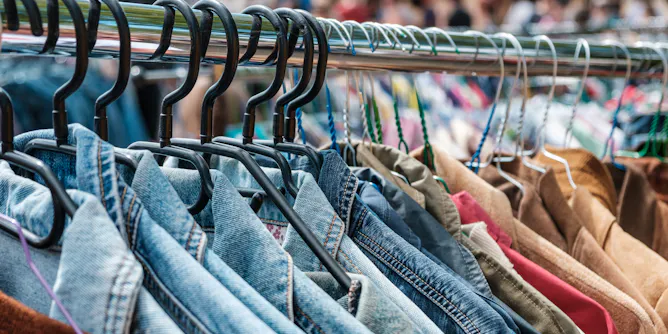
As rich countries move towards more sustainable practices, it’s vital to include communities whose livelihoods could be damaged.
Articles on Recycling
Displaying 61 - 80 of 416 articles
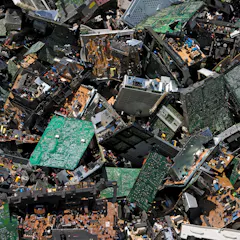
Less than 25% of all e-waste globally gets recycled. That’s because there are many challenges involved – but there is a way forward, too.

The PFAS in lithium-ion batteries is a major obstacle to recycling or disposing of these batteries safely. But we have a way to fix this problem.
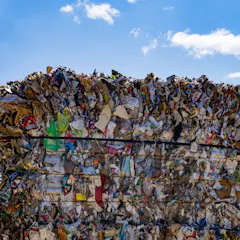
We don’t recycle enough! Cities, as the main sources of consumption and waste production, are strategically positioned to reverse this trend.

Plastic waste expert Mark Miodowonik explains the history of plastic and why he believes manufacturers must be responsible for making sure plastic is recycled.

Strong, light composite materials have revolutionised many sports. But these composites are notoriously hard to recycle
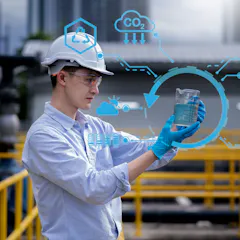
Innovative water management can reshape perceptions and demonstrate the feasibility of recycled wastewater.
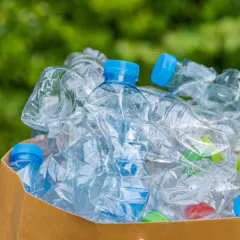
Are you considering buying fewer plastic bottles in the future? Maybe not, but now that the question has been asked, you’re bound to think about it.
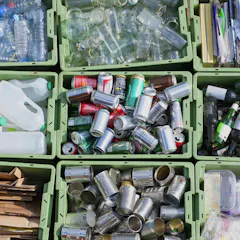
New Zealand food manufacturers are beginning to embrace the circular economy but are up against a lack of government support, customer awareness and low-emission freight options.

Many Australians are involved in Buy Nothing groups that allow locals to ask for and give away unwanted stuff for free. They bring circular economy principles to life, but depend heavily on women.
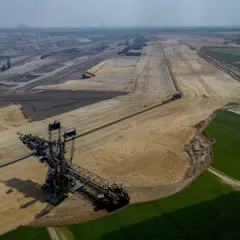
Purely technical solutions to the challenges of sustainable development will likely end in failure. Living within planetary boundaries will require a unified effort across disciplines and economies.
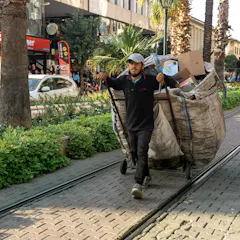
Waste management reforms in Turkey are excluding the country’s informal litter pickers from the sector.

Urban mining recovers valuable resources from the vast amounts of waste cities produce.

And why wildlife may be the biggest beneficiary.
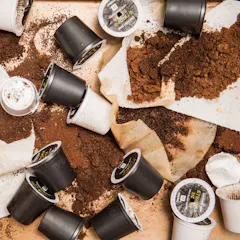
As concern about plastic pollution mounts, the federal government is revising its standards for calling products recyclable. A recent fine against Keurig could be a sign of things to come.

A proposed chemical recycling plant in western Michigan may provide a handful of jobs but little environmental benefit.

The mining industry could learn a lot from the slow fashion and food movements. New research from the Yukon shows how slow mining can be a viable path forward.

The customary energy life cycle includes exploration, development, extraction, processing, transmission and sometimes reclamation. An additional stage is needed: recycling.
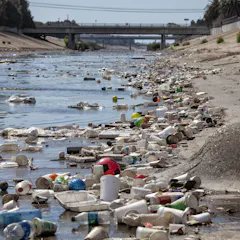
Better measuring standards, more responsibility for producers and an end to single-use products are all positive steps. But the US has not yet endorsed a cap on plastic production.

There are hopes AI may be the silver bullet we need to save the environment – but it comes with downsides.
Top contributors
-

Senior Research Fellow, BehaviourWorks Australia, Monash University
-
Lecturer, School of Life and Environmental Sciences, Deakin University
-
Associate Professor and Research Director, Institute for Sustainable Futures, University of Technology Sydney
-
Professor of Applied Environmental Science, University of Southampton
-
Professor of Global Environmental Politics, University of California, Berkeley
-
Research Principal, Institute for Sustainable Futures, University of Technology Sydney
-
Chair professor - Circular Economy, The University of Melbourne
-
Research Chair, Indigenous Approaches to Environmental Management, Keele University
-
Associate Professor at School of Property, Construction and Project Management, RMIT University
-
Associate Dean and Head of Project Management, RMIT University
-
Professor of Sustainable Development, Keele University
-
Research Director, Institute for Sustainable Futures, University of Technology Sydney
-
Research associate, Loughborough University
-
PhD Candidate in Environmental Science, Policy, and Management, University of California, Berkeley
-
Birkbeck, University of London