
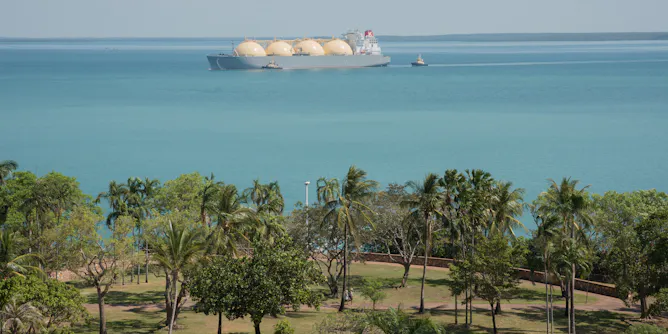
Giant gas companies are “hot venting” toxic gases known to be unsafe for humans at any concentration.
Articles on Pollution
Displaying 21 - 40 of 660 articles

Detailed data is useful for understanding and addressing environmental effects on people’s lives in ways that become difficult or impossible if only the broadest and blurriest picture is developed.
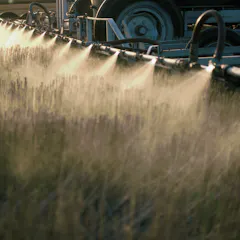
Paraquat is banned in dozens of countries – but this cheap imported herbicide is everywhere in Australia.

Nowhere is safe from forever chemical pollution – not even the middle of the ocean. PFAS levels are on the rise in the world’s whales and dolphins.
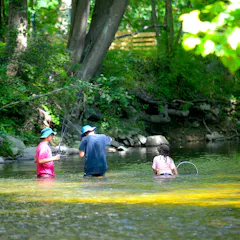
An environmental engineer who mapped microplastic pollution in three of Pennsylvania’s watersheds explains what it means for our health.

It’s the largest lawsuit ever brought by the Australian government. But what is the $2 billion forever chemicals case meant to achieve?
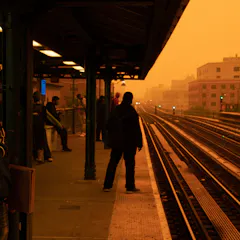
The number of ozone-related premature deaths due to wildfires is also rising.
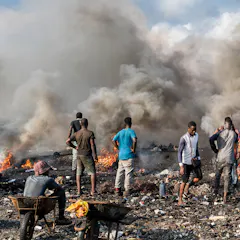
In Agbogbloshie, Ghana, thousands of young women and men burn electronic waste to extract minerals at a cost to their health. They need more protection.
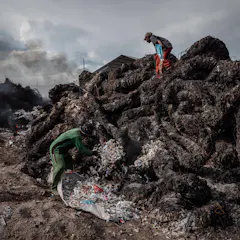
As more countries ban waste imports, plastic waste generators like the US will need to find better solutions. A few states are putting more responsibility on producers.
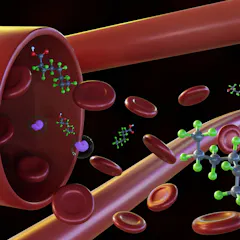
Your body likely contains an accumulation of various PFAS types, making it difficult to trace them to their sources.

By 2100, 100 million Americans could breathe unhealthy air in the summer, seven times more than in 2000.

The government promises joined‑up and long‑term regional planning for water. But some pressing challenges appear to receive surprisingly little attention.
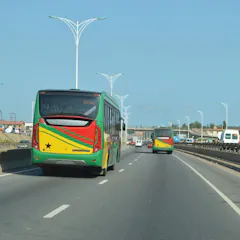
As cities grow, it would be better to have more efficient, higher-capacity transport than more vehicles on the road.

How those claims about the air purifying qualities of plants stack up.

Ads from the 19th and 20th centuries shows how the industry has long tried to promote coal as clean and even healthy, despite evidence to the contrary.

Even quite young children are watching, thinking and feeling things about the future of the environment. Those feelings deserve to be taken seriously.
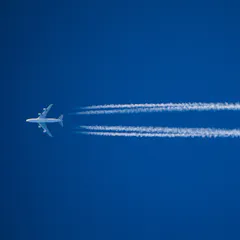
Research suggests there may be ways to reduce the climate impact of flights by addressing the white trails they leave behind.
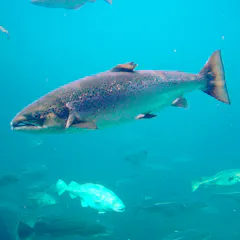
Drugs and their byproducts can end up in wild fish – and strange behaviour results.

The largest sewage spill in US history wasn’t the first, and it won’t be the last.
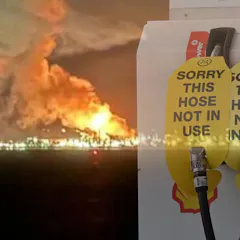
This fire should prompt us - again - to consider the future role of liquid fuels in Australia.
Top contributors
-

Honorary Professor, School of Natural Sciences, Macquarie University
-
Associate Professor in Environmental Science, Western Sydney University
-
Professor, UNSW Law & Justice and UNSW Institute for Climate Risk & Response, UNSW
-
Professor of Environmental Science, University of South Africa
-
ARC Future Fellow and Associate Professor in Climate Science, ARC Centre of Excellence for 21st Century Weather, The University of Melbourne
-
Emeritus Professor of Medicine, Adelaide University
-
Senior Principal Research Scientist, Environment, CSIRO
-
Senior Research Fellow at the Stockholm Environment Institute, University of York
-
Professor, Obafemi Awolowo University
-
Professorial Fellow, ARC Centre of Excellence for Coral Reef Studies, James Cook University
-
Professor of Biology, University of Portsmouth
-
Professor, Australian National University
-
Associate Professor, Australian National University
-
Postdoctoral research fellow, University of the Ryukyus, Okinawa Japan, Madonna University, Nigeria
-
Associate Professor and Water Management Expert, University of South Africa